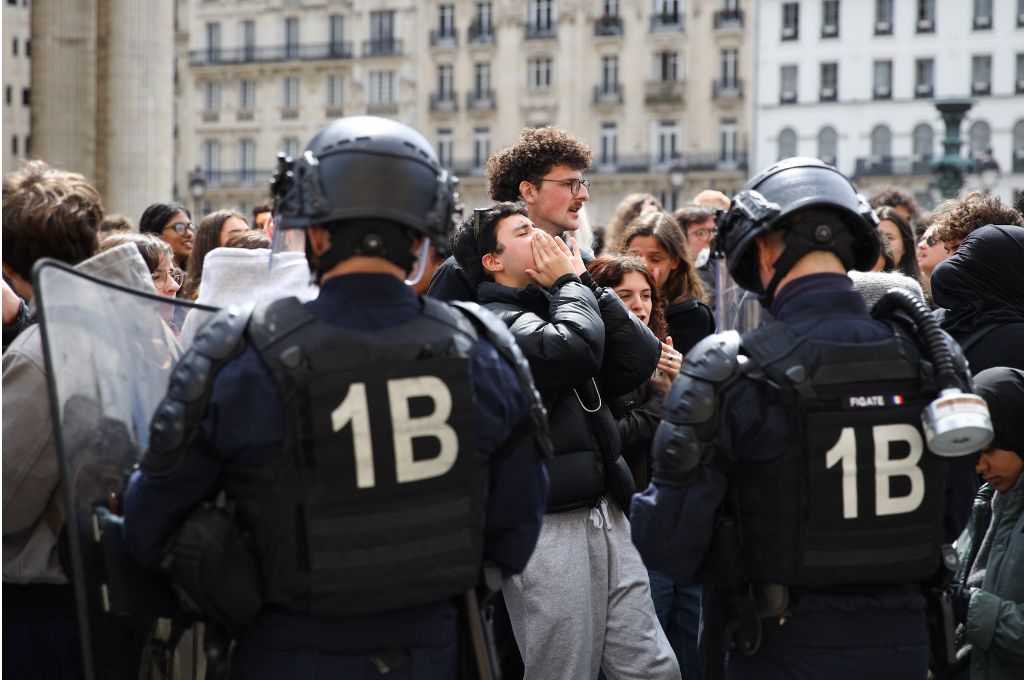
France has suspended the police use of stun grenades at student-led demonstrations, Interior Minister Laurent Nuñez announced on Wednesday, after a 15-year-old lost his hand in a blast during protests in the northern city of Lens. The decision, confirmed in an interview with radio broadcaster RTL, marks the first major concession by the government on policing tactics since the largest youth protest movement in years entered its second week — and comes hours before Prime Minister Sébastien Lecornu was due to give a televised speech on the crisis.
Nuñez said the suspension applies only to the high school protests and will last "just long enough to understand what happened" in Lens. The boy lost his hand and part of his arm on Monday when a police grenade exploded; a local prefect said an investigation had been opened, and prosecutors have not ruled out whether the student picked the grenade up or had it thrown at him.
Contents
- The announcement
- Two weeks of escalating protests
- A pattern of injuries
- Macron's crisis meeting and Lecornu's speech
- The political fallout
- Key takeaways
- Frequently Asked Questions
- Sources
- Related reading
The announcement
Speaking to RTL early Wednesday, Nuñez confirmed that he had ordered the halt to stun-grenade use at the high school demonstrations "until the facts of the incident have been clarified." He stressed that police would still intervene where necessary, but that their response had to be proportionate.
The minister also disclosed that police have opened 18 internal investigations into allegations of misconduct since the protests began — a figure that underscores how quickly the question of police violence has moved to the center of a movement that started over school conditions.
Student organizations and unions, which announced new coordinated protests for Thursday, dismissed the suspension as too narrow. France Unbowed national coordinator Manuel Bompard put it bluntly: "It took several children being maimed for life for Nuñez to give up using grenades against high school students."
Two weeks of escalating protests
The protests began in mid-September in the poorer suburbs of Paris, with high school students demanding action on dilapidated buildings, unfilled teacher absences, and record class sizes — students report leaking water, cockroaches, collapsing ceilings, and extreme summer heat. The movement has since spread nationwide and drawn pupils from affluent neighborhoods too, in what observers describe as the largest youth protest movement France has seen in years.
On Tuesday alone, the Interior Ministry counted more than 260,000 demonstrators nationwide — 56,000 in Paris — while organizers put the figure as high as 450,000. That evening, protesters from several unions and teachers' groups marched alongside high school and university students through the capital.
The human cost has been stark. Since the protests began, the Interior Ministry says 6,100 people have been arrested — the majority under 18 — and the Justice Ministry has announced that more than 1,800 people will be prosecuted, including 1,483 minors. According to the prime minister's office, at least 215 teenagers have been wounded, along with 715 police officers.
A pattern of injuries
The Lens case is the most severe, but it is not isolated. Last week, a 14-year-old student in northwest Paris was hit in the face with a tear gas grenade at such close range that he lost several teeth — a policeman was charged over that incident on Tuesday, as previously reported. In the city of Tours, a 16-year-old reportedly lost sight in one eye after being hit by a projectile, which a prosecutor said may have been fired from a sub-lethal riot-control weapon used by police.
The Socialists' parliamentary leader Boris Vallaud said his group's lawmakers would introduce legislation restricting the use of sub-lethal riot-control weapons at student demonstrations, warning they can cause irreversible injuries.
Even international observers have weighed in: US President Donald Trump used the unrest to blame "mass migration" and Islam, without evidence — claims French commentators broadly dismissed. For a fuller account of the Lens injury that triggered this week's decision, see our earlier coverage of the student who lost his hand in Lens.
Macron's crisis meeting and Lecornu's speech
On Tuesday evening, President Emmanuel Macron held an emergency meeting with Prime Minister Sébastien Lecornu and key ministers at the Élysée Palace to find a way out of the crisis. Lecornu was due to address the nation at 7 p.m. Wednesday on the school protests and the national finances, against the backdrop of heated debates over the country's 2027 budget.
The government has tried to answer the students' demands. Lecornu ordered ministers to address five student grievances — including replacing absent teachers, reviewing long school days, and repairing dilapidated buildings — by the end of October. He also proposed scrapping the school schedule for the rest of the week so schools could hold discussion forums where students and staff could air grievances. Student organizations dismissed the proposal as insufficient.
There are doubts about how quickly the government can respond at all: France is grappling with a serious budget crisis, and as critics note, the money to fund a major reinvestment in public services is hard to find.
The political fallout
The government has blamed the hard-left France Unbowed party for stoking tensions, a charge its leader Jean-Luc Mélenchon rejected. Meanwhile, polling suggests the unrest is unfolding against a grim political backdrop for the governing center: Marine Le Pen of the far-right National Rally is leading presidential polls, with current projections pointing to a runoff against Mélenchon — a matchup that would mark a dramatic weakening of France's political center.
Whether Nuñez's suspension defuses the crisis or merely confirms how far it has gone will depend on what happens next: Lecornu's speech, Thursday's coordinated protests, and the investigations into the Lens injury. What is clear is that a movement that began over leaking roofs and unstaffed classrooms has become a national test of how the French state handles the young people taking to its streets.
Key takeaways
- Interior Minister Laurent Nuñez suspended police use of stun grenades at high school student protests on Wednesday, pending clarification of the Lens incident.
- The decision follows a 15-year-old losing his hand in Lens on Monday; 18 internal investigations into police misconduct are underway.
- More than 260,000 people demonstrated across France on Tuesday; 6,100 have been arrested since the protests began, most of them minors.
- Macron held a crisis meeting Tuesday evening; Prime Minister Lecornu was due to speak at 7 p.m. Wednesday on the protests and the budget.
- Student unions announced new coordinated protests for Thursday, calling the government's concessions insufficient.
Frequently Asked Questions
Why did France suspend stun grenades at student protests?
Interior Minister Laurent Nuñez suspended their use after a 15-year-old lost his hand when a police grenade exploded during protests in Lens on Monday. He said the suspension would last until the facts of that incident are clarified, and stressed it applies only to the high school student protests.
How widespread are the protests?
Very. On Tuesday alone, the Interior Ministry estimated 260,000 demonstrators nationwide (organizers claimed 450,000). The movement began in mid-September in Paris's poorer suburbs and has spread across the country, drawing pupils from well-to-do neighborhoods as well.
What are the students demanding?
Action on school conditions: repairing dilapidated buildings, replacing absent teachers, and addressing record class sizes. Students report leaking water, cockroaches, collapsing ceilings, and extreme summer heat. Lecornu ordered ministers to address five demands by the end of October.
What is happening politically?
Macron held a crisis meeting Tuesday evening. Lecornu was due to give a televised speech Wednesday at 7 p.m. covering the protests and the 2027 budget debate. The government blames France Unbowed for stoking tensions; the left accuses the government of "unprecedented repression." New coordinated protests are planned for Thursday.
Are there related cases of police violence?
Yes. A 14-year-old lost several teeth after being hit by a tear gas grenade at close range in northwest Paris — a policeman was charged Tuesday — and a 16-year-old in Tours reportedly lost sight in one eye after being hit by a projectile. Eighteen internal investigations into police misconduct are underway.
Sources
- Sweden Herald — swedenherald.com — France suspends stun grenades after teen injured, October 2026.
- Al Jazeera — aljazeera.com — Demonstrators clash with riot police as education protests mount, October 6, 2026.
- La Gaceta de México — lagacetademexico.mx — France suspends stun grenade use at student protests ahead of PM speech (AFP), October 2026.