Global stock markets fell sharply on Friday, November 20, 2026, extending a sell-off that has now run for five straight sessions on Wall Street and is heading for its worst week in more than a year. Japan's Nikkei 225 plunged 5.06 percent, South Korea's Kospi dropped 5.21 percent and Taiwan's Taiex sank 6.2 percent, as investors questioned whether the vast sums poured into artificial intelligence can ever pay for themselves — and as even the largest initial public offering in history failed to calm the market. (Al Jazeera)
The rout began on Wall Street on Thursday. The S&P 500 fell 2 percent and the tech-heavy Nasdaq Composite lost 2.3 percent, while the Dow Jones Industrial Average shed 1,100 points and closed below the 50,000 mark for the first time since June. At its intraday low the Dow had entered a technical correction, defined as a fall of 10 percent from its peak, and 460 of the S&P 500's stocks ended the day in the red. The S&P 500 is now on its longest losing run since 2024, and the Nasdaq closed at its lowest level since April.
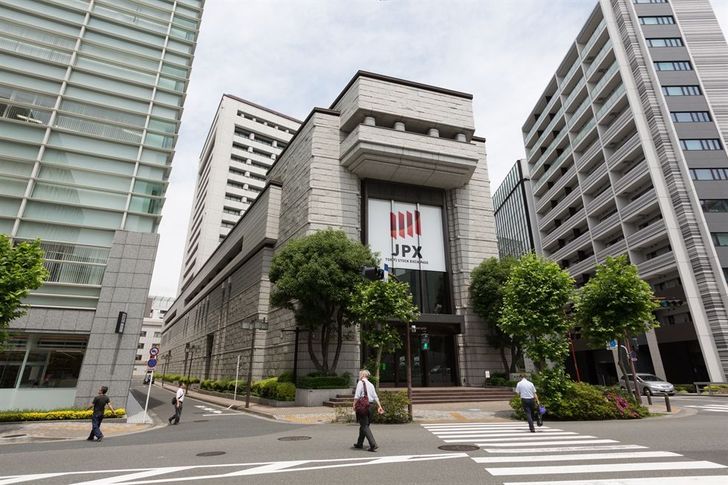
Friday's session in Asia was worse. Tokyo's Nikkei closed down more than 3,000 points at 56,436.65, its fifth-largest point drop ever and its lowest closing price since early April. In Seoul, the Kospi fell to its lowest close since January, with chip giants SK Hynix down 7 percent and Samsung Electronics down 6 percent. Taiwan's Taiex plunged 6.2 percent, taking its weekly loss to 17.5 percent — its worst week since 1990 — as Taiwan Semiconductor Manufacturing Co. dropped nearly 5 percent. Hong Kong's Hang Seng Index fell 1.9 percent, while mainland China's CSI 300 slipped 0.76 percent. (Nikkei Asia)
The paradox at the centre of the sell-off
What makes this week's slide remarkable is what failed to stop it. Anthropic, the maker of the Claude chatbot, made its market debut on Thursday after raising $81.3 billion in the largest initial public offering ever recorded, leapfrogging the $75 billion SpaceX raised in June. Its shares opened at $111.50, 34 percent above the $83 IPO price, and closed at $97.17, up 17 percent on the day — a debut that valued a company founded less than six years ago at roughly $1.3 trillion. (Anthropic's record debut)
Yet the broader market fell anyway. Anthropic's own shares slipped about 3 percent in extended trading and around 6 percent in premarket trading on Friday as investors booked profits. As Carlos Casanova, senior Asia economist at Union Bancaire Privee, put it, the sell-off reflected a "collapse in confidence in the AI investment thesis". Anthropic's blockbuster listing, he said, "did little to ease broader concerns about the outlook for AI-related equities and may, if anything, have crystallised the debate".
That is the paradox investors are wrestling with: if the most anticipated listing in market history cannot lift technology shares, what can? The answer, for now, appears to be nothing — at least not while the fundamental question about AI spending remains unanswered.
Why the AI thesis is cracking
Most coverage of the sell-off stops at the numbers. The deeper story is about money: how much of it is being spent, how much of it is borrowed, and when — if ever — it comes back.
Global AI-related investment is projected to reach $2.7 trillion in 2026 and $3.6 trillion in 2027, according to technology research firm Gartner. Much of that spending is going into data centres, chips and power infrastructure, and a growing share of it is financed with debt. Investors are now asking a blunt question that was easy to defer while share prices rose: what are the returns?
Rajat Agarwal, an Asia equity strategist at Societe Generale, said the sell-off reflected concerns that AI-led growth is slowing and that the "peak growth phase" may have passed. The technology fund tracking the S&P 500's tech sector entered bear-market territory on Thursday, closing more than 20 percent below its October peak — a technical signal that the sector's downturn is no longer a dip.
The pressure has been building for weeks. Nvidia, the chipmaker at the heart of the AI boom, has now fallen for six consecutive sessions. California has opened an investigation into whether China improperly obtained Nvidia's advanced chips, and the company's chief executive has agreed to testify before Congress about the affair. (Nvidia spy scandal) Shares in AMD fell sharply after a report alleged links between the chipmaker and a blacklisted Chinese company, and Nikkei Asia reported that TSMC has suspended shipments to several chip developers while it reviews compliance with stricter export rules — a move that could disrupt Asia's semiconductor industry and global supply chains.
Meanwhile, SoftBank Group, a major investor in OpenAI, plunged more than 14 percent in Tokyo on Friday, the biggest percentage decline among the Nikkei's 225 constituents, as the sell-off hit the AI proxies hardest. Memory chipmaker Kioxia dropped 12.6 percent and Advantest, which makes testing equipment for semiconductors, fell 12.3 percent.
A hawkish stance from the US Federal Reserve added to the pressure, and investors even sold gold holdings to cover losses elsewhere — a classic sign of forced selling rather than orderly profit-taking. US government bonds strengthened as money moved into safe-haven assets.
What comes next
For the week so far, the Dow is down 6.2 percent, on track for its worst weekly performance since April 2025, while the S&P 500 and Nasdaq are each down around 5 percent. US stock futures pointed to further weakness on Friday, with Nasdaq-100 contracts down around 1 percent and S&P 500 futures off 0.5 percent, while European technology stocks fell more than 3 percent. (Morningstar)
Whether this becomes a full-blown bear market or a sharp correction will depend on three things in the coming days. First, the Federal Reserve: any signal that interest rates will stay higher for longer would keep pressure on growth stocks. Second, corporate earnings and capital-spending plans from the big AI spenders — investors want evidence that data-centre investment is generating revenue, not just headlines. And third, the export-control picture: if TSMC's shipment suspensions widen, or if the Nvidia investigation escalates, Asia's chip-heavy markets could face a second wave of selling.
For ordinary investors, the lesson of the week is a familiar one. Markets that rise on a single story can fall on the same story when the numbers stop adding up. Anthropic's debut proved that appetite for AI shares is still enormous. The five days that followed proved that appetite alone is not enough.
Frequently Asked Questions
Why are global stocks falling?
Investors are questioning whether the trillions of dollars being spent on artificial intelligence — much of it financed with debt — will generate sufficient returns. The doubts have been amplified by a hawkish Federal Reserve, export-control disputes involving Nvidia and TSMC, and a record IPO from Anthropic that failed to lift the wider market.
How far have markets fallen this week?
The Dow Jones Industrial Average is down 6.2 percent for the week, its worst weekly performance since April 2025, while the S&P 500 and Nasdaq are each down around 5 percent. In Asia on Friday, Japan's Nikkei fell 5.06 percent, South Korea's Kospi dropped 5.21 percent and Taiwan's Taiex plunged 6.2 percent.
What happened with Anthropic's IPO?
Anthropic raised $81.3 billion in the largest IPO in history. Its shares opened at $111.50, 34 percent above the $83 IPO price, and closed at $97.17, up 17 percent. Despite the strong debut, the company's shares slipped in after-hours and premarket trading, and the wider market fell on the same day.
Is this a market crash or a correction?
The Dow entered a technical correction — a fall of 10 percent from its peak — during Thursday's session, and the S&P 500's technology sector entered bear-market territory, down more than 20 percent from its October peak. Whether the broader market follows depends on the Federal Reserve, upcoming earnings and the export-control picture.
Which stocks were hit hardest?
In Asia, SoftBank fell more than 14 percent, SK Hynix dropped 7 percent, Samsung Electronics fell 6 percent and TSMC lost nearly 5 percent. In the United States, Nvidia has now fallen for six consecutive sessions, and chipmakers including AMD came under pressure.