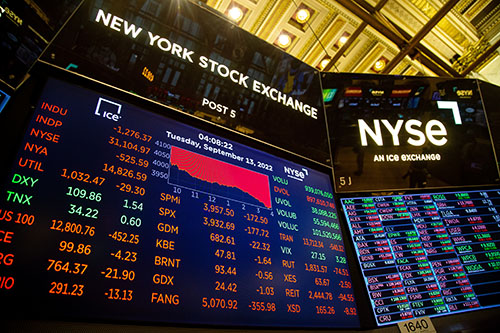
A sharp sell-off in artificial intelligence and chip shares swept through global markets on Friday, pushing the S&P 500 down 3.7 percent to 6,910 and into correction territory, as investors openly questioned whether the trillions of dollars pouring into AI infrastructure will ever pay off. One Turn reported that the Dow Jones also entered correction territory, while Japan's Nikkei fell 5.1 percent, London's FTSE 100 dropped 1.02 percent to 10,346 and Brazil's Bovespa slipped 0.69 percent to 166,376.
The rout was remarkable not only for its scale but for its breadth. Gold, the classic refuge in a market panic, fell 4.6 percent on the same day. Bitcoin slid to about $57,850. Even the usual hiding places offered no shelter — a sign that some of the selling was driven by investors raising cash to meet margin calls rather than by a calm rotation into safer assets.
What triggered the sell-off
The immediate trigger was a growing doubt about AI spending. For two years, the market's central bet has been that heavy investment in data centres, chips and power would translate into a new wave of profits. This week, that confidence cracked. Investors began asking a harder question: when do the returns arrive, and how much of the spending is being funded by debt rather than by cash the companies actually generate?
The timing sharpened the nerves. Anthropic made its stock market debut on Thursday with an initial market capitalisation of about $2 trillion, joining the ranks of the world's most valuable public companies — a valuation that, for sceptics, summed up how far expectations have run ahead of earnings. Anthropic's listing, covered in Anthropic's $2 Trillion Nasdaq Debut, came in a week when the AI trade was already under strain, and the debut did nothing to calm it.
Chipmakers and the companies building the AI supply chain led the declines, and the selling spread quickly from the sector that had driven the rally to the broader market. The pattern is familiar from past technology booms: the stocks that rise fastest on a theme are the first to fall when belief in that theme wobbles.
A correction, not a crash — yet
A correction is a fall of 10 percent or more from a recent peak, and it is a normal, if unnerving, feature of bull markets. The S&P 500 has now crossed that line, which matters for two reasons. First, it changes the psychology: fund managers who were buying every dip begin to ask whether the dip is a buying opportunity or the start of something deeper. Second, it forces a reckoning with valuations that, by most historical measures, had become stretched.
What separates a correction from a bear market is what happens next. If corporate earnings hold up and the Federal Reserve has room to cut rates, corrections often prove to be pauses. If earnings disappoint — and the next round of results from the big AI spenders will be watched more closely than any in years — the selling can feed on itself as leveraged positions unwind.
The bond market sent a mixed signal. The yield on the US 10-year Treasury fell 2.77 percent to 4.91 percent, suggesting some investors did seek safety in government debt even as gold fell. Brent crude, meanwhile, rose 0.57 percent to $89.95 a barrel, supported by the continuing confrontation in the Gulf — a reminder that the market is juggling more than one risk at a time, as covered in Wall Street Slides as Oil Swings on Iran War Fears.
The global spread — and one exception
Asia bore the brunt of the overnight session. Japan's 5.1 percent drop in the Nikkei was the sharpest among major markets, reflecting both the global AI sell-off and the yen's strength, which hurts the country's exporters. European markets fell more modestly, with London down just over 1 percent, but the direction was the same almost everywhere.
The notable exception was India, where the Sensex rose 2.3 percent. Indian shares have been buoyed by domestic demand and by investors treating the country as a relative haven from the AI and chip cycle. Whether that divergence lasts depends on whether the sell-off stays confined to technology or broadens into a general loss of confidence in global growth.
What investors are watching next
Three questions will decide whether Friday was a buying opportunity or a warning. The first is earnings: can the biggest AI spenders show that their data-centre investments are generating revenue, not just headlines? The second is discipline: will companies slow their capital spending, or double down and test investors' patience further? And the third is policy: with the US 10-year yield at 4.91 percent, borrowing costs remain high, and any sign that the Federal Reserve is in no hurry to cut will keep pressure on the most richly valued stocks.
The debate over AI exports adds another layer of uncertainty. Washington's decision to approve large-scale AI chip exports to China, covered in Trump Approves 879,000 AI Chips for China Exports, shows how intertwined the AI trade has become with geopolitics — and how quickly a policy shift can redraw the map for chipmakers.
For now, the market's message is blunt: after two years in which AI justified almost any price, investors want proof. Until the biggest spenders can show that the money coming in is keeping pace with the money going out, the shares that led the rally will remain the ones most exposed to the fall.
Frequently Asked Questions
What happened to the stock market on Friday, 21 November 2026?
A sharp sell-off in AI and chip shares drove the S&P 500 down 3.7 percent to 6,910, pushing it into correction territory, with the Dow also entering a correction. Japan's Nikkei fell 5.1 percent, London's FTSE 100 dropped 1.02 percent, gold fell 4.6 percent and Bitcoin slid to about $57,850.
What is a stock market correction?
A correction is a decline of 10 percent or more from a recent peak. It is a normal feature of bull markets and is distinct from a bear market, which is a fall of 20 percent or more. Corrections often prove to be pauses, but they can deepen if earnings disappoint or leveraged positions unwind.
Why did AI stocks fall?
Investors grew doubtful about the returns on the huge sums being spent on AI infrastructure — data centres, chips and power — and questioned how much of that spending is funded by debt rather than cash generation. The sell-off followed Anthropic's roughly $2 trillion stock market debut, which for sceptics underlined how far valuations have run ahead of earnings.
Why did gold fall if it is a safe haven?
Gold fell 4.6 percent on the same day as stocks, which is unusual. Analysts attribute such moves to investors selling liquid assets to raise cash and meet margin calls during sharp sell-offs, rather than to a loss of faith in gold itself. US Treasury bonds did attract some safe-haven demand, with the 10-year yield falling to 4.91 percent.
Which markets escaped the sell-off?
India was the notable exception: the Sensex rose 2.3 percent, supported by domestic demand and by investors treating India as relatively insulated from the AI and chip cycle. Most other major markets, including the US, Japan, Britain and Brazil, fell.