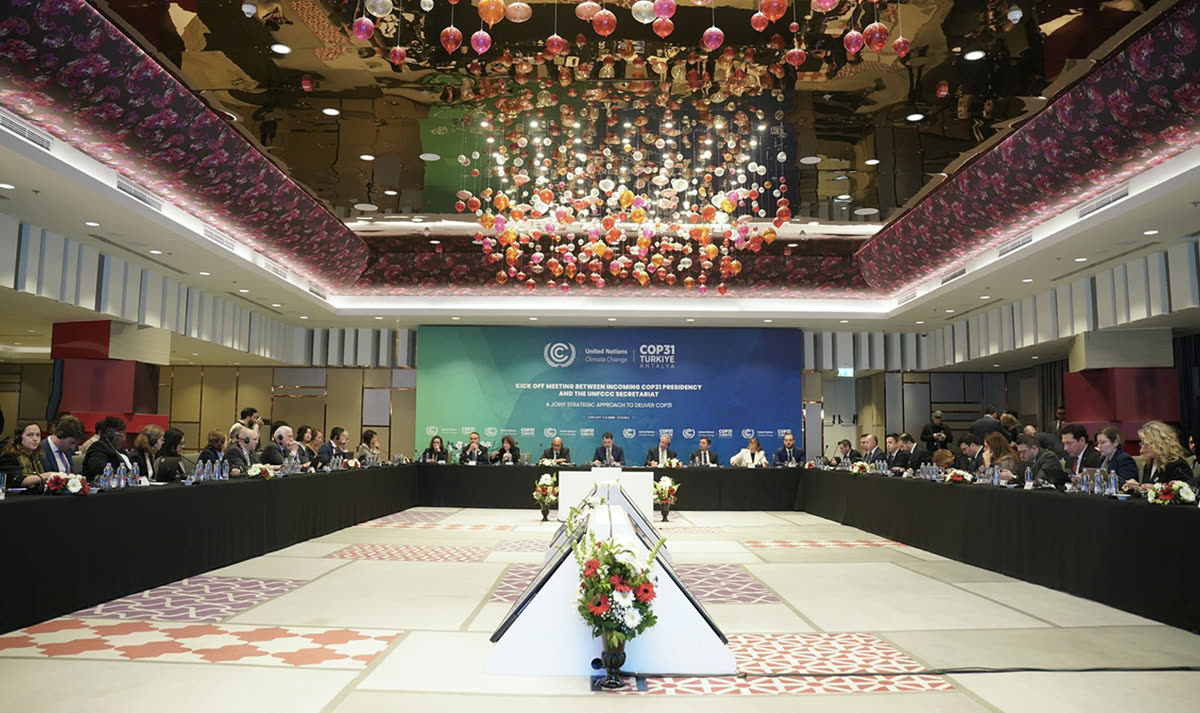
The COP31 climate summit has run into overtime. Nearly 200 countries failed to agree on a final deal by the scheduled Friday close in Antalya, Türkiye, after a draft text dropped every mention of fossil fuels — the very fuels driving global warming — and stripped out a $120 billion target for helping poorer nations adapt to a hotter planet. (Al Jazeera)
Negotiators worked through the night and into Saturday as co-hosts Australia and Türkiye scrambled to produce a third draft. Delegates were due to catch flights home, and as of Saturday lunchtime in Antalya the promised new text had still not appeared, according to The Irish Times. "We are close to the finish line, but we are not there yet," COP31 President Murat Kurum, Türkiye's environment minister, told delegates late on Friday after a closing session approved some technical matters — but not the main political agreement.
How fossil fuels disappeared from the draft
The fight has been building all week. An opening draft from Australia, which co-hosts the summit and chairs the negotiations, called on Monday for a faster phase-out of fossil fuels. A slimmer second version released on Thursday removed every mention of coal, oil and gas after Saudi Arabia and other major oil and gas producers objected. The same revision dropped a proposed $120 billion annual target for adaptation finance, angering developing nations, and softened language on bringing warming back below 1.5°C this century to mere "deep concern" about missing the Paris goal.
The European Union said the draft "risks turning this climate COP into a fossil summit" and is reportedly ready to walk away rather than accept weak wording — a hardening of the bloc's position since the EU's earlier COP31 mitigation package set out its negotiating red lines. Juan Carlos Navarro, Panama's environment minister, said it was unacceptable for a global climate conference to produce a final agreement that makes no mention of fossil fuels at all. Rough drafts circulating early on Saturday would leave out fossil fuel wording but also delete language backing carbon capture and storage — the technology oil producers have promoted and which critics describe as unproven.
The summit's closing plenary was suspended at 10:29 pm local time on Friday, with talks expected to resume on Saturday. A third version of the proposed cover decision was promised for Saturday, alongside revised negotiating texts reflecting feedback from the parties.
The electrification pivot — and what it leaves out
Faced with pressure over fossil fuels, the COP31 hosts have pitched "electrification" as a way to cut emissions and bolster energy security. The latest draft proposes raising the share of the world's final energy consumption that comes from electricity to 35 percent by 2035 — without saying that power must be clean. Critics note the target says nothing about how the electricity is generated, leaving the door open for fossil-fuelled power to count toward the goal.
The dispute is not only about energy. Adaptation finance, just transition measures for workers in fossil-fuel industries, and the treatment of climate science in the text all remain unresolved. The COP31 president listed just transition, finance, mitigation and adaptation among the significant outstanding issues on Friday evening.
A summit held under unusual pressure
Expectations of a major breakthrough have been low at COP31 since the summit opened in Antalya. Countries are grappling with an oil price shock and geopolitical tensions stemming from the war in Iran, and the summit follows a string of climate-linked disasters from Europe to Nepal and Indonesia, unfolding as a super El Niño pattern amplifies the risk of further extreme weather. The United States, the largest historical emitter, is absent for a second year after President Donald Trump ended US climate cooperation.
The evening plenary was also disrupted by a protest. Climate activist Amalen, associated with the Artivist Network, confronted President Kurum during his opening address, shouting "You are killing the future. Why don't you just kill me?" while challenging the removal of references to fossil fuels from the negotiating text.
What happens if there is no deal
If Antalya ends without agreement, the open issues would be pushed to COP32, which Ethiopia will host next year — Addis Ababa was confirmed as the host city during the summit. That would leave the 2023 COP28 pledge to transition away from fossil fuels without a follow-up for another year, and developing countries without the adaptation finance target they had sought.
For now, the question is whether the third draft, when it finally appears, restores any fossil fuel language or the adaptation finance target — or whether the EU and its allies decide that a weak deal is worse than none at all.
Frequently Asked Questions
Why did COP31 run past its deadline?
The summit was due to end on Friday, November 20, but nearly 200 countries could not agree on the final political deal. The main sticking points are whether the text mentions fossil fuels at all, adaptation finance for developing countries, and just transition measures. A late closing session approved some technical items but not the main agreement, and the plenary was suspended at 10:29 pm local time.
Why were fossil fuels removed from the draft?
An opening draft on Monday called for a faster phase-out of fossil fuels. A slimmer version on Thursday removed every mention of coal, oil and gas after Saudi Arabia and other major oil and gas producers objected. The revision also dropped a $120 billion annual adaptation finance target and softened language on the 1.5°C Paris goal.
What is the electrification proposal in the draft?
Instead of fossil fuel language, the draft proposes raising electricity's share of final energy use to 35 percent by 2035. Critics say the target does not require the electricity to be clean, so fossil-fuelled power could count toward it, making it a weak substitute for a phase-out commitment.
What happens if COP31 ends without a deal?
The unresolved issues would roll over to COP32 in Addis Ababa, Ethiopia, in 2027. That would delay any follow-up to the 2023 COP28 pledge to transition away from fossil fuels by another year and leave developing nations without the adaptation finance target they sought.
Why is the United States absent from COP31?
The United States is not participating for a second year after President Donald Trump ended US climate cooperation. Its absence removes the world's largest historical emitter from the negotiations and weakens pressure on fossil fuel producers to accept stronger language.