The air above New Zealand is now thicker with greenhouse gases than at any point in the country's recorded history. New figures show carbon dioxide concentrations hit a record 423.1 parts per million in 2025 — 30 percent higher than when monitoring began in 1972 — while scientists warn the warming that flows from it is pushing the nation's iconic glaciers toward a catastrophic melt.
Table of Contents
- A record written in the air
- How New Zealand's climate is already changing
- The glaciers are the visible casualty
- Why this matters beyond New Zealand
A record written in the air
The data, released by Stats NZ and measured at the Baring Head monitoring station outside Wellington, feeds into the international network of stations used to track global warming. It confirms a relentless trend: every long-lived greenhouse gas that causes global warming has risen to new record levels in New Zealand's atmosphere, according to RNZ and Farmers Weekly.
Carbon dioxide is the headline number, but the chemistry of the trend is unforgiving. CO2 persists in the atmosphere for thousands of years, which means concentrations — and the warming they drive — keep rising until the world stops producing emissions altogether. Global concentrations told the same story last year, hitting a record 426 parts per million, more than 50 percent above pre-industrial levels of 280 ppm.
New Zealand is not a large emitter in absolute terms, but it sits firmly inside the global pattern. Its record is another confirmation that the atmosphere keeps filling with heat-trapping gases faster than any policy yet announced has been able to slow.
How New Zealand's climate is already changing
The warming signal is no longer theoretical in New Zealand. Annual average temperatures have climbed 1.36°C since reliable records began in 1908, with winter averages rising particularly quickly, Stats NZ reported.
Rainfall is shifting in subtler but consequential ways. Parts of the North Island now receive more annual rainfall, while places like Tauranga and Whangārei have grown significantly drier. The South Island is generally getting wetter. Crucially, more of the country's rain is arriving in bursts: at 11 of the 30 weather stations analyzed, the share of annual rainfall falling on "very wet days" increased between 1960 and 2025, at a rate of 0.6 to 1.8 percent per decade — the fingerprint of a warmer atmosphere holding more moisture and releasing it in heavier downpours.
The glaciers are the visible casualty
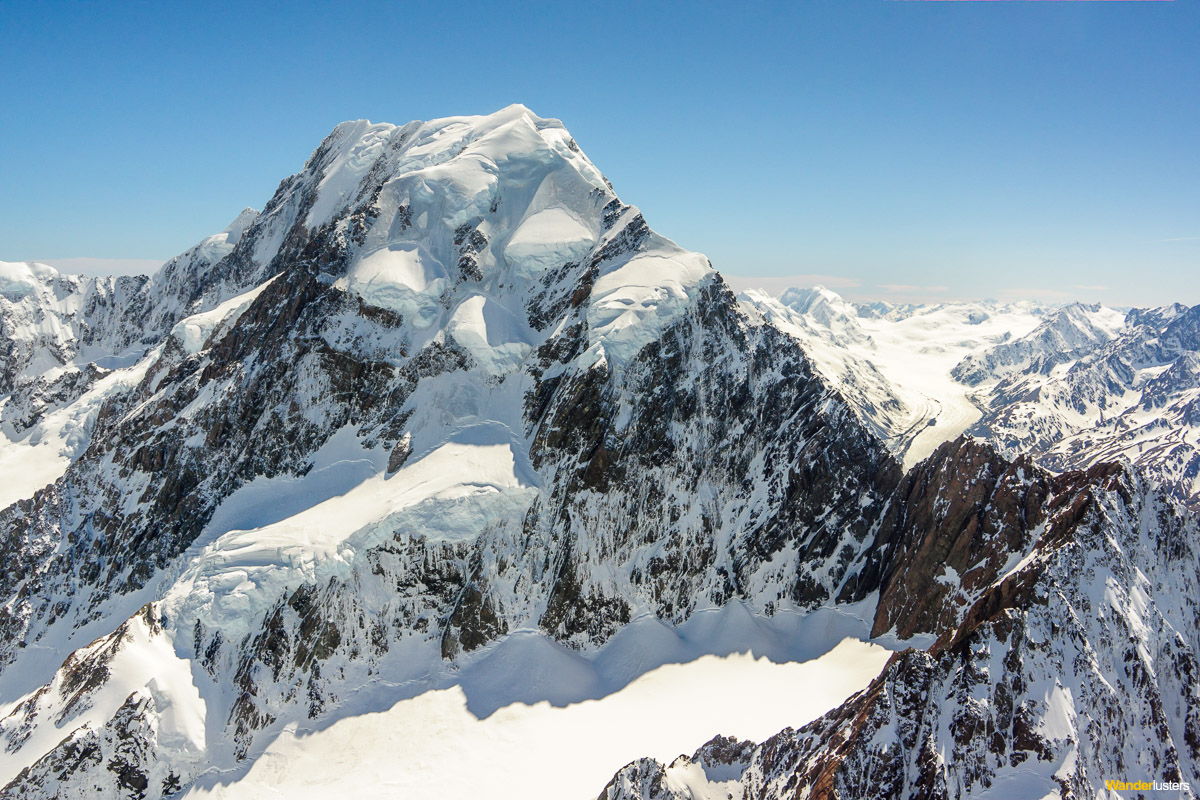
Nowhere is the trend more visible than on the ice itself. A study published in Nature Climate Change modelled how many of the world's glaciers will melt completely at different warming levels — and the outlook for New Zealand is stark, RNZ reported. If the world warms by 2.7°C — a plausible trajectory under current policies, according to Climate Action Tracker — 87 percent of New Zealand's 3,300 glaciers will disappear by the end of this century.
The losses would peak between 2035 and 2052, at more than 50 glaciers a year. In an even more severe scenario of 4°C warming, just 100 of the country's glaciers would remain. Only if the world holds warming to the Paris Agreement target of 1.5°C does the picture improve dramatically — roughly doubling the number of glaciers that survive worldwide.
Researchers who have watched the ice up close describe a pace of change that has shocked even them. Antarctic Research Centre associate professor Brian Anderson, who has monitored New Zealand's best-known glaciers for 25 years, said Brewster Glacier near Haast Pass is no longer just retreating — in the last decade it has been breaking into pieces, falling apart in ways unlike anything seen before.
The consequences go well beyond postcards. Glacier loss contributes to sea-level rise, worsens water shortages for agriculture and hydroelectric generation, and hits the tourism economies built around Fox and Franz Josef glaciers. As The Guardian noted in its coverage, the record greenhouse gas readings are directly threatening what it called a catastrophic glacier melt.
Why this matters beyond New Zealand
New Zealand's glaciers are a sentinel, not an exception. Globally, as many as 4,000 glaciers a year could be lost by the mid-2050s under current trajectories, and eight of the ten largest annual glacier mass-loss years on record have occurred since 2016. What is happening in the Southern Alps is the same physics playing out everywhere ice meets a warming atmosphere.
The record readings also sharpen a familiar scientific warning: the only lever that changes the outcome is emissions. CO2's millennia-long atmospheric lifetime means today's records are locked in — but the difference between the 1.5°C and 2.7°C scenarios for New Zealand's glaciers is hundreds of surviving icefields versus thousands lost. The choice, as ever, is in the emissions.
Related coverage: Pacific nations push climate action ahead of COP31 and ExxonMobil and Suncor face climate lawsuit at the Supreme Court.
Frequently Asked Questions
What is New Zealand's new CO2 record?
Stats NZ data shows carbon dioxide in New Zealand's atmosphere reached 423.1 parts per million in 2025 — the highest ever recorded and 30 percent above levels measured when monitoring began in 1972.
How many of New Zealand's glaciers could disappear?
A Nature Climate Change study projects that at 2.7°C of global warming, 87 percent of New Zealand's 3,300 glaciers will vanish by 2100. Limiting warming to 1.5°C would roughly double the number of glaciers surviving worldwide.
Why are the glaciers melting so fast now?
Rising greenhouse gas concentrations have warmed the atmosphere, and New Zealand's average temperatures are up 1.36°C since 1908. Warmer air melts ice faster, and researchers report glaciers like Brewster are now breaking apart, not just retreating.