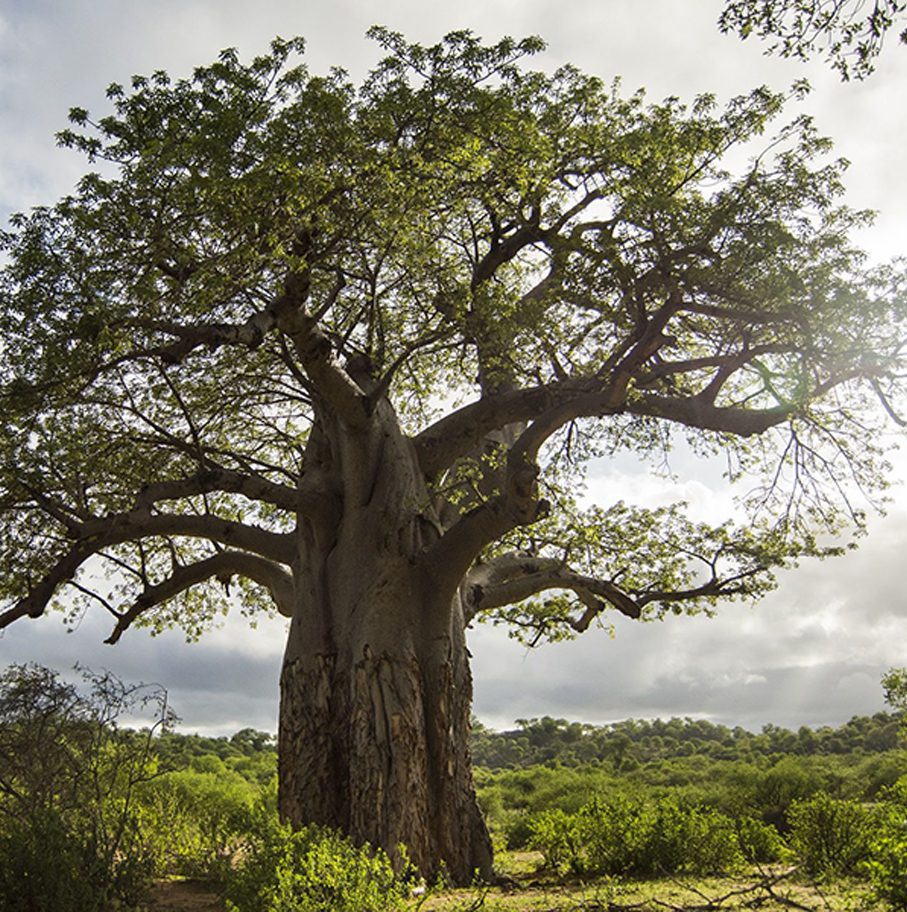
Five baobab trees believed to be between 200 and 300 years old, illegally dug up in South Africa and left lying in a Durban warehouse for four months, have arrived at a nature reserve in the country's north-east, where conservationists are racing to get them back into the ground before the trees exhaust the water stored inside their own trunks. (Daily Maverick)
The trees, weighing between 19 and 29 tonnes each, with trunks up to 4.5 metres across and heights of up to 12.5 metres, reached the Timbavati Private Nature Reserve on Wednesday, where they will be replanted and held upright by cables while they recover. The operation, dubbed "Operation Baobab" by the team behind it, ends a four-month ordeal that began when the trees were intercepted by South African authorities in July, just before they were due to be shipped thousands of miles to Georgia.
Table of Contents
- Dug up in Limpopo, seized in Durban
- Four months without soil
- How a baobab survives on its own stored water
- The Kenya warning: eight trees that did not survive
- The court case and the question of who pays
- Why this rescue matters beyond five trees
Dug up in Limpopo, seized in Durban
South Africa's Department of Forestry, Fisheries and the Environment says the trees were removed from the Lephalale area of the Waterberg district in Limpopo province, then transported to a warehouse in Mobeni, south of Durban, owned by Africa Global Logistics. On 17 July, officials intercepted the shipment, saying the exporter — the Pretoria-based landscaping company Divine Landscapes — had no valid licence to remove, transport or export the trees. (Geo.tv)
Baobabs are protected under South African law: the National Forests Act lists them as a specially protected tree species, and anyone who cuts, removes, transports or exports one needs a permit first. The department confirmed the trees had been destined for a buyer in Georgia, though it did not name the recipient.
Divine Landscapes applied for a licence on 27 July. The department refused it on 31 July, saying it does not issue licences after the fact, and dismissed the company's appeal on 27 October. The company has denied wrongdoing, telling the South African publication Daily Maverick that the trees were obtained from private gardens with the full consent of their owners. A criminal case has been opened against the owner of the landscaping company, who is due back before the Durban Magistrate's Court in January 2027. A conviction under the National Forests Act could bring a fine, imprisonment for up to three years, or both.
Four months without soil
For more than three months the five giants lay on their sides in an open parking lot at the Durban shipping warehouse, unwatered and unplanted, while the legal dispute dragged on. The rescue began only after ecologist Dr Sarah Venter, founder of the Baobab Foundation, read about their plight and stepped in to organise the move.
The first trees were loaded onto abnormal-load truck rigs late on 11 November for the 900-kilometre journey to Timbavati, a reserve of about 55,000 hectares spanning Limpopo and Mpumalanga. Timbavati agreed to cover the costs of loading, transport and replanting — a bill the state had not funded. "I am just really relieved that Timbavati have stepped up by offering to pay for the costs of loading, transport and replanting," Venter said.
How a baobab survives on its own stored water
The reason the trees are still alive at all is the very feature that makes them targets: a baobab's massive trunk is a water reservoir. The spongy wood can store tens of thousands of litres, which the tree draws on through dry seasons. That storage is what let five uprooted trees survive months lying in a warehouse car park — and it is also what makes the replanting urgent. The trees have been burning through their reserves, and despite the ordeal they have just started sprouting new leaves and fruit, a sign they are spending stored water to grow rather than to stay alive.
Baobabs are dormant during the southern hemisphere winter, from May to October, which bought the rescue team time. But that window has closed: with the growing season under way, Venter says the critical thing is to get the trees back into soil as soon as possible so they can take up water again and regenerate. "They are using up stored stem water to survive," she said. She believes the trees have a good chance of surviving if they are replanted quickly.
The Kenya warning: eight trees that did not survive
The case echoes an episode in Kenya four years ago, when eight baobabs were uprooted from the East African coast to be exported to the Shekvetili Dendrological Park in Georgia, a Black Sea park owned by Bidzina Ivanishvili, the influential Georgian billionaire and former prime minister. Environmentalists condemned that export as biopiracy, and it was initially blocked after a public outcry — but later allowed to go ahead.
What most coverage of the South African case omits is how the Kenyan story ended: the eight trees died soon after their arrival in Georgia, having remained in Kenya for an extended period during a similar legal row over their export. That outcome is the shadow hanging over the Timbavati rescue — and the reason Venter and her team moved as fast as the courts allowed. The same Georgian destination, the same months-long delay, and the same species were involved in both cases, which is why South African conservationists say they did not want to see a repeat of what happened in Kenya.
The court case and the question of who pays
The rescue leaves two unresolved questions. The first is legal: the criminal proceedings against Divine Landscapes continue separately from the replanting, with the case set to be heard again on 15 January 2027. The second is financial and structural: the rescue was paid for by a private reserve, not by the state or by the exporter, and the months the trees spent in Durban were the product of an appeals process that ran from July to late October while the trees lay unplanted.
Venter has also pointed to a wider pattern that the baobab headlines obscure. While public attention has focused on the illegal export of baobabs and smaller succulent plants from the Western and Northern Cape, other hardwood species such as kiaat, taken from Angola, Zimbabwe and Mozambique, face similar pressures with far less scrutiny.
Why this rescue matters beyond five trees
The five baobabs are, in the end, only five trees. But their journey — dug up in Limpopo, seized in Durban, stranded for a season, then hauled 900 kilometres to a reserve that volunteered to pay — has become a test case for how South Africa treats its protected species when the buyer is overseas and wealthy. "If they had died in Durban, or been exported to Georgia, I think this would have sent the wrong message to the world about South African conservation," Venter said. "This rescue operation is much bigger than just these five individual trees."
For now, the trees stand — or rather, are held upright by cables — in Timbavati, sprouting new leaves. Whether they recover will only become clear over the coming growing season, as their roots take hold and their trunks refill. Conservationists in South Africa will be watching, as will campaigners in Kenya, where the last baobab export ended very differently.
Frequently Asked Questions
Why were the baobabs being exported to Georgia?
The trees were destined for a buyer in Georgia, according to South Africa's Department of Forestry, Fisheries and the Environment, which did not name the recipient. A similar export from Kenya in 2023 sent eight baobabs to the Shekvetili Dendrological Park on Georgia's Black Sea coast, owned by billionaire former prime minister Bidzina Ivanishvili.
How did the trees survive four months without soil?
Baobabs store large amounts of water in their spongy trunks, which they draw on during dry periods. That stored water kept the five trees alive while they lay in a Durban warehouse, and they even began sprouting new leaves and fruit — but the reserves are finite, which is why replanting them quickly is critical.
Are baobabs endangered in South Africa?
No, baobabs are not listed as endangered in South Africa. They are, however, a specially protected species under the National Forests Act, which means a permit is required to cut, remove, transport or export one.
What happens to the company that exported them?
Divine Landscapes, the Pretoria-based landscaping company behind the export, faces criminal charges under forestry law. Its case is due back before the Durban Magistrate's Court in January 2027, and a conviction could result in a fine, imprisonment for up to three years, or both.