Saudi Arabia has restored oil flows through its East-West Pipeline to 5.8 million barrels per day (bpd), Energy Minister Prince Abdulaziz bin Salman announced on Tuesday, underscoring how quickly the kingdom has rebuilt an alternative export route while shipments through the Strait of Hormuz remain disrupted. The milestone is a significant relief for crude markets: oil prices fell for a third consecutive session on the news (Reuters).
A pipeline rebuilt in weeks
Speaking at the Made in GCC 2026 Forum in Manama, Bahrain, the minister said the pipeline was pumping at the 5.8 million bpd level as of Tuesday morning. The figure represents more than 80% of the system's expanded 7 million bpd capacity and caps a remarkably fast recovery: the pipeline was forced to shut on September 11 after drone attacks that Riyadh blamed on militias operating from the direction of Iraq, halting crude loadings at Yanbu.
Restarted at low rates on September 22, the line was ramped up steadily and was already nearing 6 million bpd by early October, with roughly 4.5 million bpd available for export after accounting for western-coast refinery supplies, according to industry sources cited by Reuters.
Why it matters for global supply
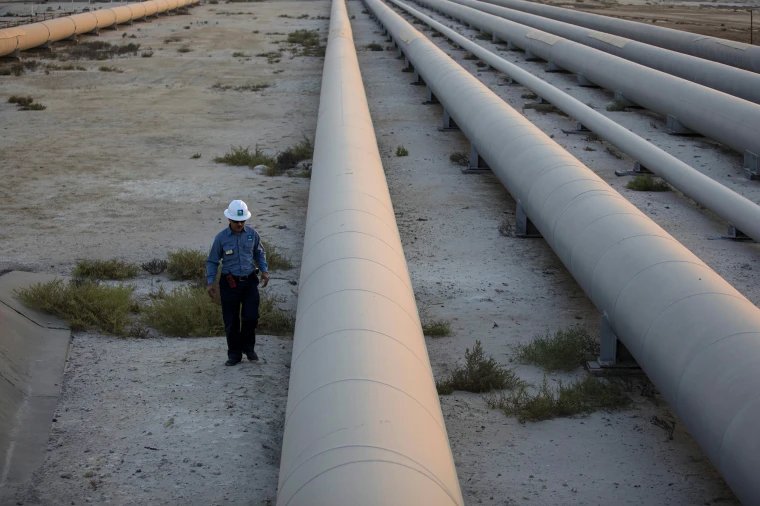
The East-West Pipeline — also known as Petroline — runs 1,200 kilometres from the Abqaiq production area in eastern Saudi Arabia to the Red Sea export hub of Yanbu. According to the U.S. Energy Information Administration, Saudi Arabia and the UAE are the only Gulf countries with operating pipelines that can bypass the Strait of Hormuz.
That bypass capacity is the market's critical insurance policy this year. Since fighting disrupted flows through Hormuz, Riyadh has been using the pipeline to reroute around 4 million barrels per day — roughly 4% of global supply — to Yanbu, keeping Gulf crude moving west without passing through the world's most important oil chokepoint.
Brent slides for a third day
The recovery in Middle East crude flows is reshaping the supply outlook. Brent crude fell for a third consecutive session on Tuesday, approaching $98 a barrel, as traders weighed the Saudi announcement alongside other bearish signals: Middle East exports exceeded pre-war levels on four days in the final week of September, the G7 agreed on Friday to release 100 million barrels of diesel and crude from emergency reserves, OPEC+ kept November production targets unchanged, and Saudi Arabia sharply cut its official selling price for Asian buyers (Trading Economics).
Yet risks remain. Reuters reported Monday that shipments through the pipeline have not been interrupted despite fresh reports of disruption and continuing hostilities between Saudi Arabia and Yemen's Houthis — a reminder that the infrastructure Riyadh is racing to restore sits within drone range of its adversaries.
Key numbers
- 5.8 million bpd: current flow through the East-West Pipeline (as of October 6)
- 7 million bpd: expanded capacity, reached in 2019
- 4 million bpd: roughly what Riyadh has been rerouting around Hormuz
- ~$98: Brent crude, down for a third straight session
- 100 million barrels: diesel and crude the G7 agreed to release from reserves
Frequently Asked Questions
What is the East-West Pipeline?
A 1,200-kilometre Saudi pipeline, also called Petroline, operated by Saudi Aramco. It carries crude from the Abqaiq production area in eastern Saudi Arabia to the Yanbu export terminal on the Red Sea coast, allowing exports without transiting the Strait of Hormuz.
Why is 5.8 million barrels per day significant?
It restores more than 80% of the pipeline's 7 million bpd expanded capacity, less than a month after drone attacks forced a full shutdown. That level of overland flow gives Riyadh a genuine alternative to Hormuz, through which roughly 4 million bpd — about 4% of global supply — is currently being rerouted.
Why are oil prices falling?
Rising Middle East crude flows are easing supply fears. In addition to the Saudi pipeline recovery, Middle East exports exceeded pre-war levels on four days in late September, the G7 pledged a 100-million-barrel reserve release, and OPEC+ kept targets unchanged — all combining to loosen a tight market.
Is the pipeline safe from further attacks?
It has been attacked before — the September shutdown followed drone strikes Saudi Arabia attributed to Iraqi militias — and Houthi hostilities continue in the region. The system's restored capacity is strategic insurance, but its physical security remains a live concern.
Related
- Chokepoint risks: Tankers face projectile strikes near Hormuz
- Red Sea escalation: Saudi strikes on Sanaa amid Houthi escalation