Kenya has recorded its first confirmed Ebola case, a Kenyan citizen who had been living in the Democratic Republic of Congo and arrived in Nairobi on Saturday. The patient has since died, Health Minister Aden Duale announced at a press conference on Tuesday, adding that 28 contacts — including family members and health workers — have been identified so far and are being monitored. The case puts Kenya's long-standing outbreak preparedness plans to their first real test.
The announcement came just months after the World Health Organization declared the regional emergency around Congo's outbreak, which has become the country's largest-ever epidemic of the virus, according to Reuters.
Table of contents
- What Kenya's health ministry confirmed
- The outbreak the case came from
- Why Kenya was considered at risk
- What happens next
- Key takeaways
- Sources
- Read more on Chronicle
What Kenya's health ministry confirmed
Health Minister Aden Duale told journalists the patient was a Kenyan national who had been living in Congo and landed in Nairobi on Saturday. The patient died after falling ill, and laboratory testing confirmed the Ebola infection.
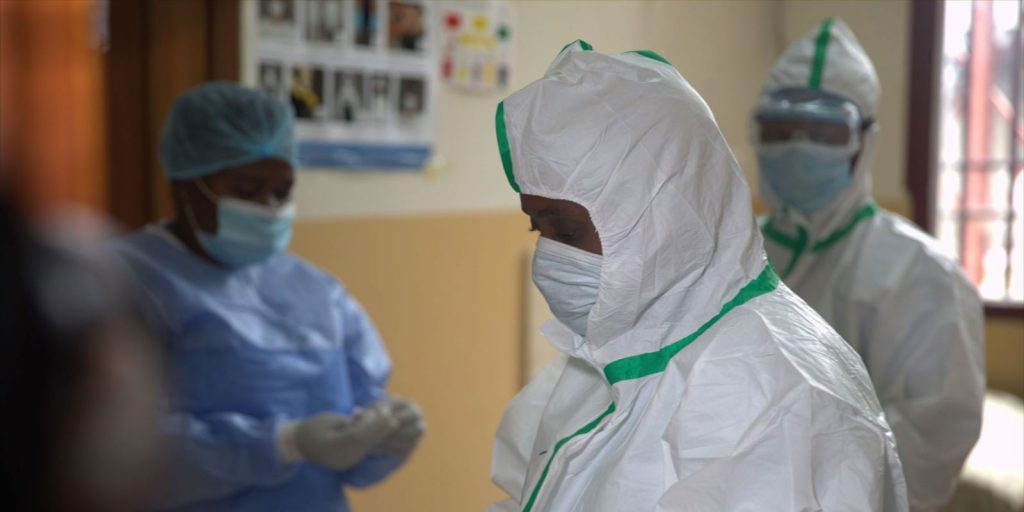
Twenty-eight contacts have been traced so far, Duale said, spanning family members and health workers who treated the patient. Contact tracing teams are following them up over the incubation period, and health authorities have activated emergency response structures at national and county level.
Kenya had spent months preparing for exactly this scenario. An update from the Ministry of Health earlier this year showed the country had tested 129 suspected Ebola cases, all returning negative results, while more than 74,000 travellers were screened at airports and other points of entry. Public health emergency operations centres were activated, and airlines were directed to submit exit surveillance reports for passengers arriving from affected areas.
The outbreak the case came from
The infection almost certainly originates in Congo's sprawling epidemic, which was formally declared in mid-May but may have begun months earlier. Congolese authorities have recorded more than 8,000 cases and over 4,000 deaths, making it the country's deadliest Ebola outbreak on record.
The epidemic is caused by Bundibugyo virus, a rare Ebola species for which there is no licensed vaccine and no approved specific treatment — a critical handicap for containment, as we detailed in our earlier coverage of Congo's outbreak passing 4,000 deaths.
The virus had already crossed one border before reaching Kenya: Uganda reported 20 cases and two deaths before the WHO declared it free of the disease in August. Now the pathogen has arrived in one of East Africa's busiest travel and trade hubs, raising the stakes considerably.
Why Kenya was considered at risk
Kenya's exposure was long predicted by epidemiologists. Nairobi's Jomo Kenyatta International Airport is a major regional hub with dense connections across Central and East Africa, and overland movement between Kenya and its neighbours is constant.
Ebola spreads through direct contact with the bodily fluids of infected people, living or dead, and causes fever, vomiting and diarrhoea, with severe cases leading to internal and external bleeding. That transmission profile makes family caregivers and front-line health workers — both among the 28 contacts being followed — the most vulnerable after an imported case.
Authorities had already advised Kenyans against non-essential travel to affected areas and trained 880 national and county healthcare workers on Ebola preparedness. The challenge now is execution: ensuring every fever case that fits the profile is isolated and tested quickly, and that border screening catches onward chains before they start.
What happens next
The coming weeks are the critical window. If all 28 identified contacts complete the monitoring period without developing symptoms, Kenya may avoid secondary transmission entirely. The danger lies in unidentified contacts — fellow travellers, informal caregivers, anyone who handled the patient's belongings — who are not yet on the authorities' list.
Regional coordination will matter too. Congo's epidemic is still active, and as long as it burns, neighbouring countries remain exposed. Nairobi's response will be watched closely by the WHO and by health ministries across the region as a test case for how quickly a major African city can seal off a single imported case.
Key takeaways
- Kenya has confirmed its first Ebola case: a Kenyan citizen who had been living in Congo arrived in Nairobi on Saturday and later died.
- Health Minister Aden Duale said 28 contacts, including family members and health workers, have been identified and are under monitoring.
- The case is almost certainly linked to Congo's largest-ever Ebola outbreak, caused by the rare Bundibugyo virus, with over 8,000 cases and 4,000 deaths.
- Kenya had prepared extensively — screening 74,000+ travellers and testing 129 suspected cases (all negative) — and now faces its first real test.
- The critical risk is unidentified contacts and onward transmission through Nairobi's dense travel networks.
Sources
- Reuters — Kenya confirms first Ebola case imported from Congo, patient has died
- The Eastleigh Voice — Kenya tests 129 suspected Ebola cases as DRC outbreak grows
- The Standard — Ebola virus has no passport, just like its cousin Covid-19
Read more on Chronicle
- Congo's Ebola Outbreak Passes 4,000 Deaths, Becoming the Fastest-Growing on Record
- New York Declares Statewide Disaster Emergency as Measles Cases Rise
- One in Eight Cancers Worldwide Tied to Infections, Lancet Study Finds
Frequently Asked Questions
Who was the first Ebola patient in Kenya?
Kenya's health ministry identified the patient as a Kenyan citizen who had been living in the Democratic Republic of Congo and arrived in Nairobi on Saturday. The patient has since died, Health Minister Aden Duale announced at a press conference on Tuesday.
How many contacts are being monitored?
Twenty-eight contacts have been identified so far, including family members and health workers. They are being followed up by contact tracing teams through the incubation period.
Where did the infection come from?
The case is almost certainly linked to Congo's ongoing Ebola outbreak — the country's largest ever, with more than 8,000 cases and over 4,000 deaths. It is caused by Bundibugyo virus, a rare Ebola species with no licensed vaccine or approved specific treatment.
How does Ebola spread?
Ebola spreads through direct contact with the bodily fluids of infected people, living or dead. It can cause fever, vomiting, diarrhoea and, in severe cases, internal and external bleeding. Family caregivers and health workers are at the highest risk.
Was Kenya prepared for an imported case?
Yes — the Ministry of Health had tested 129 suspected cases (all negative), screened more than 74,000 travellers at airports and points of entry, activated emergency operations centres, and trained 880 healthcare workers. This case is the first real test of those systems.