Georgia's democratic crisis is approaching a point of no return. This week, the country's Constitutional Court held its first hearing on a lawsuit filed by the ruling Georgian Dream party seeking to ban several major opposition parties over alleged "unconstitutional activities" — a move critics describe as an attempt to outlaw dissent itself. Meanwhile in Strasbourg, the European Parliament is debating a resolution on the crackdown, with a vote expected on 8 October that could push Georgia's already-frozen EU membership bid further into the deep freeze.
Table of Contents
- The lawsuit that could erase the opposition
- Brussels responds: the European Parliament resolution
- A candidacy 'only on paper'
- Washington weighs in
- Why this matters
- Frequently Asked Questions
The lawsuit that could erase the opposition
The Constitutional Court's first hearing concerns a lawsuit brought by Georgian Dream asking the court to declare several opposition parties unconstitutional and ban them outright. The target list reads like a roll call of the country's mainstream opposition: the United National Movement, the Coalition for Change, Strong Georgia – Lelo, the Federalists, and Gakharia for Georgia.
If the court rules in the government's favour, Georgia would effectively become a one-party state in all but name — an extraordinary step for a country that has spent three decades presenting itself as the South Caucasus's democratic success story. Georgian Dream MP Archil Gorduladze has dismissed the expected European criticism as an "attack on Georgia's sovereignty," framing the crackdown as a domestic legal matter.
The case does not stand alone. Two men convicted over an attempt to seize the presidential administration on 4 October last year, Murtaz Zodelava and Lasha Beridze, are reportedly nearing plea agreements that could cut their seven-year sentences down to just one year and one month each, with possible release on 4 November. The combination of harsh initial sentences for protesters and now a legal drive to dissolve opposition parties paints a picture of a ruling party systematically dismantling political pluralism.
Brussels responds: the European Parliament resolution
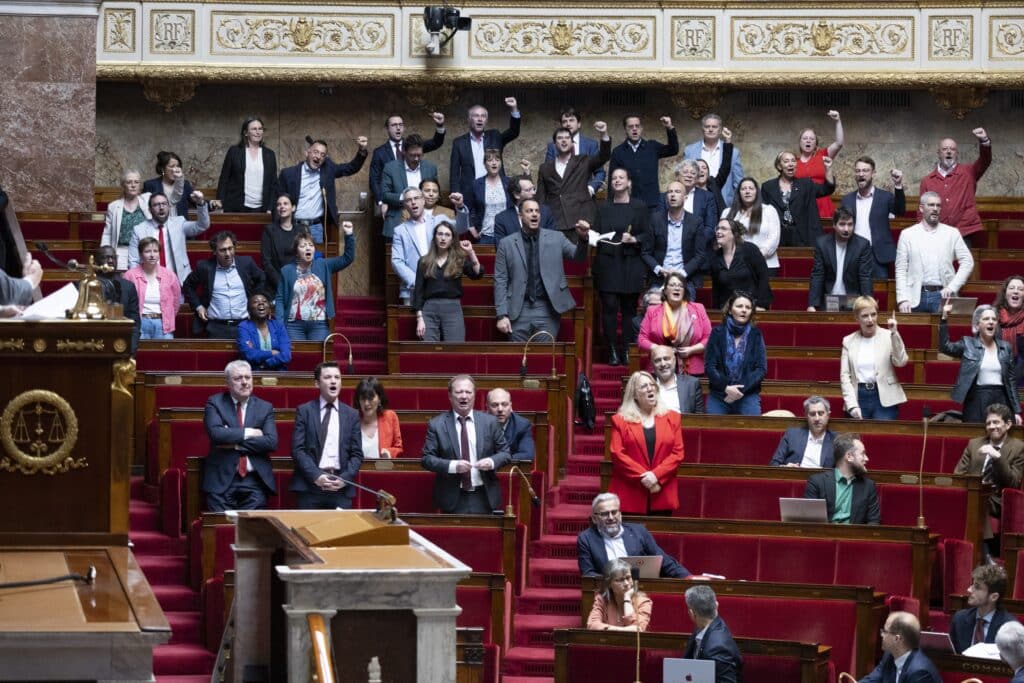
On 7 October, the European Parliament opened debate on the Georgian situation, with a formal resolution scheduled for a vote on 8 October. The resolution is expected to condemn the opposition-ban lawsuit and the broader pattern of democratic backsliding — adding to a long series of EU warnings that Tbilisi has so far ignored.
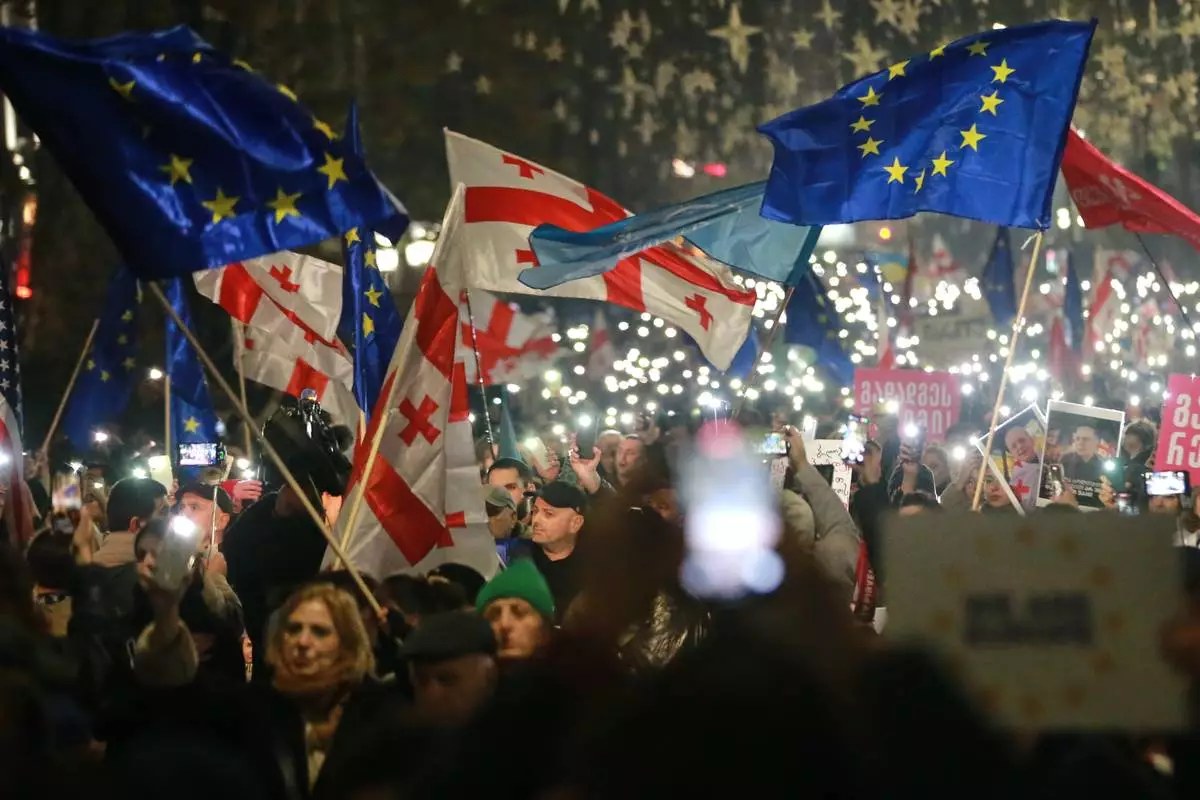
The timing is pointed. Georgia was granted EU candidate status in late 2023, but the accession process has been effectively frozen since the government pushed through a controversial "foreign influence" law in 2024, triggering months of mass protests in Tbilisi. Brussels has repeatedly tied any progress to concrete democratic reforms; Tbilisi has responded by accusing the EU of interference.
A candidacy 'only on paper'
The bluntest verdict came from EU Enlargement Commissioner Marta Kos, who said Georgia is "a candidate country for EU membership only on paper." She confirmed that the country's democratic regression will be reflected in the European Commission's enlargement report due at the end of October — and noted that while the Commission will present indicative enlargement plans for Albania, Moldova, Montenegro and Ukraine as part of its 2026 package, Georgia is not among them.
That exclusion is telling. Once the poster child for EU integration in the Eastern Partnership, Georgia is now being openly ranked alongside — or behind — countries that were considered laggards. For a government whose legitimacy narrative once rested on delivering European integration, the snub is both a diplomatic and a domestic blow.
Washington weighs in
Pressure is also coming from across the Atlantic. US Republican Congressman Joe Wilson has accused Georgian Dream of rigging the country's 2024 parliamentary elections by creating obstacles to voting by the Georgian diaspora abroad, comparing the tactics to those of Aleksandar Vučić's government in Serbia. The 2024 vote — whose disputed results triggered the current political crisis — remains a live wound in Georgian politics.
Why this matters
The stakes extend well beyond Georgia's borders. The country sits at a strategic crossroads between Russia, Türkiye, Armenia and Azerbaijan, hosting key energy and trade corridors linking Central Asia to Europe. A Georgia that slides into authoritarian one-party rule — potentially drifting back into Moscow's orbit — would reshape the security map of the entire South Caucasus.
For the EU, Georgia is a test case for whether its enlargement policy has any teeth. Brussels has watched the backsliding unfold for two years, issuing statements while Tbilisi consolidated power. The Parliament's resolution this week, and the Commission's enlargement report at month's end, will show whether "candidate only on paper" is a diagnosis — or an epitaph.
Read more: on the EU's approach to democratic backsliding among candidates, see EU enlargement and the backsliding safeguard; on the wider security picture, see NATO's theory of victory on the eastern flank.
Sources: JAMnews
Frequently Asked Questions
Which parties is Georgian Dream trying to ban?
The lawsuit targets the United National Movement, the Coalition for Change, Strong Georgia – Lelo, the Federalists, and Gakharia for Georgia — essentially the country's main opposition forces — over alleged "unconstitutional activities."
What is the European Parliament voting on?
On 8 October, the Parliament is expected to adopt a resolution condemning Georgia's democratic backsliding, including the opposition-ban lawsuit. The debate opened on 7 October.
Is Georgia still an EU candidate country?
Formally, yes — but EU Enlargement Commissioner Marta Kos says the candidacy exists "only on paper." Georgia was excluded from the Commission's indicative 2026 enlargement plans for Albania, Moldova, Montenegro and Ukraine.
What happened in Georgia's 2024 elections?
The disputed 2024 parliamentary vote, which the opposition and international observers challenged, triggered a prolonged political crisis. US Congressman Joe Wilson has accused the ruling party of rigging it by obstructing diaspora voting.