NATO is drawing up a strategy for quickly defeating a potential Russian attack on the alliance's eastern flank by fusing conventional military power with drones, unmanned systems and artificial intelligence. According to a Bloomberg report published on October 5, the alliance's top military commander, U.S. General Alexus Grynkewich, is expected to unveil the plan — titled "Theory of Victory" — in Poland on October 12. A NATO official confirmed the document's existence to the Kyiv Independent, though the alliance has not publicly commented on its contents.
What the plan would do
The strategy is designed to answer a single question: how NATO would respond if Russian forces entered the territory of a member state. Its authors drew on an unclassified version of the document reviewed by Bloomberg, supplemented by briefings from senior officials and diplomats.
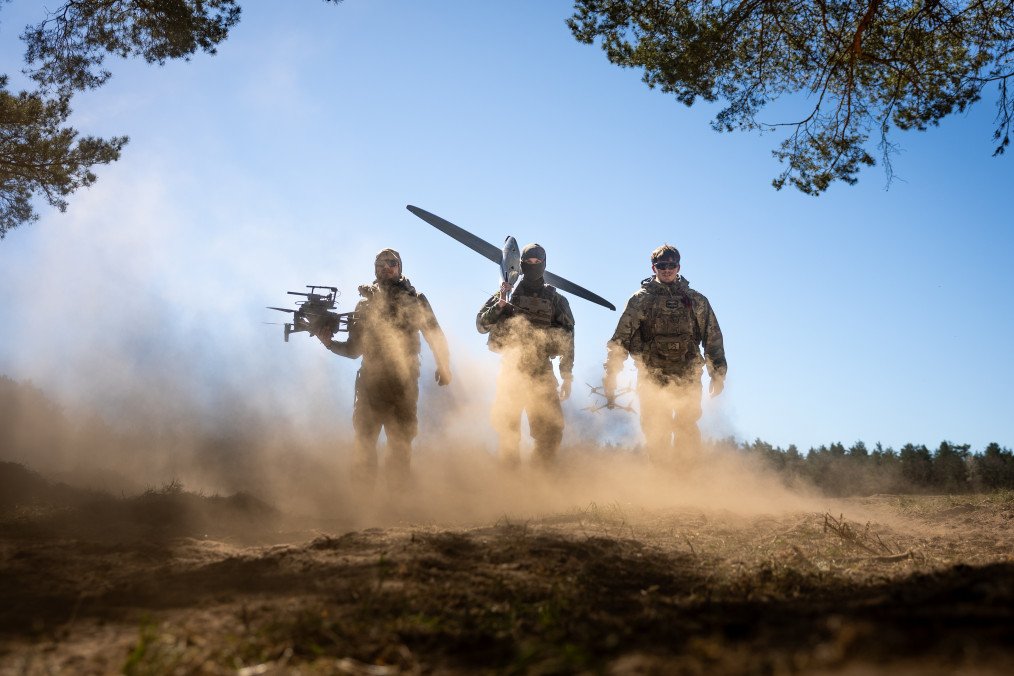
Under the proposal, NATO would first blunt an incursion using land forces and capabilities assembled under the alliance's Eastern Flank Deterrence Initiative — including low-cost drones, minimally crewed systems and AI-assisted targeting working alongside conventional weapons and units. Once allied forces gained freedom of manoeuvre, the plan calls for destroying Russian command-and-control systems to deliver what its authors describe as a quick and decisive victory.
The document also stresses restraint. It presents NATO as a purely defensive alliance, calls for avoiding unintended provocations, and frames collective action against hybrid threats — sabotage, cyberattacks and drone incursions that fall below the threshold of open conflict — as part of deterrence.
"Maintain NATO's advantage"
Grynkewich's spokesman, Colonel Martin O'Donnell, declined to discuss operational details but laid out the thinking behind the plan. "The Supreme Allied Commander Europe's theory of victory is simple: maintain NATO's advantage," he told Bloomberg. He added that given an unsettled global security environment, the alliance must "set conditions now to deter aggression and, if necessary, win if attacked."
The strategy also serves a political purpose: to reassure the public in eastern member states that NATO has a concrete answer to a Russian incursion, and to show allied governments how traditional weapons and the technologies reshaped by Russia's war in Ukraine — drones, automated targeting and electronic warfare — can be combined into a single operational concept.
Context of rising tensions
The plan arrives amid heightened friction between NATO and Moscow. Allied officials say a conventional Russian attack is not imminent — Secretary General Mark Rutte has said there are no indications Moscow is preparing one — but they warn that Russia could test the alliance through hybrid attacks or repeated drone incursions into NATO airspace. Recent months have already seen drone scares near allied bases and borders, including an alert over Vilnius and intensified Ukrainian drone strikes on Russian territory.
The document's unveiling also coincides with an internal debate over defence spending. Allies have increased military budgets, but how to divide money between tanks, artillery and emerging technologies remains contested. Over the summer, Washington surveyed allies on their spending plans and on their support for President Donald Trump's policies, as the administration weighed a reduction of U.S. military resources in Europe — a backdrop that makes Grynkewich's presentation in Poland as much a political signal as a military one. For background on the alliance's recent posture, see our earlier coverage.
Frequently Asked Questions
What is NATO's "Theory of Victory"?
It is a draft strategy, developed under NATO Supreme Allied Commander Europe General Alexus Grynkewich, outlining how the alliance would rapidly stop and decisively defeat a Russian attack on its eastern flank using a combination of conventional forces, drones, unmanned systems and AI-assisted targeting.
When will the plan be presented?
Grynkewich is expected to present the strategy in Poland on October 12, according to Bloomberg, which reviewed an unclassified version of the document and spoke to senior officials and diplomats familiar with the initiative.
Does NATO believe a Russian attack is imminent?
No. Allied officials have said a conventional Russian attack against NATO is not imminent, and Secretary General Mark Rutte has stated there are no indications Russia is preparing one. The strategy is a contingency plan; officials warn instead about possible hybrid attacks or drone incursions testing the alliance's eastern flank.
How do drones and AI fit into the plan?
Rather than replacing conventional forces, low-cost drones, minimally crewed systems and AI-enabled targeting would be integrated with land forces under the Eastern Flank Deterrence Initiative — accelerating decision-making on the battlefield and helping NATO stop an attack before Russia could achieve its initial objectives.