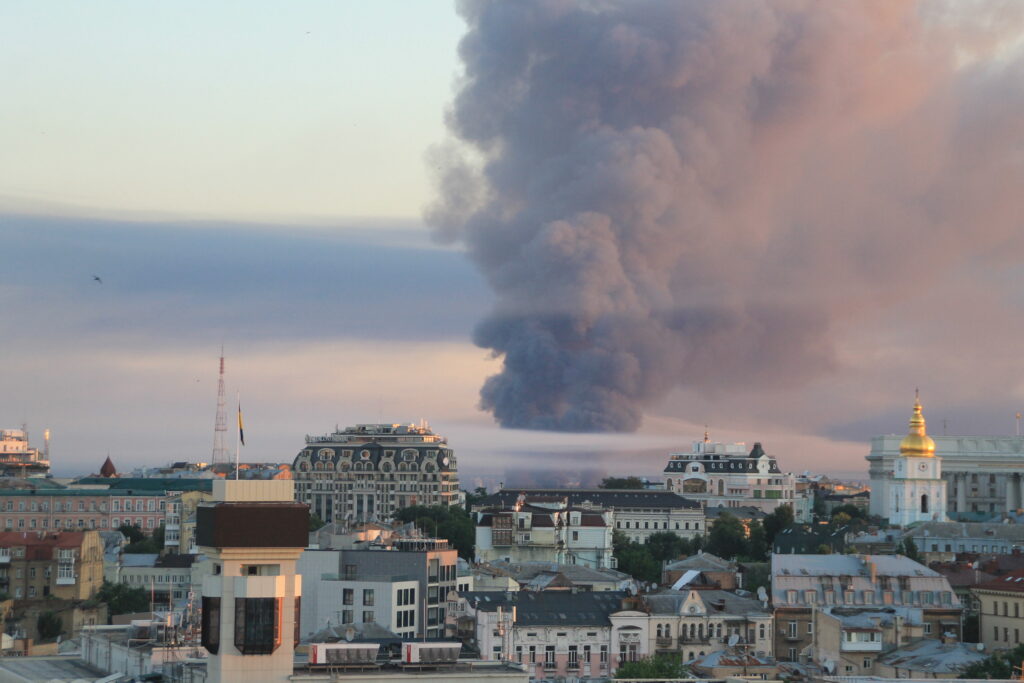
Kyiv came under what officials described as massive strikes overnight, triggering a deadly fire that killed at least two people, according to France 24. The attack marks another night of intensifying pressure on the Ukrainian capital, which has faced a sustained Russian campaign against its infrastructure in recent days.
Table of Contents
- What we know so far
- A pattern of escalation against Kyiv
- The infrastructure campaign
- Civilian toll and emergency response
- What remains unclear
- Frequently Asked Questions
What we know so far
The strikes hit Kyiv overnight into Wednesday, igniting fires in the capital. At least two people were killed in one of the blazes, officials said. Emergency services were deployed to battle the fires through the night as residents took shelter during the alerts.
The characterization of the bombardment as "massive" suggests a large-scale assault — consistent with the recent Russian practice of combining drone waves and missile salvos against Ukrainian cities. As of the latest reports, authorities had not released a full casualty count, and the number of injured remained unconfirmed.
A pattern of escalation against Kyiv
This attack does not come in isolation. Just days earlier, Russian forces targeted Kyiv's Dnipro bridges for three consecutive days, striking a northern bridge on Saturday morning and disrupting the daily commutes of some 500,000 residents. Kyiv Mayor Vitali Klitschko has repeatedly warned that the attacks are tearing the capital apart, with critical infrastructure squarely in the crosshairs.
The renewed strikes underscore a shift in the Russian campaign: rather than only probing the front lines, Moscow has concentrated on degrading the systems that keep Kyiv functioning — its bridges, energy grid and transport arteries — ahead of winter.
The infrastructure campaign
The targeting of infrastructure is a deliberate strategy. Bridges over the Dnipro are the lifelines connecting Kyiv's left and right banks; damaging them fractures the city's logistics, humanitarian corridors and civilian mobility. Repeated strikes on the same targets — as seen with the three-day bridge assault — suggest Russia is testing both Ukrainian air defenses and repair capacity.
This mirrors the broader Russian approach across Ukraine and beyond its borders: drone and missile attacks have struck vessels in the Black Sea, threatening commercial shipping, while Ukrainian cities endure near-nightly alerts. The cumulative effect is a war of attrition aimed as much at civilian morale and economic function as at military targets.
Civilian toll and emergency response
Each wave of strikes on Kyiv brings the same grim arithmetic: residents killed in their homes, fires gutting apartment blocks and businesses, and rescue crews working under the threat of follow-up attacks. Ukrainian emergency services have grown practiced at responding within minutes, but the scale of the latest bombardment stretched resources across the capital.
The overnight fire that killed at least two people is a reminder that even when air defenses intercept much of an attack, falling debris and partial hits can be lethal. Ukrainian officials have long argued that intercepting drones and missiles over a city of nearly three million people cannot eliminate the danger entirely.
What remains unclear
As with many fast-moving overnight attacks, key details are still emerging: the precise districts affected, the types of munitions used, the full casualty toll and whether energy infrastructure sustained new damage. Russian authorities had not issued a statement at the time of reporting, and independent verification of the extent of the damage will take time.
What is clear is the trajectory: Kyiv is absorbing heavier punishment than at any point in recent months, and the coming weeks — as temperatures drop and the energy grid comes under strain — will test both the city's defenses and its resilience.
The attacks also land against a backdrop of continued Western support: Germany's leadership recently visited Kyiv to discuss further aid, but Ukrainian officials consistently say air defense supplies remain the decisive variable in how many lives each night's strikes claim.
Frequently Asked Questions
What happened in Kyiv overnight?
Kyiv came under massive strikes overnight into Wednesday, October 7, triggering fires across the capital. At least two people were killed in one of the fires, according to officials cited by France 24.
How many casualties have been confirmed?
At least two deaths have been confirmed so far in connection with the fire. A full casualty count, including the number of injured, had not been released at the time of reporting.
Why is Russia targeting Kyiv's infrastructure?
The strikes follow a pattern of attacks on Kyiv's critical infrastructure — including three consecutive days of strikes on Dnipro bridges. The apparent aim is to degrade the city's transport, energy and logistics systems ahead of winter, pressuring both civilian morale and the Ukrainian war effort.
Is this the first recent attack on the capital?
No. Days earlier, Russian forces struck a northern bridge over the Dnipro for the third day in a row, disrupting commutes for hundreds of thousands of Kyiv residents. The capital has faced sustained aerial pressure in recent weeks.
What has Ukraine said about the strikes?
Kyiv Mayor Vitali Klitschko has warned that repeated attacks on the capital's infrastructure are tearing the city apart. Ukrainian officials continue to appeal for more air defense systems, which they describe as the decisive factor in limiting casualties from each night's attacks.