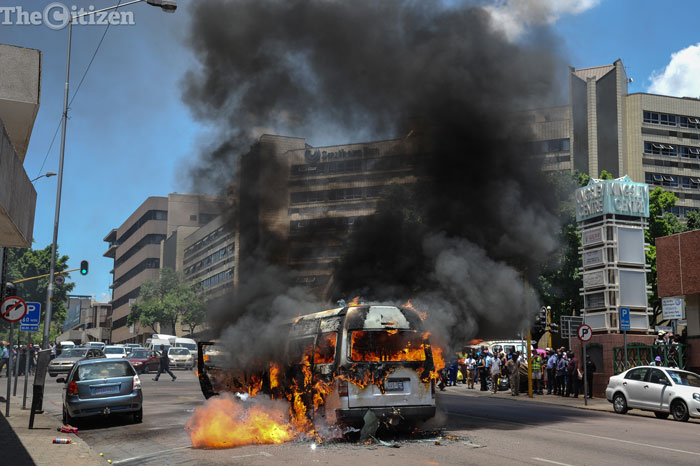
Anti-migrant protests in South Africa turned violent on Thursday as demonstrators torched cars in the coastal city of Durban and gunshots rang out during clashes in Johannesburg's Soweto township, local media reported. At least 11 vehicles were set alight in central Durban after a march demanding that a refugee centre stop processing asylum applications spiralled into looting and arson.
The unrest is the latest and most violent flare-up of an anti-immigrant movement that has swept South Africa through 2026, drawing international criticism and already forcing tens of thousands of foreign nationals to flee the country, according to Reuters.
Table of Contents
- What happened in Durban
- Gunshots in Soweto
- A year of escalating xenophobia
- The economics behind the anger
- Key takeaways
- Frequently Asked Questions
- Sources
- Read more
What happened in Durban
The Durban unrest began at the Home Affairs refugee office on Che Guevara Road, where protesters gathered to demand an end to the processing of asylum applications. Police advised foreign nationals inside to evacuate for their own safety, and the office was shut down, local outlet Eyewitness News reported.
The crowd then moved into the central business district along Anton Lembede Street, where at least 11 cars were torched or damaged and a tyre shop belonging to a foreign national was set ablaze. Footage shared on social media showed vehicles engulfed in flames, thick black smoke rising past shuttered storefronts, as security personnel in tactical gear moved through the area.
Violence appeared to escalate after one protester was assaulted, which KwaZulu-Natal police spokesman Colonel Robert Netshiunda said prompted the group to turn violent. At least 10 vehicles were torched in the aftermath, police said. A case of public violence has been opened, though no arrests had been made by Thursday afternoon. The situation remained volatile into the evening, with protesters still on the scene.
Gunshots in Soweto
In Soweto, on the outskirts of Johannesburg, residents clashed with foreign shop owners and gunshots were heard, broadcaster Newzroom Afrika reported. Shops owned by foreign nationals were looted in both cities, according to the South African news site News24.
A year of escalating xenophobia
Thursday's violence did not emerge from nowhere. South Africa has seen months of anti-migrant marches this year led by groups including Operation Dudula, March and March, and Put South Africans First, which blame undocumented African migrants for crime, unemployment and strained public services — claims social scientists say are not supported by evidence.
The movement has intensified since the start of 2026. Reports indicate that roughly 56,000 Malawians and 115,000 Zimbabweans have been forced to flee their homes since March, and at least 11 foreign nationals have been killed. The governments of Nigeria, Ghana, Zimbabwe, Mozambique and Malawi have paid for tens of thousands of their citizens to return home. South Africa's government, meanwhile, has deported 19,000 migrants in recent months.
Critics, including human rights organisations and labour unions, characterise much of the movement as xenophobic. President Cyril Ramaphosa took months to condemn the violence publicly, and commentators have argued the unrest marks a break from the post-1994 "rainbow nation" consensus coined by Archbishop Desmond Tutu.
The economics behind the anger
Three decades after apartheid ended, South Africa remains deeply unequal, with about a third of the population out of work. Yet it is still Africa's largest economy and a magnet for migrants from across the continent seeking work and safety. That tension — between economic despair at home and the perception that foreigners take jobs and strain services — has fuelled the protests all year, and Thursday's violence suggests the fuse is getting shorter, not longer.
Key takeaways
- At least 11 cars were torched in Durban's city centre and gunshots were heard in Soweto on Thursday during anti-migrant protests.
- The Durban march began at the Home Affairs refugee office, demanding an end to asylum processing, before spilling into the central business district.
- No arrests had been made by Thursday afternoon; police opened a case of public violence.
- The unrest is part of a 2026 anti-immigrant movement that has already forced tens of thousands of migrants to flee South Africa.
- Protesters blame migrants for unemployment and crime; social scientists say the evidence does not support the claims.
Frequently Asked Questions
Where did the violence take place?
In two places on Thursday: central Durban, where protesters torched at least 11 cars along Dr Pixley KaSeme Street and Anton Lembede Street, and Johannesburg's Soweto township, where residents clashed with foreign shop owners and gunshots were heard.
What sparked the Durban unrest?
Protesters marched on the Home Affairs refugee office on Che Guevara Road demanding it stop processing asylum applications. Police say the violence escalated after one protester was assaulted, leading the group to set cars alight and loot foreign-owned shops.
How bad has South Africa's 2026 anti-migrant movement been?
It has been severe: roughly 56,000 Malawians and 115,000 Zimbabweans have fled since March, at least 11 foreign nationals have been killed, and the government has deported 19,000 migrants in recent months. African governments have organised mass repatriations of their citizens.
Who is behind the protests?
Groups including Operation Dudula, March and March, and Put South Africans First have led the 2026 campaign. They blame undocumented African migrants for crime, unemployment and pressure on public services — claims social scientists say are not supported by evidence.
Sources
- Reuters — "South African anti-migrant protests turn violent, with cars torched, gunshots fired"
- Eyewitness News — "Durban CBD volatile as anti-illegal immigration march leaves 11 cars torched"
- Briefly News — "Violence erupts in Durban: vehicles burnt after local man allegedly shot dead"