A Russian glide bomb slammed into a bus stop in the front-line city of Kramatorsk on the morning of Thursday, October 8, 2026, killing at least 12 people and injuring 14 more, Ukrainian authorities said. The Donetsk regional prosecutor's office later reported that the death toll from the morning attack had climbed to 30, making it one of the deadliest single strikes on civilians in Ukraine this month.
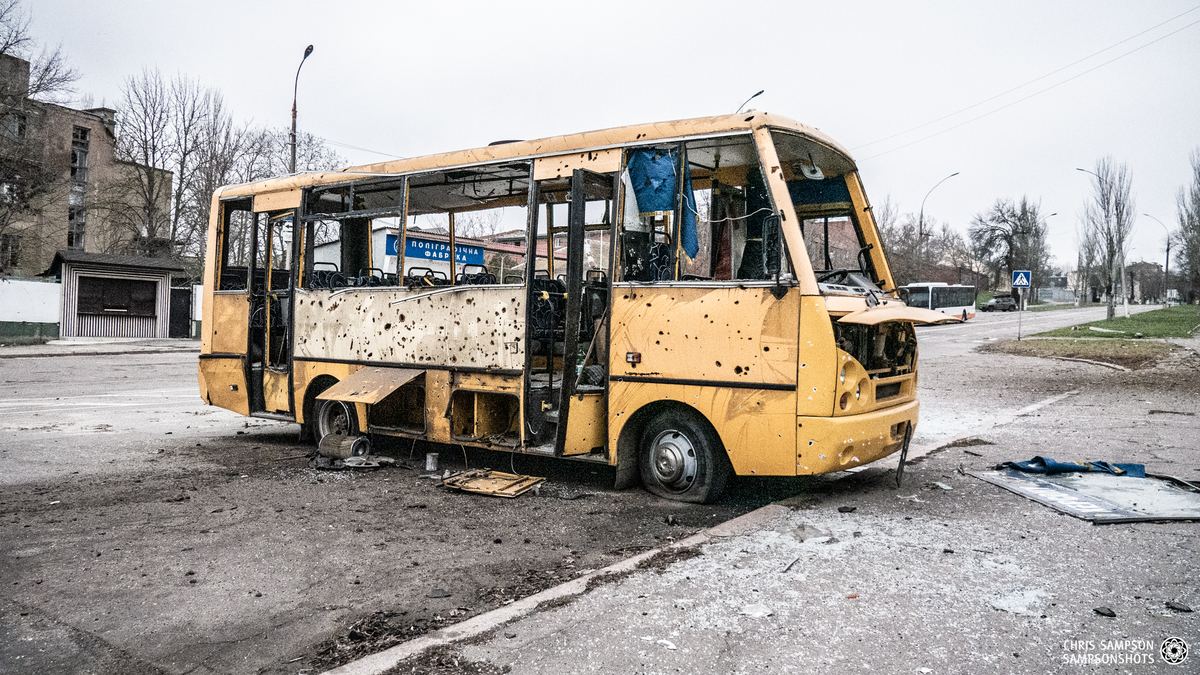
Two city buses were operating on the street when the bomb struck at around 10 a.m. local time, Reuters reported. Images released by police showed bodies strewn across a debris-littered street and the charred shell of what appeared to be a bus.
"Russia comes to the Ukrainian land with death. She hits our cities, kills our people and multiplies her crimes every day," Donetsk regional governor Vadym Filashkin wrote on Telegram, adding: "These are not 'the consequences of war', nor dry statistics. These are people killed by the Russian army."
Table of Contents
- What happened in Kramatorsk
- A rising death toll
- The fortress belt under pressure
- A night of mass drone attacks
- A pattern of strikes on civilian transport
- Key takeaways
- Frequently Asked Questions
- Sources
- Related reading
What happened in Kramatorsk
President Volodymyr Zelenskyy said a Russian glide bomb hit a bus stop in Kramatorsk, the embattled eastern city that remains a key Ukrainian stronghold in the Donetsk region. Regional police confirmed that another 14 people were wounded in the morning attack on a street where two city buses were operating, according to Reuters.
Kramatorsk's city council described the strike as "yet another horrific crime committed by the Russian army against the civilian population," stressing that the attack once again hit "a location where there are absolutely no military targets." In the aftermath, local authorities suspended all public transport in the city amid fears of further strikes.
Governor Filashkin shared photographs of the aftermath showing a burned-out bus and another destroyed vehicle on the road. Across Donetsk Oblast as a whole, four more people had been killed and six injured by Russian attacks before the Kramatorsk strike even happened, Filashkin said.
A rising death toll
Early reports put the number of dead at 12 with 14 wounded. But as rescue work continued through Thursday, TRT World reported that the Donetsk regional prosecutor's office said the death toll had risen to 30, with 18 wounded. The regional governor's office confirmed the same toll.
The wide gap between the early and later figures reflects how chaotic the scene was — and how casualty counts in glide-bomb attacks on crowded civilian areas are often revised sharply upward as debris is cleared. Whatever the final number, the strike ranks among the deadliest attacks on Ukrainian civilians in recent weeks.
The fortress belt under pressure
Kramatorsk is one of the cities Moscow is demanding Ukraine cede before it stops fighting — the backbone of what Ukrainian officials call the "fortress belt," the network of defended cities in Donetsk Oblast that still holds the line against Russian advances. Russian forces have stepped up drone and guided-bomb strikes on Kramatorsk and the other fortress-belt cities in recent weeks, local officials say.
Kyiv refuses to surrender the rest of the region still under its control, and the Kremlin has tied any ceasefire to Ukraine's withdrawal from it. Strikes like Thursday's are widely seen as part of a pressure campaign to depopulate and terrorize the fortress cities while Russian ground forces grind forward.
A night of mass drone attacks
The bus-stop bombing came at the end of another night of mass aerial assault. Ukraine's air force said Russia launched 142 Shahed-type drones — 82 of them jet-powered — across Ukraine overnight on October 8. Air defences shot down or suppressed 126 of them.
In the Donetsk region alone, Russian forces shelled settlements 31 times over the previous day, and 256 people, including 32 children, were evacuated from front-line areas, according to the regional governor. And Thursday's attack was the second deadly strike in two days: a day earlier, a massive Russian air assault, primarily targeting Ukraine's power grid, killed dozens across the country — including 22 people, among them five children, when a Russian Kh-101 missile hit a residential building in Pryluky, Chernihiv region.
A pattern of strikes on civilian transport
The bus-stop attack also fits a disturbing pattern. Just six days earlier, on October 2, Russian forces hit a passenger bus with a first-person-view (FPV) drone in Kramatorsk at around 7:08 a.m., injuring two people, according to the Kramatorsk City Council. "Russian troops have once again attacked civilian transport — right in the middle of a routine morning journey," the council said at the time. "People were simply going about their business and had absolutely nothing to do with military targets."
Zelenskyy renewed his calls for additional air defence systems and ammunition, warning: "The threat is there every day, and every day, our air defence batteries need to have missiles ready." Kyiv is counting on prompt deliveries from its partners, he said.
Key takeaways
- A Russian glide bomb struck a bus stop in Kramatorsk on October 8, 2026; at least 12 people were initially reported dead, with the toll later rising to 30 dead and 18 wounded per the regional prosecutor's office.
- President Zelenskyy and Governor Filashkin condemned the attack, which hit two city buses with no military targets nearby; public transport in the city has been suspended.
- The strike came after a night in which Russia launched 142 Shahed drones across Ukraine, 126 of them intercepted, and followed a deadly missile strike on Pryluky the day before.
- Kramatorsk is part of Ukraine's "fortress belt" in Donetsk — territory Moscow is demanding Kyiv cede as a condition for stopping the fighting.
Frequently Asked Questions
How many people were killed in the Kramatorsk bus stop strike?
Initial reports from Ukrainian authorities said 12 people were killed and 14 wounded. The Donetsk regional prosecutor's office later reported the death toll had risen to 30, with 18 wounded. Casualty figures in such attacks are often revised as rescue work continues.
What is a glide bomb?
A glide bomb is a conventional bomb fitted with wings and satellite or laser guidance, allowing it to glide for tens of kilometres from the release aircraft. Russia has made heavy use of them to strike Ukrainian cities while keeping its planes beyond the reach of Ukrainian air defences.
Where is Kramatorsk?
Kramatorsk is a city of roughly 150,000 people in Ukraine's eastern Donetsk Oblast, near the front line. It is a key logistics and supply hub for the Ukrainian military and part of the "fortress belt" — the chain of defended cities Moscow wants Kyiv to abandon.
Is this the first time a bus has been hit in Kramatorsk?
No. On October 2, a Russian FPV drone struck a passenger bus on its morning route in Kramatorsk, injuring two people. Thursday's attack was far deadlier.
What did Ukraine say in response?
President Zelenskyy renewed calls for more air defence systems and ammunition, while Governor Filashkin said "Russia comes to the Ukrainian land with death." The city council called the strike a "horrific crime" against civilians, and public transport was suspended across Kramatorsk.
Sources
- Reuters: Russian bomb kills 12 in street in east Ukraine stronghold
- The Kyiv Independent: At least 12 dead after Russian glide bomb strikes Kramatorsk bus stop
- TRT World: Russian, Ukrainian strikes leave at least 56 dead, over 100 injured
- France24: Dozens killed in Russian strike on buses in Ukraine's Kramatorsk