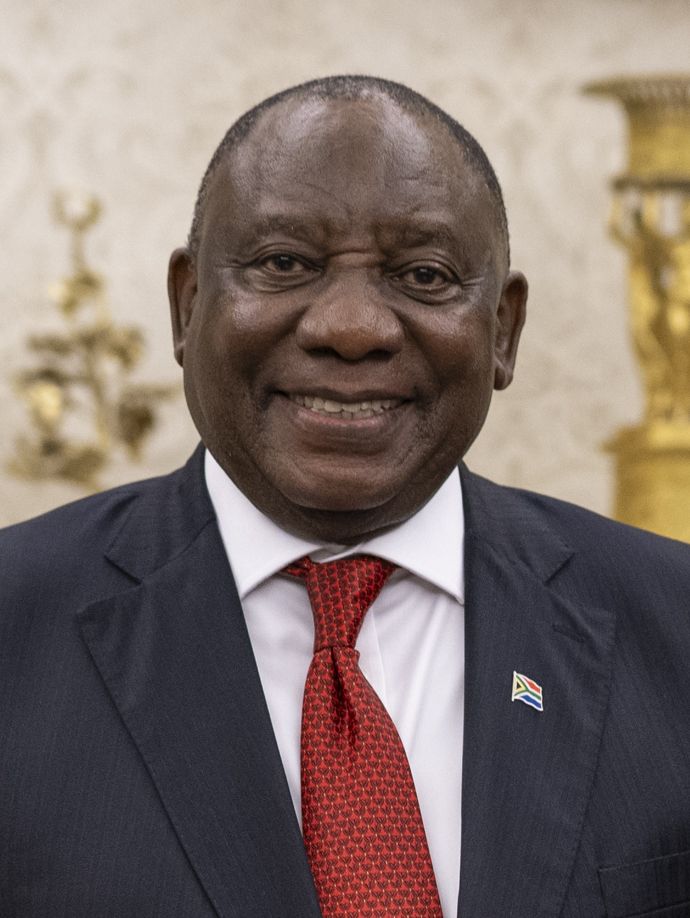
"I am ashamed of what we men are doing to the women of South Africa." With those words, President Cyril Ramaphosa addressed the nation this week to announce four urgent measures against gender-based violence and femicide — after the discovery of 11 women's bodies in and around Ekurhuleni, east of Johannesburg, since July. The televised address, reported by The Guardian and South African outlets, framed the crisis as "a national shame" and placed responsibility squarely on men.
Table of Contents
- The address: a direct appeal to men
- The four-point plan
- The Ekurhuleni killings that forced action
- The numbers behind the crisis
- Scepticism: plans versus reality
- What happens next
- Key takeaways
- Sources
- Read more on Chronicle
The address: a direct appeal to men
In a striking departure from the usual bureaucratic tone, Ramaphosa spoke "as a man, as a husband and as a father to daughters," calling the violence inflicted on women "a source of profound pain and national shame." His core message was aimed not at women — whom he said should not have to "reorganise their lives around the threat of male violence" — but at men and boys:
"The solution to violence against women cannot be to make women less free," he said. "We cannot build a safer country by turning women into prisoners of precaution... That is why I am speaking directly tonight to the men and boys of South Africa. Challenge the friend who humiliates his partner. Challenge the colleague who harasses women. Challenge the relative who abuses his wife or girlfriend. It is time for good men to stop being silent men."
He also stressed prevention at its root: changing how boys are raised and educated about gender, consent and relationships, because "the issue often begins at home."
The four-point plan
The president announced four immediate directives, each with strict deadlines and quarterly public progress reports monitored by the Inter-Ministerial Committee and the National Council on Gender-Based Violence and Femicide:
- Forensic overhaul. Priority forensic samples in rape and murder cases involving women and children must be processed urgently, with progress reported publicly every quarter — a direct response to the notorious DNA testing backlogs.
- Municipal safety audits. Every municipality must audit women's safety within 60 days, identifying high-risk areas: broken streetlights, overgrown public spaces, unsafe transport routes. Urgent hazards must be fixed within 90 days of the audit's completion or included in a funded implementation plan.
- Alcohol-related violence package. The ministers of trade, health, social development, police and cooperative governance must jointly propose a coordinated legislative and enforcement package within 60 days. Alcohol is not the cause of gender-based violence, the president acknowledged, but a significant aggravating factor.
- Expanded survivor services. More Sexual Offences Courts, dedicated gender-based violence desks at every police station, victim-friendly services, and strengthened Family Violence, Child Protection and Sexual Offences Units — backed by additional finance ministry resources.
The first consolidated progress report is expected within 90 days, which the president presented as proof these are "concrete actions rather than mere statements of intent."
The Ekurhuleni killings that forced action
The address followed the discovery of another woman's body in Springs on Sunday — bringing to 11 the number of women's bodies found in Ekurhuleni since July, some naked and dumped on streets. Police have elevated the investigation to national level, coordinated by the Deputy National Commissioner for Detective Services, with a multidisciplinary team of detectives, crime intelligence, forensic specialists, investigative psychologists and digital investigators, assisted by the Council for Scientific and Industrial Research.
Arrests have been made in three of the cases — those of Ntombifuthi Nxumalo, Jabulile Ntimba and Busisiwe Mahlangu — while persons of interest have been identified in others. Police say they have found no evidence of a single perpetrator, but all possibilities remain under investigation. Notably, only two of the women found dead had been reported missing — a fact Ramaphosa used to remind the public that there is no need to wait 24 hours before reporting someone missing.
Beyond Ekurhuleni, the president mourned women and girls killed elsewhere in recent weeks, including ten-year-old Octavia Swarts from Kraaifontein and 15-year-old Amogelang Motshwaedi from Dinokana village.
The numbers behind the crisis
The backdrop is grim. Official crime statistics recorded 5,427 homicides between April and July, and South Africa has been identified as having one of the world's highest femicide rates (AV1 TV). Most women murdered in the country are killed by an intimate partner. Ramaphosa himself has repeatedly declared gender-based violence a "second pandemic" — a phrase first used during COVID-era lockdowns, when reported abuse surged.
Scepticism: plans versus reality
The announcement has been met with cautious — and in some quarters, weary — reception. South Africa has no shortage of national strategies against gender-based violence; critics argue the gap has always been implementation, not policy. Women's rights groups have long complained that successive plans produce press conferences rather than convictions, pointing to underfunded shelters, hostile police stations and a court system where rape cases collapse for lack of forensic evidence.
The president appeared to anticipate this, framing the quarterly public reporting and fixed deadlines as accountability mechanisms. Whether the audits, the forensic overhaul and the alcohol package survive contact with municipal budgets and bureaucratic inertia will be the real test — and the first report, due within 90 days, will be watched closely.
What happens next
In the immediate term, the Ekurhuleni investigation continues under national coordination, with visible patrols increased in the area. The municipalities' 60-day clock on safety audits is ticking, as is the ministers' deadline for the alcohol-violence package. For now, the country waits to see whether a president's televised shame — and an unusually direct challenge to the nation's men — can move the needle on a crisis that has defied every plan before it.
Key takeaways
- President Ramaphosa announced four urgent measures against gender-based violence and femicide, with strict deadlines and quarterly public reports.
- The trigger: 11 women's bodies found in Ekurhuleni since July; arrests have been made in three cases, with a nationally coordinated investigation ongoing.
- His most striking message was directed at men: "It is time for good men to stop being silent men."
- South Africa has one of the world's highest femicide rates; official stats recorded 5,427 homicides between April and July.
- Critics warn the country has seen many plans but little implementation — the first progress report, due within 90 days, will be the real test.
Sources
- The Guardian — South African leader urges men to speak up on gender-based violence after series of killings
- Sowetan — I'm ashamed of what we men are doing to women − Ramaphosa
- The Eastleigh Voice — South African President Ramaphosa announces new measures to combat gender-based violence
- AV1 TV — South Africa's Ramaphosa announces new measures to tackle gender-based violence