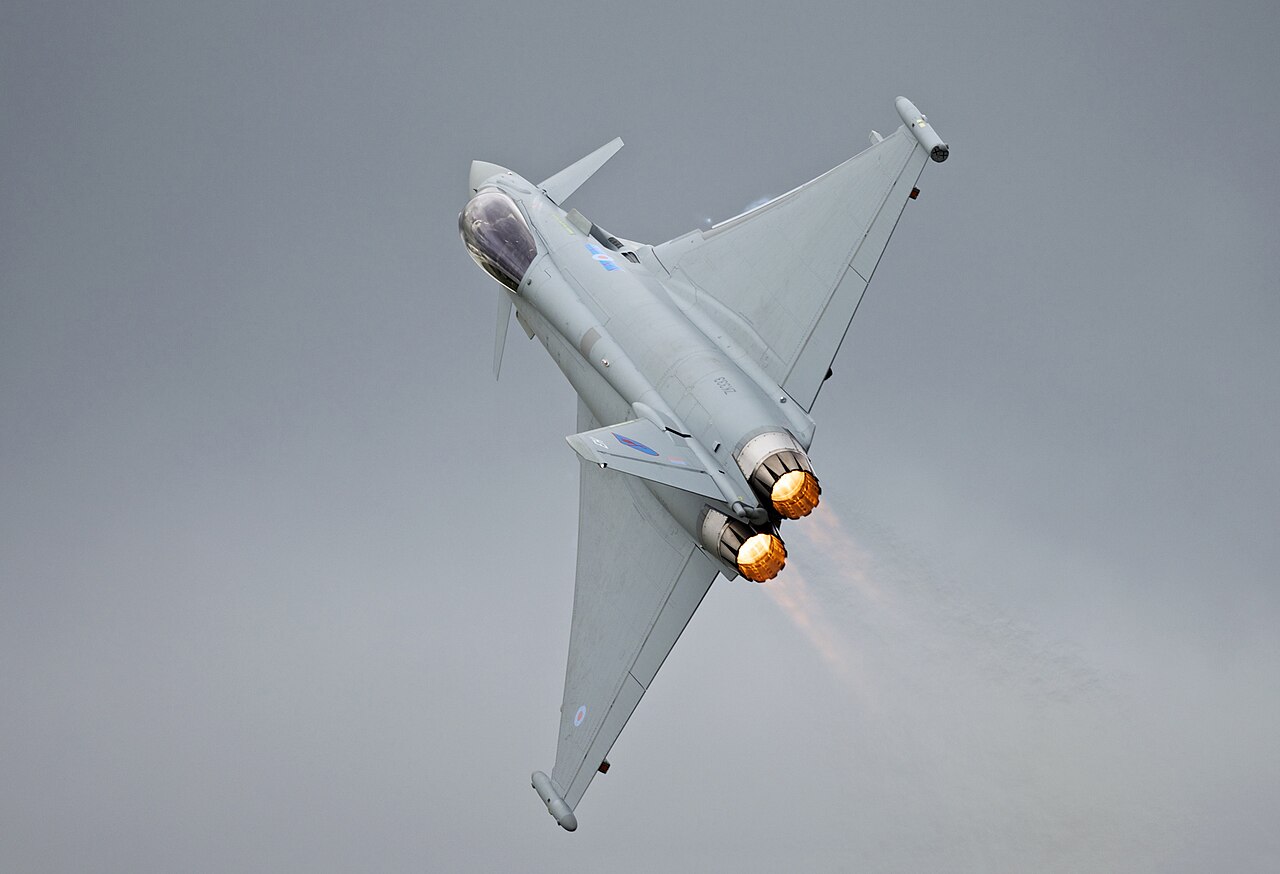
Britain announced on Tuesday that it is expanding its military support for Saudi Arabia against the Houthis to include "defensive" air patrols by Royal Air Force jets — the clearest sign yet that London is being drawn deeper into the spiralling conflict between Yemen's Iran-backed rebels and the Saudi-led coalition. Royal Air Force Typhoons will fly defensive counter-air operations over Saudi territory, protecting cities and critical national infrastructure from incoming missiles and drones, the UK Ministry of Defence said.
The decision was authorised by Defence Secretary Wes Streeting and announced to Parliament on Tuesday, after weeks of escalating Houthi attacks on the kingdom — including repeated strikes on Riyadh's King Khalid International Airport and Saudi oil facilities. The deployment was first revealed by Bloomberg and confirmed by the government on Tuesday, according to The Times.
What the deployment includes
- RAF Typhoon fighter jets conducting defensive counter-air missions over Saudi Arabia, with orders to intercept Houthi missiles and drones crossing toward the kingdom.
- A military transport aircraft and British military advisers, to help move defence equipment and support Saudi staff officers inside the country.
- A 90-day extension of the RAF's air-to-air refuelling mission supporting Saudi aircraft operating against the Houthis — a mission Britain began only last month.
Crucially, the British jets will not conduct offensive strikes against Houthi positions inside Yemen. "RAF Typhoons will fly defensive air missions to help protect Saudi airspace from drones and missiles. This builds on the UK equipment and personnel we already have in the country to defend against Houthi air attacks," Streeting said in a written statement to Parliament.
"Absolutely despicable" attacks
Streeting left no doubt about the trigger. "The continuing attacks from the Houthis on our ally Saudi Arabia are absolutely despicable. The targeting of the airport in Riyadh in particular shows the lengths the Houthis are going to escalate the situation in the region," he said.
The kingdom has struggled to cope with the onslaught. Riyadh's main international airport has been struck several times this month — a defence source told The Times the October 10 attack on King Khalid International Airport, which killed thirteen civilians, was "like Heathrow being blown up". On Tuesday, Saudi authorities said they had downed a missile over the capital, where the airport remains closed. The repeated airport attacks have forced airlines to suspend Riyadh flights and prompted fresh Saudi retaliation warnings.
Reporting from London, Al Jazeera's Camille Nedelec said the decision was partly driven by fears over rising energy prices: "What's happening in the Gulf has a direct impact on people's homes."
No military solution, says London
Despite the escalation, the British government stressed that the mission is protective, not a war campaign. "The government remains clear that there is no long-term military solution to the conflict in Yemen," Streeting told Parliament, adding that the UK continues to back UN-led peace efforts.
The announcement comes amid a flurry of regional manoeuvring. Egypt's parliament delayed for a second day its vote on a presidential request to authorise military support for Saudi Arabia if Riyadh asks for it, with a new session set for October 26 — though Cairo has separately pledged to stand with the kingdom. According to the Associated Press, Saudi Arabia has asked allies — including France, Britain, Pakistan and Egypt — for air-defence support, while the United States, which bombed Houthi targets under both the Biden and Trump administrations, has declined to take on the same role this time.
Britain maintains a substantial military footprint across the Middle East, with RAF facilities in Cyprus and Qatar and naval bases in Bahrain, and Typhoons have already been flying similar defensive missions against Iranian missiles and drones threatening Gulf states.
Key takeaways
- The UK approved RAF Typhoon defensive air patrols over Saudi Arabia on October 20, alongside a transport plane, military advisers, and a 90-day extension of aerial refuelling support.
- British jets will intercept Houthi missiles and drones — but will not strike Houthi targets in Yemen.
- The move follows weeks of escalating attacks, including repeated strikes on Riyadh's King Khalid International Airport that killed thirteen civilians on October 10.
- London insists there is "no long-term military solution" in Yemen; Egypt's parliament delayed its own vote on military support to October 26.
Frequently Asked Questions
What exactly will the RAF jets do over Saudi Arabia?
RAF Typhoons will fly defensive counter-air missions — intercepting and shooting down Houthi missiles and drones heading toward Saudi cities and critical infrastructure. They will not conduct offensive strikes against Houthi targets inside Yemen.
Why is the UK getting more involved now?
Houthi missile and drone attacks on Saudi Arabia have escalated sharply in recent weeks, including repeated strikes on Riyadh's international airport and oil facilities. Defence Secretary Wes Streeting called the attacks "absolutely despicable" and said the targeting of Riyadh's airport showed the lengths the Houthis are going to escalate the situation.
What else is in the support package?
Beyond the fighter patrols: a military transport aircraft, an unspecified number of British military advisers in Saudi Arabia, and a 90-day extension of the RAF's air-to-air refuelling mission for Saudi aircraft.
Are other countries joining?
Saudi Arabia has asked France, Britain, Pakistan and Egypt for air-defence help, according to the Associated Press. Egypt's parliament has twice delayed its vote on authorising military support, rescheduling it to October 26. The United States has declined to take on a similar role this time.
This article is based on reporting by Al Jazeera, The Times and the Associated Press, rewritten and analysed independently by Chronicle's editorial team.