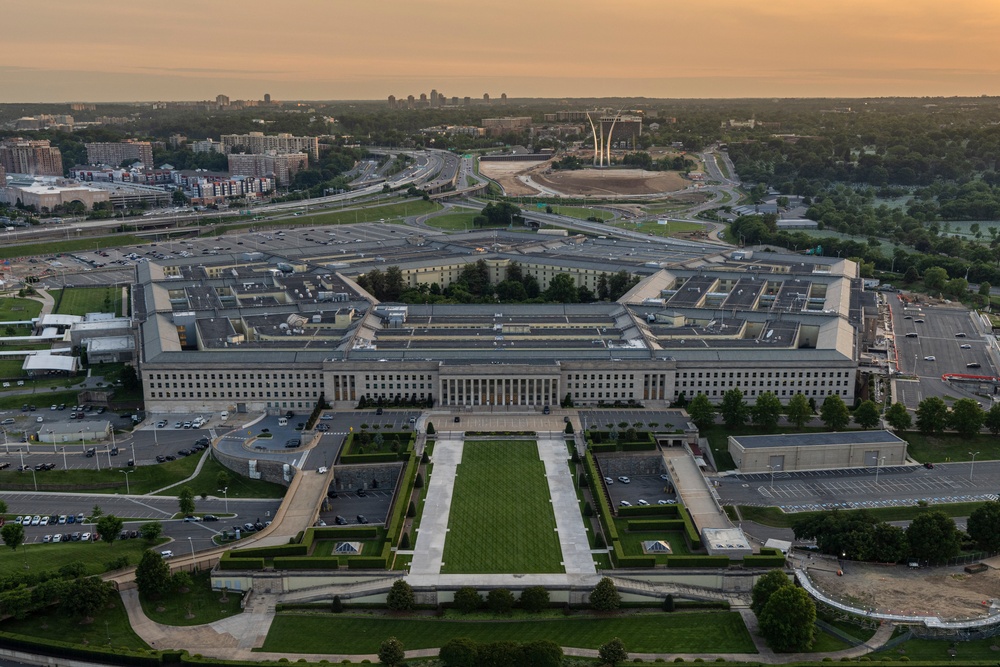
The Pentagon has formally designated Chinese-funded Confucius Institutes a threat to US national security, in the sharpest escalation yet of Washington's long campaign against the campus language and cultural centres. Defense Secretary Pete Hegseth made the announcement on Friday in a video posted on social media, accusing the institutes of running disguised "propaganda cells" at American universities to steal intellectual property and "infiltrate the minds of American students," according to Reuters.
The announcement: a video, a list, a two-month campaign
Hegseth said the institutes had been added to the Defense Department's list of institutions that threaten national security, as reported by Channel News Asia. The charge was specific and sweeping: "It turns out that 80 new propaganda cells across 30 universities had popped up using different names and different charters, but with the same mission: to steal intellectual property and to infiltrate the minds of American students," Hegseth said.
He added that over the past two months the Defense Department had "systematically dismantled every single one of these organizations." The Chinese embassy in Washington did not immediately respond to a request for comment.
What the designation actually does — an open question
The core of the announcement remains unexplained. No written Defense Department statement, memorandum, or published directive had surfaced as of publication; the designation arrived as a social-media video, not a legal instrument. Its legal authority, its criteria, and its practical consequences — funding restrictions, contractual bans, visa measures against personnel — are all undisclosed. Until the Pentagon publishes the list and its basis, the move's power lies as much in the signal it sends as in any enforceable action.
That ambiguity is itself part of the story. Washington has long accused Confucius Institutes of serving as Chinese propaganda tools and has taken repeated steps to crack down on them. This is the first time the Defense Department itself has placed them on a formal threat list.
A decade of scrutiny, compressed
The institutes — launched globally in 2004 as Chinese-funded centres for language teaching and cultural exchange on university campuses — have been under Washington's microscope for years. On August 13, 2020, the State Department designated the Confucius Institute US Center, the Washington, D.C.-based de facto headquarters coordinating the network, as a foreign mission of the People's Republic of China, citing its opacity and state-directed nature, as Arab News recalled.
Congress then squeezed the network through the 2019 and 2021 National Defense Authorization Acts, which restricted Defense Department funding for universities hosting Confucius Institutes. The effect was dramatic: federal data cited in US reports shows the count falling from about 100 institutes in 2019 to fewer than five by 2023.
Hegseth's claim of "80 new propaganda cells" suggests the Pentagon believes the network has since regrouped under new names and charters — and that its two-month dismantling campaign has now caught up with them.
Why universities are the battlefield
Confucius Institutes once sat at the intersection of two American priorities: promoting Chinese-language study and protecting open academic exchange. Critics — including US lawmakers, the FBI, and academic watchdogs — have long argued that the funding structure gave Beijing leverage over curriculum, visiting instructors, and event programming, turning classrooms into channels for soft power and, at the margin, intelligence collection.
Beijing has consistently rejected those allegations, presenting the institutes as equivalent to cultural bodies like the British Council or Germany's Goethe-Institut and accusing Washington of Cold War thinking. That rebuttal has lost ground in Congress year after year, but the Pentagon's formal threat designation raises the stakes beyond congressional pressure and university self-policing — potentially putting campus partnerships under the same scrutiny as defense-industry contracts.
What comes next
Several questions will decide whether Friday's announcement is a legal turning point or a rhetorical one:
- The list itself. Will the Pentagon publish which organisations, at which universities, have been designated? Without names, universities cannot know whether their partnerships are affected.
- The legal mechanism. Does the designation carry funding bans, contracting exclusions, or visa consequences — or does it function mainly as political pressure?
- Beijing's response. The Chinese embassy's silence so far is notable. A formal protest — or retaliation against American cultural programmes in China — could follow.
- The campus reaction. Universities that ended their Confucius Institute agreements years ago may still find renamed successor programmes caught in the net.
Hegseth framed the campaign as a completed operation: the cells were found, and they were dismantled. If that is true, the next chapters will be about consequences — legal, diplomatic, and academic. If the details never materialise, Friday's video will join a long line of Washington statements that turned campuses into a front line of the US-China contest without resolving what that front line actually requires of universities.
Related reading: Pentagon tells CENTCOM to finish preparations for renewed Iran strikes · Royal Navy sailor charged with spying under the National Security Act
Frequently Asked Questions
What are Confucius Institutes?
Confucius Institutes are Chinese government-funded centres hosted on university campuses worldwide, launched in 2004 to promote Chinese-language teaching and cultural exchange. Washington has long accused them of functioning as propaganda and influence tools for Beijing; Beijing says they are ordinary cultural institutions comparable to the British Council or Goethe-Institut.
What did Defense Secretary Pete Hegseth announce on October 23, 2026?
Hegseth said in a social-media video that the US Defense Department had designated Confucius Institutes as a threat to American national security. He alleged that 80 rebranded "propaganda cells" across 30 universities were stealing intellectual property and influencing students, and claimed the Pentagon had dismantled them over the preceding two months.
Has the US taken action against Confucius Institutes before?
Yes. The State Department designated the Confucius Institute US Center as a foreign mission of China in August 2020, and the 2019 and 2021 National Defense Authorization Acts cut off Defense Department funding to universities hosting the institutes — driving the number in the US from about 100 in 2019 to fewer than five by 2023. The October 2026 announcement is the first time the Pentagon itself placed the institutes on a formal national-security threat list.
What practical effect does the Pentagon designation have?
That remains unclear. No written memorandum or directive had been published as of the announcement, so the designation's legal authority, criteria, and consequences — such as funding restrictions or visa actions — are undisclosed. Until the Pentagon publishes the list and its basis, the move functions primarily as a political and reputational signal.