What began in France as a wave of anger over living costs and government policy spilled across the continent on Saturday, with street clashes in Italy, water cannons in Albania and Belgium, and soldiers on the streets of Milan, as demonstrators in at least six countries took to the streets on the same day.
The unrest, which erupted in France a week earlier with looting and violence, has now become a visibly European phenomenon: similar grievances — rising prices, welfare cuts, tuition fees and distrust of governments — are being voiced in city squares from Tirana to Barcelona, and authorities from Paris to Rome responded with some of the heaviest security deployments seen in years.
France: a calmer Paris march, but the country on edge
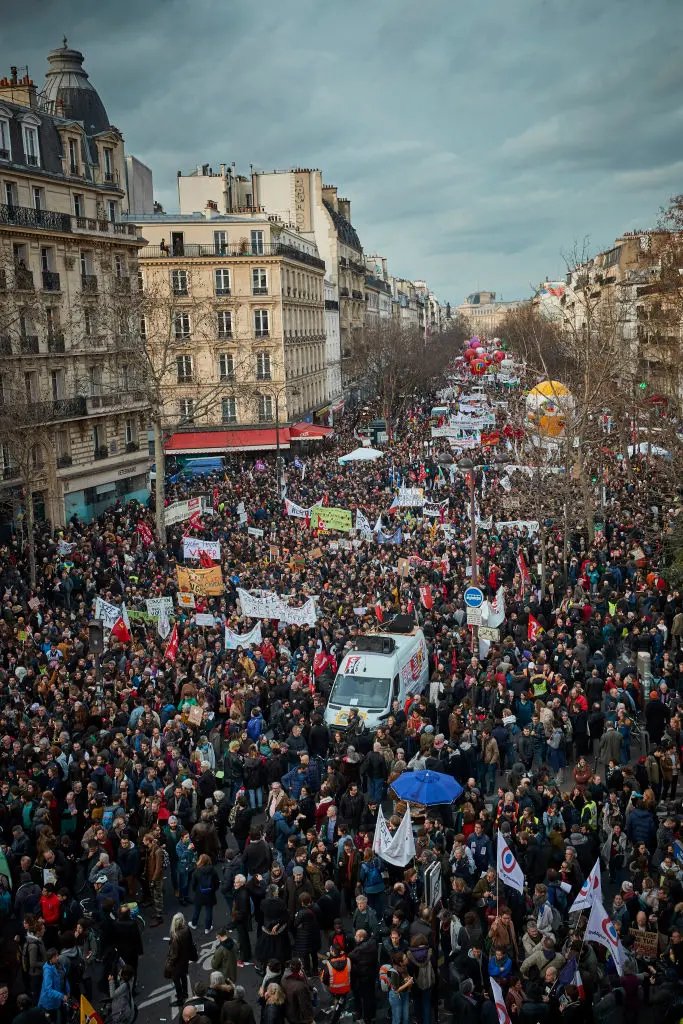
In France itself, Saturday brought a large but largely peaceful march in Paris, with police saying around 110,000 people turned out for the capital's demonstration, according to France 24. The government said the marches "went well", even as reports of clashes came in from other cities and some 70,000 police officers were deployed nationwide.
The scale of that deployment — and the fact that it followed a week of looting and destruction — set the tone for the rest of the continent. Retailers and city authorities elsewhere were watching France closely, and many acted before their own marches even began.
Italy: bottles, fireworks and 500 soldiers in Milan
Italy saw the sharpest escalation outside France. Shops across Naples, Rome, Turin, Bologna, Florence and Milan boarded up their windows in anticipation of the kind of looting that had erupted in France the previous week, according to the New York Post.
Milan was placed on particular alert. Prime Minister Giorgia Meloni deployed 500 soldiers into the city, backed by drone surveillance, railway station checks and rapid-response units. The US Embassy and Consulates in Italy put the country on high alert, urging Americans to avoid Piazza Duomo in Milan and major commercial streets.
In Rome, protests turned violent as demonstrators threw bottles and launched fireworks at police officers, and several street signs were torn down and defaced, according to Euro News. In Turin, protesters threw rocks and smoke bombs at officers blocking their way, and police answered with tear gas. Demonstrators also clashed violently with police in Florence.
Albania and Belgium: students, water cannons and boarded-up shops
In Albania, protesters rallied outside the Ministry of Education in Tirana, demanding lower tuition fees, greater state investment in education and the resignation of Prime Minister Edi Rama. Crowds set fire to dumpsters and to couch cushions that Rama had placed as a symbolic invitation to dialogue with students. More than 2,500 police officers were deployed in the capital, where they turned water cannons on the crowd.
Belgium saw a similar scene in Brussels, where protesters gathered at Albertine Square to oppose the federal government's economic policies, rising living costs and proposed cuts to social welfare programmes. Police used water cannons and tear gas to break up student-built barricades, and high-end retailers boarded up shops for fear of a repeat of the previous week's looting. In one incident, protesters tried to set fire to a pile of rental scooters, road signs and bicycles before police intervened. At least five people were arrested, though police said no major incidents had taken place.
Spain: pension marches in Madrid, fires in Barcelona
In Spain, more than 25,000 people took to the streets in Madrid demanding pension system reform, while in Barcelona masked demonstrators were filmed smashing a glass kiosk and starting fires in the streets. EuroNews also reported that jihadists had called for attacks on demonstrators and police officers during demonstrations in Spain and Portugal — a claim that added to the sense of alarm around the weekend's marches.
The Spanish scenes underlined how the same weekend produced very different kinds of protest: organised pension marches in one city, and small groups smashing street furniture in another.
Why the protests are spreading now
The grievances are not identical from country to country, but they rhyme. In France and Belgium, the trigger has been the cost of living and welfare budgets. In Italy, the protests have fused economic anger with broader anti-government sentiment. In Albania, the driving force is student anger over tuition and education funding. And in Spain, pension reform has brought older demonstrators onto the streets alongside younger ones.
What links them is timing and visibility. A week of dramatic scenes in France — looting, mass police deployments, closed landmarks — gave protesters elsewhere a template and a sense of momentum, while governments, determined not to be caught off guard, responded with soldiers, drones and water cannons of their own. Al Jazeera reported violence breaking out across Europe after another day of protests, a sign that the unrest is now being read as a single continental story rather than a series of national ones.
That framing matters. When protests are treated as a European wave, governments tend to coordinate, embassies issue alerts, and media coverage amplifies the next demonstration. It also raises the stakes for the coming days: if the pattern of the past two weekends holds, the question is no longer whether protests will continue, but where they will appear next — and whether the heavy security response calms them or hardens them.
What happens next
For now, the immediate picture is one of containment rather than resolution. Paris saw a large march pass off relatively calmly. Rome, Turin and Florence saw clashes. Tirana and Brussels saw water cannons. Milan saw soldiers. None of the underlying disputes — over prices, pensions, tuition or welfare — has been settled, and none of the governments involved has announced concessions that would take demonstrators off the streets.
The coming week will test whether Saturday was the peak of a protest wave or the moment it became a fixture of Europe's autumn. Further marches are already being discussed online, and with embassies on alert and soldiers deployed in Italy's financial capital, authorities are plainly preparing for more.
Related coverage: the earlier French deployment is covered in France Deploys 70,000 Police for Weekend Protests, the Albanian student movement in Albania Student Protest at Education Ministry, and Madrid's pension demonstrations in Madrid Pension Rally.
Frequently Asked Questions
Where did protests take place across Europe on Saturday?
Protests took place in France, Italy, Albania, Belgium and Spain, with the largest single march in Paris and clashes reported in Rome, Turin, Florence, Tirana, Brussels and Barcelona.
Why were soldiers deployed in Milan?
Prime Minister Giorgia Meloni deployed 500 soldiers into Milan, along with drone surveillance, railway station checks and rapid-response units, amid fears of looting similar to that seen in France the previous week.
How many people marched in Paris?
Police said around 110,000 people turned out for the Paris march, which the French government described as having gone well, despite clashes reported in other cities.
What were protesters demanding?
Demands varied by country: lower living costs and welfare protection in France and Belgium, pension reform in Spain, lower tuition fees and education investment in Albania, and broader anti-government grievances in Italy.
Were there any arrests?
At least five people were arrested in Brussels, where police said no major incidents had taken place despite the use of water cannons and tear gas. Casualty and arrest figures from Italy and Albania had not been fully confirmed at the time of reporting.