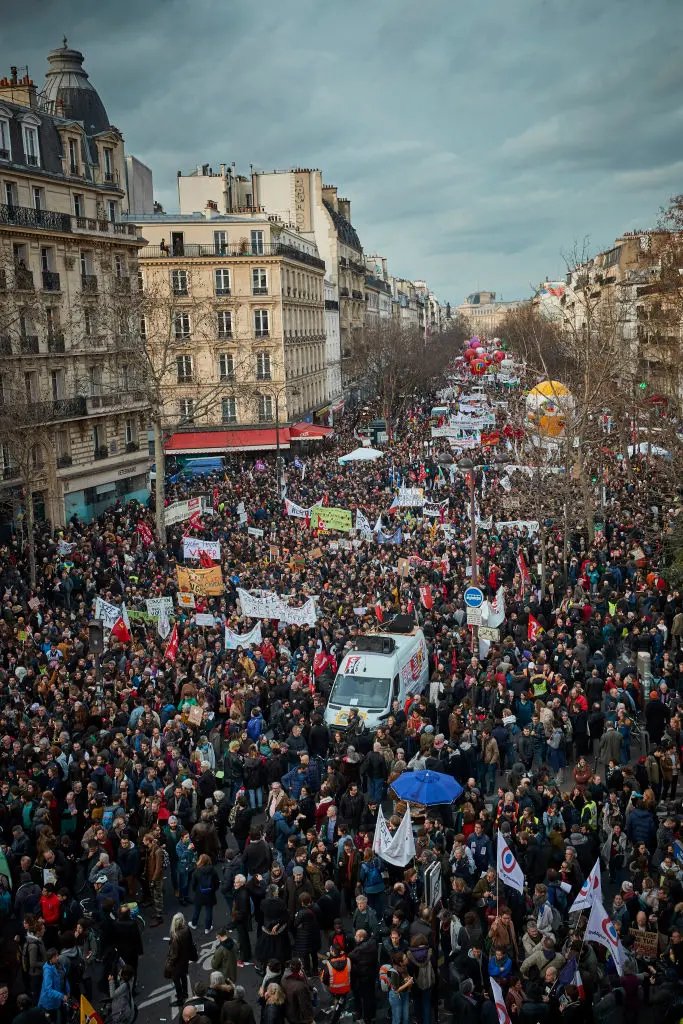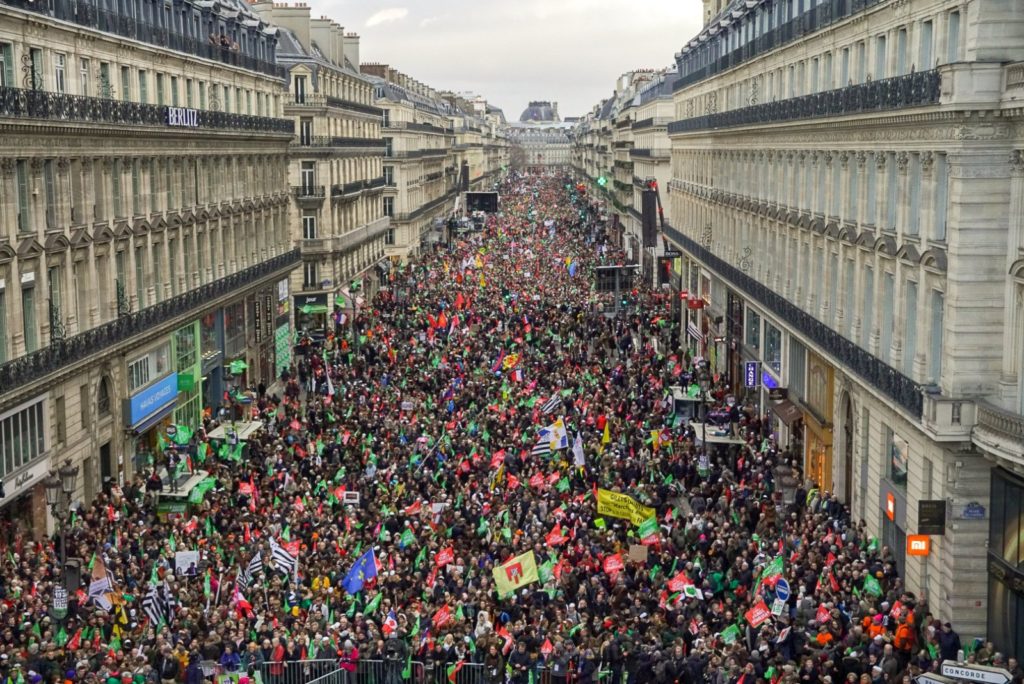
More than 1,300 people were arrested across France on Saturday as an estimated 410,000 demonstrators took part in nearly 300 protests nationwide, in a second weekend of mass mobilisation over the cost of living and conditions in schools that began peacefully and ended in clashes in several major cities.
Interior Minister Laurent Nuñez gave the final tally on Sunday, saying 1,314 people had been arrested and 53 police officers injured. He said the marches had "passed off well" for most of the day, but that police later faced what he called "an extremely elevated level of violence" from ultra-left groups. The scale of the arrests, while large, was well below the previous weekend, when 2,700 people were arrested, 997 officers were injured and some 3,000 shops were looted.
A peaceful day, then an unruly evening
For much of Saturday the demonstrations were orderly. Around 70,000 police officers and gendarmes had been deployed nationwide, backed by helicopters, armoured vehicles and water cannon, in an operation designed to avoid a repeat of the previous Saturday's scenes, which officials have described as some of the worst disorder in France's modern history. The Louvre, the Paris opera house and other major museums closed for the day, and many shops boarded up their windows.
In Paris, the main march was rerouted at the last minute on Friday night: instead of starting at the Place de la Bastille in the centre of the city, it began at Porte d'Italie in the south-east and headed towards Porte de Vincennes. Police searched hundreds of people before the march began and confiscated weapons including metal balls, fireworks, slingshots, a katana sword and airsoft guns, according to The Times.
The trouble came at the end of the day. In Paris, clashes erupted near Porte de Vincennes as masked protesters threw projectiles and fireworks at officers, police fired tear gas and water cannon, and groups smashed the windows of a car dealership. In the capital alone, 142 people were arrested, 126 of them placed in police custody. Clashes were also reported in Lyon, Lille, Montpellier, Marseille, Nantes and Toulouse, with tear gas used to keep crowds from reaching city centres, barricades set alight in Marseille and boards ripped from a shop in Bordeaux, Capital FM reported.
Two very different crowd counts
As with previous weekends, the authorities and the organisers gave sharply different estimates of turnout. The interior ministry counted about 410,000 protesters, including 110,000 in Paris. The CGT union, one of the organisers, put the national figure at around 800,000, including 250,000 in the capital. The gap between official and union counts has become a fixture of French protest weekends, and neither side has shown any sign of converging.
Nuñez nevertheless presented the weekend as a relative success for the security operation. He said police had acted more rapidly and conducted more pre-demonstration checks than a week earlier, that businesses and shopping centres had been better protected, and that looting, while not eliminated, was on "a far smaller scale" than the previous weekend. He said authorities would remain on high alert overnight.
What the protesters are demanding
The grievances driving the marches have been consistent across both weekends: frustration over the rising cost of living, cuts and strain in public services, and poor conditions in schools. Some demonstrators have also criticised the government over poverty and police violence. President Emmanuel Macron decreed earlier in the week that only demonstrations organised by recognised trade unions would be permitted, and hundreds of people have been jailed for vandalism, arson and looting after fast-track court hearings in recent days.
The political reaction was swift. Left-wing leader Jean-Luc Mélenchon accused the authorities of using force at the back of the Paris procession to shape how the demonstrations were perceived, writing on social media that police had gassed and fired into the crowd "in a bid to get footage" for television channels. The government, by contrast, has framed the operation as a defence of the right to demonstrate peacefully against a violent minority.
The wider European picture
France was not alone. Similar demonstrations took place elsewhere in Europe over the weekend, with riot police using tear gas against anti-government protesters in Tirana and clashes reported in Brussels, while a major security operation in Milan, involving police and soldiers, prevented protesters from gathering amid fears of renewed violence. The continental spread of the unrest, first visible a week ago, has turned what began as a French protest movement into a wider European story.
What happens next
The key question now is whether the movement sustains its momentum or fades. The government has shown it can deploy overwhelming force to keep marches largely peaceful, but it has not addressed the underlying complaints about prices, schools and public services — and the fast-track jailing of hundreds of people after the first weekend has itself become a point of contention.
For now, the pattern is set: huge, largely peaceful marches by day, a violent fringe by night, and a war of numbers over how many people actually turned out. Unions are already discussing further action, and with the government insisting it will stay on high alert, another weekend of mass mobilisation looks likely rather than remote.
Related coverage: the security build-up ahead of the weekend is covered in France Deploys 70,000 Police for Weekend Protests, the wider continental spread in From Paris to Rome: Protests Spill Across Europe, and the earlier October marches in France: Nationwide Protests on October 17.
Frequently Asked Questions
How many people were arrested during Saturday's protests in France?
Interior Minister Laurent Nuñez said 1,314 people were arrested nationwide, with 53 police officers injured. In Paris alone, 142 people were arrested, 126 of them placed in police custody.
How many people took part in the protests?
The interior ministry estimated about 410,000 protesters at nearly 300 demonstrations, including 110,000 in Paris. The CGT union estimated around 800,000 nationwide and 250,000 in the capital.
Where did clashes break out?
Clashes were reported in Paris, Lyon, Lille, Marseille, Montpellier, Nantes and Toulouse, mostly late on Saturday after largely peaceful marches. In Paris, confrontations took place near Porte de Vincennes at the end of the march from Porte d'Italie.
What are the protesters demanding?
The main grievances are the rising cost of living and poor conditions in schools, alongside broader complaints about public services, poverty and police violence.
How does this weekend compare with the previous one?
The previous weekend saw 2,700 arrests, 997 officers injured and some 3,000 shops looted. This weekend's figures — 1,314 arrests and 53 officers injured — were substantially lower, which the government credits to faster police action, more pre-demonstration checks and better protection of businesses.