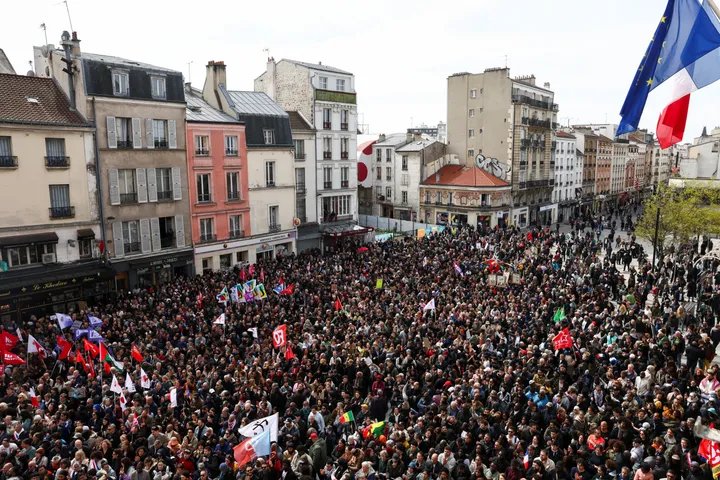
France is heading into one of the biggest coordinated days of protest it has seen in years. On Saturday, October 17, a loosely organised national day of action is expected to bring together high school students, trade unions, cost-of-living demonstrators and figures from the yellow-vest movement of 2018 — a convergence the French press is calling a "crossroads of anger." The government says it fears violence, police are preparing for widespread disruption, and the day could decide whether a schools dispute that has simmered for three weeks mutates into a full-scale social crisis.
Table of contents
- What is planned for Saturday
- From school blockades to a national crisis
- The government's response: concessions and warnings
- The 2027 election looms over everything
- Frequently Asked Questions
What is planned for Saturday
The call for a day of action on October 17 began as a viral TikTok post on September 8 and has since been amplified online, picked up by student groups, unions and former yellow-vest organisers. Online crowd-sourced listings show more than 1,000 proposed actions across the country, while Interior Ministry sources expect between 200 and 300 events to actually materialise, according to Particle News.
In Paris, a march is set to start from Place de la République at 14:00. Demonstrations are also expected in major cities nationwide, with protesters potentially gathering at roundabouts, petrol stations and supermarkets — a nod to the yellow-vest playbook of 2018–2019. Prominent yellow-vest figures including Jérôme Rodrigues, Priscillia Ludosky and Maxime Nicolle have urged people to join, and the CGT trade union, the France Unbowed party and the French Communist Party have added their support, Anadolu Ajansi reported via Franceinfo.
The demands are a patchwork that explains why the day worries the authorities: students want better school conditions; workers and pensioners want relief from the rising cost of living; protesters oppose frozen benefits and public-sector salaries under the draft budget. What unites them is a shared target — a government widely seen as exhausted and a state seen as indifferent.
From school blockades to a national crisis
The movement began in mid-September as a student protest over crumbling classrooms, overcrowded classes and teacher shortages — conditions students say are far worse in poorer suburbs. For more than three weeks, pupils have blocked entrances to high schools and marched in demonstrations, joined increasingly by trade unions, parents and figures linked to the yellow vests. The mobilisation has turned a schools dispute into what the BBC described as a broader test of public anger.
The scale has been large and the policing controversial. On October 6, the French government said turnout had topped 250,000, while student unions put the figure at 450,000. More than 6,800 people have been taken into police custody since the protests began — 86% of them minors — and 36 investigations have been opened by the police oversight body, the IGPN. A 15-year-old boy in Lens lost a hand in an incident that intensified scrutiny of police tactics; the interior minister has since halted the use of stun grenades at high school demonstrations.
Disinformation has also stalked the protests. France24's fact-checkers found that far-right figures were spreading false and out-of-context videos to portray the student movement as an anti-white or Islamist uprising — a reminder of how quickly a domestic dispute can be weaponised in the global information war.
The government's response: concessions and warnings
Prime Minister Sébastien Lecornu has tried two tracks at once: acknowledging the grievances as legitimate while warning that Saturday could turn violent. On Thursday he told reporters that authorities feared unrest and said the wave of demonstrations "no longer resembles a student movement but a movement of urban violence," Reuters reported. "We are in an atmosphere of perma-crisis: wars, inflation, and issues surrounding purchasing power," he said.
Ministers and police held preparedness meetings on October 15, and Paris authorities have imposed bans and alternative demonstration routes over fears of black-bloc infiltration and rapid "coup de poing" disruptions on major roads such as the Paris périphérique. Officials also warn of travel disruption at the start of the Toussaint school holidays, and say any durable blockades or attacks on motorists will draw immediate police intervention.
The government has also offered concessions, though none has satisfied the protesters so far. Education Minister Édouard Geffray announced an emergency plan to send 3,000 qualified supply teachers to the schools facing the most urgent shortages, and student leaders were due to meet ministry officials on Thursday afternoon. Lecornu has promised broader measures on school facilities and timetables, asking ministers to submit proposals by the end of October — a deadline that now looks like a political cliff edge, with the budget debate in parliament running in parallel.
The 2027 election looms over everything
Both sides accuse the other of politicising the movement. Lecornu argued this week that the protests are being steered for political advantage as campaigning builds toward next year's presidential election, accusing members of Jean-Luc Mélenchon's France Insoumise party of exploiting the high school blockades for electoral benefit. President Emmanuel Macron has said young people are expressing legitimate anxieties but that those anxieties are being politically exploited and turned into urban violence.
Opposition figures return the charge: Mélenchon's supporters at the marches point to his proposals for a wealth tax and for lowering the voting age to 16 as answers to the anger in the streets. The result is a cycle in which every concession looks like campaigning and every crackdown looks like authoritarianism — a dynamic that has trapped French governments before.
Saturday will be the first real test of which force is stronger: the government's promise of reforms by the end of October, or a movement that has grown from school gates to roundabouts and now, possibly, to the gates of the capital itself.
Frequently Asked Questions
Why is France protesting on October 17?
The day of action brings together several strands of anger: a three-week-old student movement over school conditions, cost-of-living protests over fuel prices and frozen benefits, trade unions, and figures from the 2018 yellow-vest movement. Online listings show over 1,000 proposed actions; authorities expect 200–300 to materialise.
What does the French government expect to happen?
Prime Minister Sébastien Lecornu has warned of possible unrest and clashes, saying the movement "no longer resembles a student movement but a movement of urban violence." Police have prepared bans and alternative routes in Paris and warn of disruption at the start of the Toussaint holidays.
What concessions has the government offered?
The education ministry announced an emergency deployment of 3,000 substitute teachers to the worst-affected schools, and Lecornu has promised broader measures on facilities and timetables with proposals due from ministers by the end of October. Protesters have so far judged the measures inadequate.
How does this connect to the 2027 presidential election?
Both the government and the opposition accuse each other of politicising the protests ahead of the vote. Lecornu accuses France Insoumise of steering the movement; Mélenchon's supporters respond with demands for a wealth tax and lowering the voting age to 16.
What has happened in previous weeks of the movement?
Students have blocked roughly 160 schools; more than 6,800 people have been taken into custody (86% minors); 36 police-oversight investigations are open; and a 15-year-old in Lens lost a hand in a policing incident that led the interior minister to halt stun-grenade use at school demonstrations. Earlier coverage: Paris student rallies with unions.