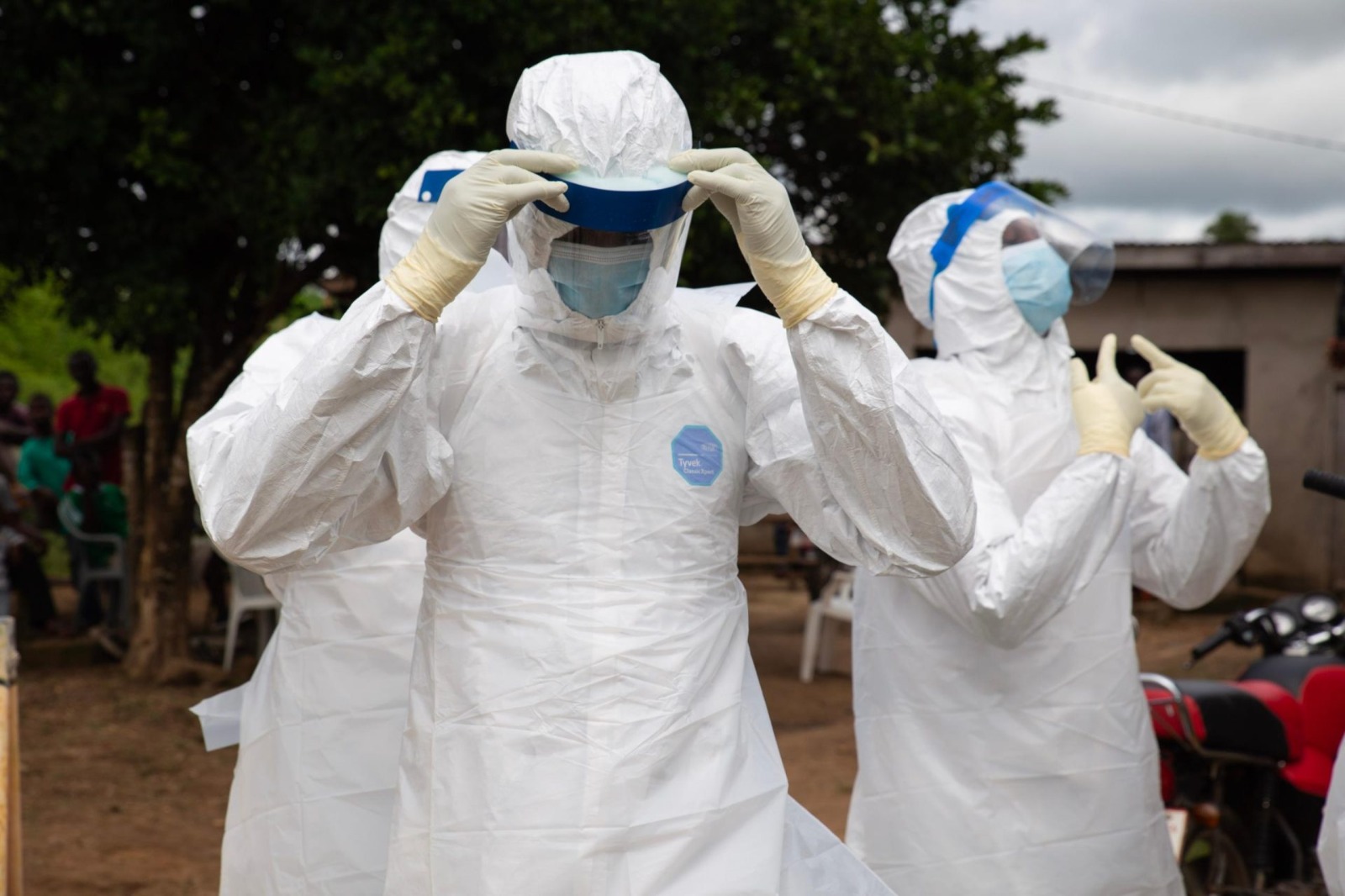
Less than a week after recording its first-ever Ebola case, Kenya has confirmed a second. The health ministry announced on Wednesday that a 39-year-old man — a close family member of the country's first victim — tested positive for the Bundibugyo strain of the virus. But officials and the World Health Organization were quick to stress what makes this case different: the patient was already in quarantine and under daily monitoring when he developed symptoms, which means the contact-tracing system built up over the past week worked exactly as designed. Two cases, one death, and still no evidence of wider community transmission — for now, Kenya's response is holding.
According to the ministry's October 14 press release, the second patient began showing fever, fatigue and joint pains on October 13 while under quarantine. Health teams isolated him immediately, collected specimens, and obtained positive results from both the National Virology Reference Laboratory and the Kenya Medical Research Institute-CDC laboratory. He has since been transferred to a designated treatment centre, where he is receiving supportive care. Channel News Asia reported that Health Cabinet Secretary Aden Duale emphasised that the early detection "limits the chance of passing the virus to others."
Table of Contents
- How the second case was caught
- The contact-tracing numbers
- WHO: surveillance is working
- Border questions remain
- The DRC outbreak behind it all
- Key takeaways
- Frequently Asked Questions
- Sources
- Related coverage
How the second case was caught
The first patient — a Kenyan man who had been living in the Democratic Republic of Congo — died in a Nairobi hospital on October 5, days after falling ill. His death marked the first Ebola case ever recorded in Kenya and triggered a national contact-tracing operation, covered in our earlier reporting on Kenya's confirmation of its first Ebola case.
The second case is a close relative of that first victim. As a listed contact, he was placed in quarantine and checked daily for 21 days from his last possible exposure. When symptoms appeared, there was no delay — no trip to a clinic, no exposure of unsuspecting health workers, no gap in the chain. "Contact tracing and monitoring are working. Both cases are linked, and there is no evidence of spread in the wider community," Duale said in his statement.
This is the textbook scenario epidemiologists hope for: an imported case, identified contacts, and a second infection detected inside quarantine rather than in the community.
The contact-tracing numbers
The ministry released its most detailed picture yet of the tracing effort. Of 128 contacts linked to the first case, 113 had been traced as of October 13, and 108 were in quarantine inside Kenya. Five contacts are located outside the country, and their respective national health authorities have been informed as required under the International Health Regulations (2005). Tracing of the remaining 15 continues.
Work is now also under way to identify everyone who may have come into contact with the second patient since his symptoms began — including quarantine staff and health workers who cared for him. Daily clinical and temperature checks for all quarantined contacts run for 21 days from their last possible exposure.
WHO: surveillance is working
WHO Director-General Tedros Adhanom Ghebreyesus publicly praised Kenya's response. In a statement carried by News 9 Africa, he noted that the second case was a close contact of the first patient who was already in quarantine, adding: "This shows that surveillance and contact tracing efforts are working. He has been receiving supportive clinical care since the onset of the symptoms."
Tedros confirmed that WHO has been collaborating with Kenya and neighbouring countries since the Ebola outbreak was declared in the DRC in May 2026, building disease surveillance, contact-tracing capacity and clinical management — preparation that is now being tested in real time.
Border questions remain
The second case has renewed scrutiny of how the first patient managed to travel through the region undetected. Reports indicate the patient crossed from the DRC into Uganda — despite the border having been closed since May — before reaching Kenya. Kenya's Director-General for Health, Patrick Amoth, has scheduled a meeting with officials from the DRC, Uganda and the Africa Centres for Disease Control and Prevention to investigate how the journey went undetected.
The incident has sharpened a regional debate: travel bans and border closures on paper versus the porous reality of cross-border movement in the Great Lakes region. It is the same tension that surfaced when Kenya pushed back against travel advisories issued after the first case, arguing that screening and transparency work better than blanket restrictions.
The DRC outbreak behind it all
Kenya's cases are a spillover from a far larger crisis. The DRC declared its 17th Ebola outbreak in May 2026 — caused by the rare Bundibugyo strain — and it has since expanded to its 65th affected health zone, with Ituri province remaining the main epicentre and significant transmission also continuing in North Kivu and Haut-Uele. According to UA News, the outbreak is now the largest and deadliest in the DRC's history and the second-largest Ebola outbreak worldwide after the 2014–2016 West Africa epidemic, with more than 8,000 cases and over 4,000 deaths.
WHO's country outbreak response manager has flagged an alarming statistic: about 60% of recent cases are community deaths, and roughly one-third of new cases in recent weeks were detected only after patients had died — meaning health services never found them in time. Kenya is the fourth country to record cases linked to the DRC epidemic. Experimental countermeasures continue to advance: researchers are running trials of the drug obeldesivir against the virus, though no approved vaccine or treatment exists for the Bundibugyo strain.
Key takeaways
- Kenya confirmed its second Bundibugyo Ebola case on October 14 — a 39-year-old close relative of the first victim, detected while already in quarantine.
- Two confirmed cases, one death, and no evidence of wider community transmission, according to the health ministry.
- Of 128 contacts of the first case, 113 were traced and 108 placed in quarantine; the remaining 15 are still being tracked.
- WHO chief Tedros praised Kenya's surveillance, saying the quarantine detection proves the system is working.
- The outbreak stems from the DRC's record epidemic — over 8,000 cases and 4,000 deaths across 65 health zones — raising fresh questions about regional border screening.
Frequently Asked Questions
How many Ebola cases has Kenya confirmed so far?
Kenya has confirmed two cases of Bundibugyo Ebola virus disease as of October 14, 2026, with one death. The first case — a Kenyan man who had been living in the DRC — died in a Nairobi hospital on October 5. The second, a 39-year-old close relative of the first victim, tested positive while already in quarantine.
Is there evidence of Ebola spreading in Kenyan communities?
No. Health Cabinet Secretary Aden Duale has stated there is "no evidence of spread in the wider community," and both confirmed cases are directly linked to each other. WHO has echoed this assessment, crediting contact tracing and quarantine for containing the cases.
How does contact tracing work in this outbreak?
Health authorities listed 128 contacts of the first patient and are monitoring them daily for 21 days from their last possible exposure, with clinical and temperature checks. The second patient was caught precisely through this system — he was already quarantined and under daily monitoring when symptoms began on October 13.
Why is Kenya getting Ebola cases from the DRC?
The DRC is experiencing its largest-ever Ebola outbreak, caused by the Bundibugyo strain, with over 8,000 cases and 4,000 deaths across 65 health zones. Kenya is the fourth country to record imported cases linked to this epidemic. Questions remain about how the first patient crossed the DRC–Uganda border, which has been officially closed since May.
Is there a vaccine or treatment for the Bundibugyo strain?
There is currently no approved vaccine or specific treatment for Bundibugyo Ebola virus. Patients receive supportive clinical care, and experimental treatments such as obeldesivir are under trial. WHO continues to advise against blanket travel and trade restrictions, recommending targeted public health measures instead.
Sources
- Channel News Asia — Kenya announces second Ebola case, says 'no evidence' of wider spread
- News 9 Africa — WHO reacts to Kenya's second case of Ebola virus disease
- Vivid Voice News — Kenya confirms second Ebola case, contact tracing continues
- UA News — Ebola outbreak in DR Congo expands to 65th health zone