Argentine authorities closed tourist access to Iguazu Falls on Monday as a precaution, after days of heavy rain pushed the Iguazu River to more than six times its average flow and raised fears that the river could burst its banks.
The closure, ordered by officials at Iguazu National Park, lasted about a day. By Tuesday, authorities said the park would reopen to visitors as the river's flow began to ease gradually, according to The Guardian.
No injuries or evacuations were reported in connection with the closure, which was a preventive measure rather than a response to an accident or structural failure.
Table of Contents
- A river running six times its normal volume
- Why the park closed
- El Niño's fingerprints on the deluge
- A familiar pattern at Iguazu
- What it means for visitors
- Frequently Asked Questions
A river running six times its normal volume
The scale of the surge explains why park officials acted. The Iguazu River's flow exceeded 12,000 cubic metres per second — more than six times its average rate — as relentless rain combined with water released from dams upstream on the river.
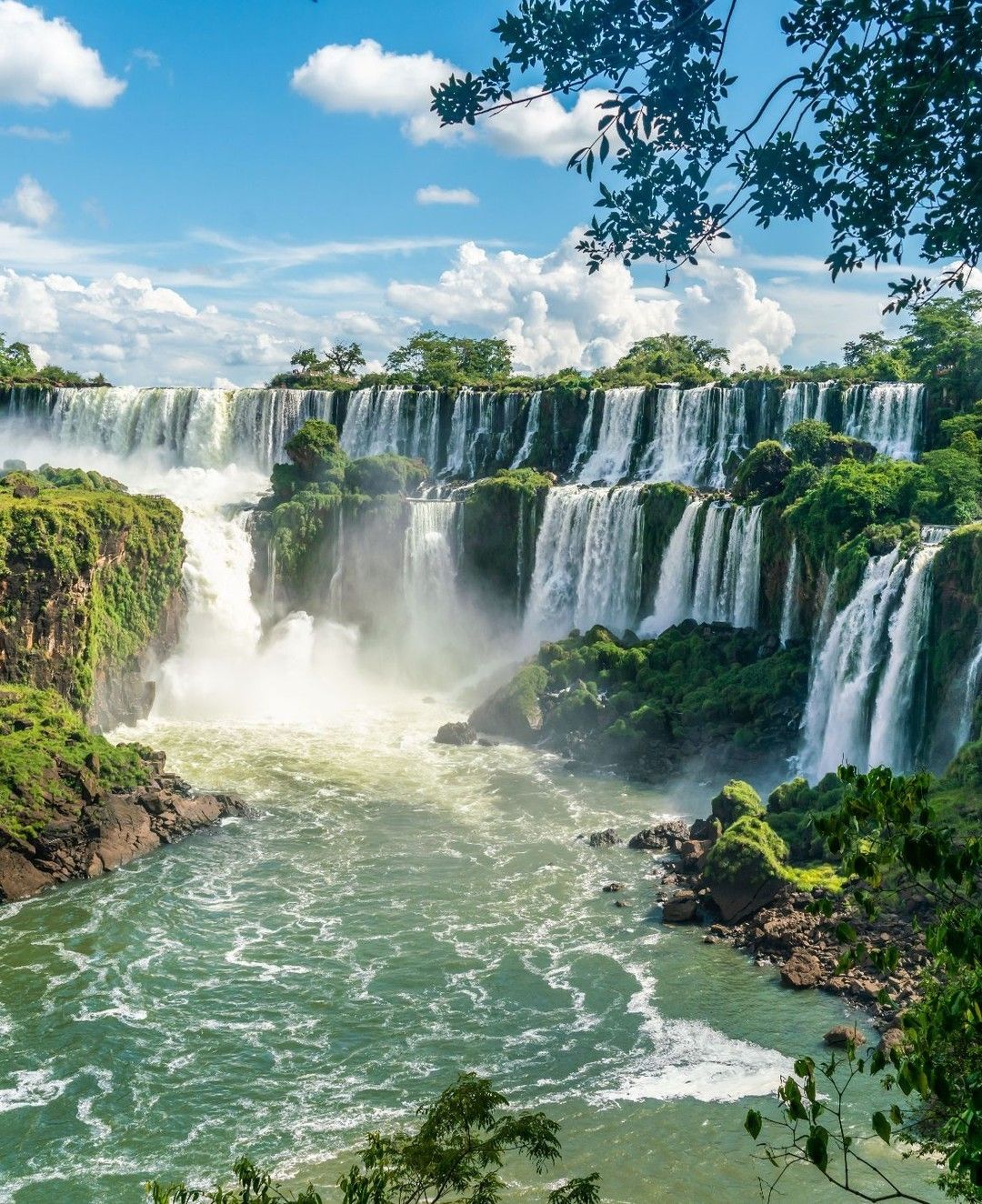
At those volumes, the falls themselves transform. Iguazu is a system of some 275 individual cascades spread across about 2,700 metres on the Argentina–Brazil border, and in flood it becomes a single roaring wall of brown water. The walkways and viewing platforms that bring visitors close to the cascades — including the famous Devil's Throat — sit just above the river, which is why rising water quickly becomes a safety question rather than a spectacle.
José María Hervás, director of Iguazu National Park, told the Buenos Aires Times that access was closed because "it just keeps raining" and the volume of water being released from upstream dams was not falling. The remark captures the park's dilemma: the rain was not a single passing storm but a sustained pattern, and dam releases upstream kept adding water even between downpours.
Why the park closed
The decision was precautionary. Park officials were concerned that the rapidly rising river could burst its banks, flooding access routes and stranding visitors on walkways designed for normal flows.
Closing a site of Iguazu's stature is not a step authorities take lightly. The falls are one of South America's most visited natural attractions and a UNESCO World Heritage site, drawing hundreds of thousands of visitors a year. A closure costs local hotels, guides and businesses a day of revenue at a minimum. That officials chose to close anyway — and then reopened as soon as flows began to decline — suggests the call was driven by the trajectory of the river rather than by any single dramatic moment.
The closure applied to the Argentine side of the falls, where the national park manages access. There was no reported closure of the Brazilian side.
El Niño's fingerprints on the deluge
The rainfall behind the surge has been linked to a powerful El Niño weather pattern. Meteorologists say the 2026–2027 El Niño, which begins in the equatorial Pacific, grows through the northern hemisphere autumn and peaks in December, is certain to be the biggest ever recorded. Scientists believe human-caused global heating is making El Niño events more intense.
Argentina's coastal region had already recorded above-average rainfall last month, at levels its national meteorological service described as similar to those seen during strong El Niño events. The pattern is consistent with what the region has experienced across this El Niño cycle: heavy, persistent rain rather than isolated storms, swelling rivers across the La Plata basin.
The episode fits a broader season of El Niño-driven disruption across South America. Chile's capital, Santiago, was placed on red alert for flooding earlier in this El Niño cycle, and forecasters have warned that this El Niño will keep intensifying toward a December peak. The Iguazu closure is the latest reminder that the pattern's effects arrive not only as distant climate statistics but as closed gates at famous landmarks.
A familiar pattern at Iguazu
This is not the first time flooding has shut the Argentine side of the falls. Argentine officials also closed the park in 2023 and 2024 over flooding caused by a previous El Niño cycle, when swollen rivers forced the same precautionary decision.
The repetition is itself part of the story. Iguazu sits in a subtropical region where the Iguazu River's flow is governed by rainfall across a large catchment in southern Brazil and north-eastern Argentina. When that catchment receives sustained heavy rain — as it does during strong El Niño episodes — the falls can go from postcard calm to dangerous torrent within days. Park infrastructure has been rebuilt and reinforced after past floods, but the basic vulnerability remains: the attraction is the river, and the river is what floods.
Climate scientists have long warned that a warmer atmosphere holds more moisture and delivers heavier downpours, making the swings between drought and flood sharper. For river-fed attractions like Iguazu, that means closures of this kind may become less exceptional, even if each individual closure remains short.
What it means for visitors
For travellers, the practical lesson is to check before going. The park reopened on Tuesday as flows declined, but river levels can change quickly while the rainy pattern persists, and further short closures cannot be ruled out if heavy rain returns.
Visitors planning a trip in the coming weeks should check the park's official channels before travelling, allow flexibility in their itinerary, and expect that some walkways closest to the water may reopen on a staggered schedule even after the main gates open. The Brazilian side, which was not reported closed, offers an alternative viewpoint, though it cannot substitute for the Argentine park's walkways above the cascades.
The broader message from Iguazu is one that extends well beyond tourism. As climate-driven flooding has already prompted legal and financial reckoning elsewhere in the region, the falls' one-day closure is a small, visible symptom of a much larger shift: the weather patterns that shape South America's rivers are becoming more extreme, and the institutions that manage life around them — parks, cities, insurers, courts — are being forced to adapt in real time.
For now, the falls are open again, the river is falling, and the spectacle that draws the world to this corner of Argentina has survived another flood. The question the closure leaves behind is how often, in a warming climate, the gates will have to shut.
Frequently Asked Questions
Why did Argentina close Iguazu Falls?
Park officials closed tourist access to Iguazu Falls on Monday as a precaution because heavy rain had pushed the Iguazu River to more than six times its average flow, raising fears the river could burst its banks and flood walkways and access routes.
How high did the Iguazu River rise?
The river's flow exceeded 12,000 cubic metres per second — more than six times its average rate — driven by sustained rainfall and water released from dams upstream.
How long was the closure?
The closure lasted about a day. Officials said the park would reopen to tourists on Tuesday as the river's flow began to decline gradually.
Was the Brazilian side of the falls closed too?
No closure of the Brazilian side was reported. The closure was ordered by Argentine national park officials and applied to the Argentine side of the falls.
What role did El Niño play?
The heavy rainfall was fuelled by a powerful El Niño pattern. Meteorologists say the 2026–2027 El Niño is certain to be the biggest ever recorded, and scientists believe human-caused global heating is making El Niño events more intense. Argentina's coastal region had already seen above-average rainfall similar to that of strong El Niño events.
Has this happened before?
Yes. Argentine officials also closed the park in 2023 and 2024 over flooding caused by a previous El Niño cycle.