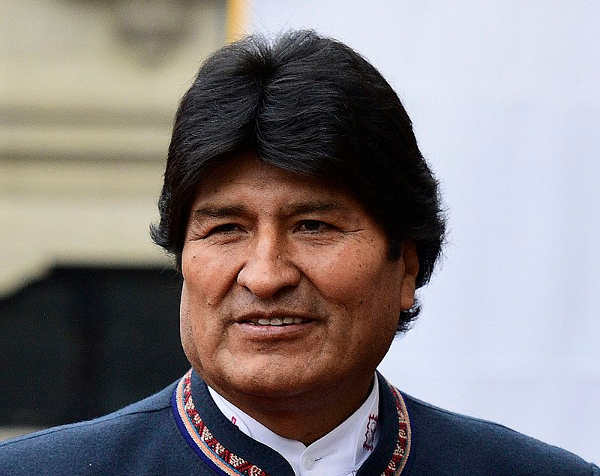
Bolivia's attorney general has opened a preliminary investigation into former president Evo Morales over the killing of three Europeans and the alleged torture of two others during a police raid in 2009 — the most serious legal threat yet against the leftist leader, who is already in hiding from separate arrest warrants. The inquiry, announced on Monday by acting attorney general José Armando Urioste, also names Morales's former vice-president, Álvaro García Linera, and centres on one of the darkest episodes of his presidency: the dawn raid on the Hotel Las Américas in Santa Cruz.
A week into the job, a politically explosive move
Urioste announced the preliminary investigation just one week after taking up the post of acting attorney general. In a letter to the supreme court, he said authorities were gathering evidence against Morales and García Linera over "the alleged commission of the crimes of murder, abuse, torture and unlawful detention," following a complaint filed by two rightwing lawmakers, Tomasa Yarhui and Rodrigo Antonio.
The step is remarkable for its targets: a former head of state and his deputy, investigated over events 17 years old. Neither Morales nor García Linera had commented on the announcement at the time of writing.
The 2009 raid at the Hotel Las Américas
At dawn on 16 April 2009, elite Bolivian police stormed the Hotel Las Américas in Santa Cruz, the economic capital of the country's opposition-minded lowlands. Police shot dead three men: Eduardo Rózsa Flores, a Bolivian-Croatian; Michael Dwyer, an Irishman; and Árpád Magyarosi, a Hungarian-Romanian. Two others — Bolivian-Croatian Mario Tadic and Hungarian Elöd Tóásó — were arrested and say they were tortured in custody.
According to The Guardian, the Morales administration claimed at the time that Rózsa Flores was leading a separatist plot funded by Santa Cruz's rightwing economic elite — and Morales himself, during an official visit to Venezuela as the raid unfolded, told reporters he had ordered the detention of the foreigners, whom he called "mercenaries."
The case did not end at the hotel doors. The survivors and the families of the dead took Bolivia before the Inter-American Commission on Human Rights, which concluded in 2021 that the Bolivian government had violated human rights in the episode. That finding now forms part of the evidentiary backdrop for the new investigation.
A pattern of accountability — or political persecution?
The probe lands as Morales's legal troubles multiply. He has spent months in hiding in Bolivia amid at least two active arrest warrants on separate matters, including accusations linked to protest violence and a trafficking allegation he denies.
Latin America has seen a wave of former leaders facing courts in recent years — from the bribery custody case of Venezuela's Álvaro Pulido to the sentencing of ELN leaders in Colombia. Morales's supporters are certain to frame the investigation as political persecution by rightwing forces: the complaint that triggered it came from rightwing legislators, and the acting attorney general has been in the job barely a week.
But the IACHR's 2021 conclusion that the state violated human rights gives the probe a harder legal foundation than a simple partisan vendetta — and the torture allegations by Tadic and Tóásó have never been fully addressed by a Bolivian court.
What comes next
A preliminary investigation is not a charge, and in Bolivia, prosecuting a former president requires supreme court involvement — which Urioste has already engaged by writing to the court. The questions now: whether investigators can assemble admissible evidence 17 years after the raid, whether García Linera faces real jeopardy, and how Morales's still-loyal base — which has taken to the streets for him before — responds.
One thing is clear: the Hotel Las Américas raid, once treated by the Morales government as a foiled foreign-backed plot, is being recast by its political opponents as a state crime. The battle over Bolivia's memory of 2009 is moving, at last, into a courtroom.
Frequently Asked Questions
Who is being investigated in Bolivia?
Former president Evo Morales and his former vice-president, Álvaro García Linera, over alleged murder, abuse, torture and unlawful detention connected to the 2009 Hotel Las Américas raid in Santa Cruz.
What happened at the Hotel Las Américas in 2009?
On 16 April 2009, elite police raided the hotel and shot dead three Europeans — Eduardo Rózsa Flores, Michael Dwyer and Árpád Magyarosi — arresting two others, Mario Tadic and Elöd Tóásó, who say they were tortured. The Morales government claimed the men were foreign mercenaries backing a separatist plot.
Why is the case resurfacing now?
Acting attorney general José Armando Urioste opened a preliminary investigation on 12 October 2026 after a complaint by two rightwing lawmakers, one week into his own tenure. The Inter-American Commission on Human Rights had already found in 2021 that Bolivia violated human rights in the episode.
What is Morales's current situation?
Morales has been in hiding in Bolivia for months amid at least two other active arrest warrants on separate allegations, which he denies. Neither he nor García Linera has commented on the new probe.
What are the next legal steps?
Urioste has written to the supreme court, which must be involved in any prosecution of a former president. Investigators are now gathering evidence; no charges have been filed.