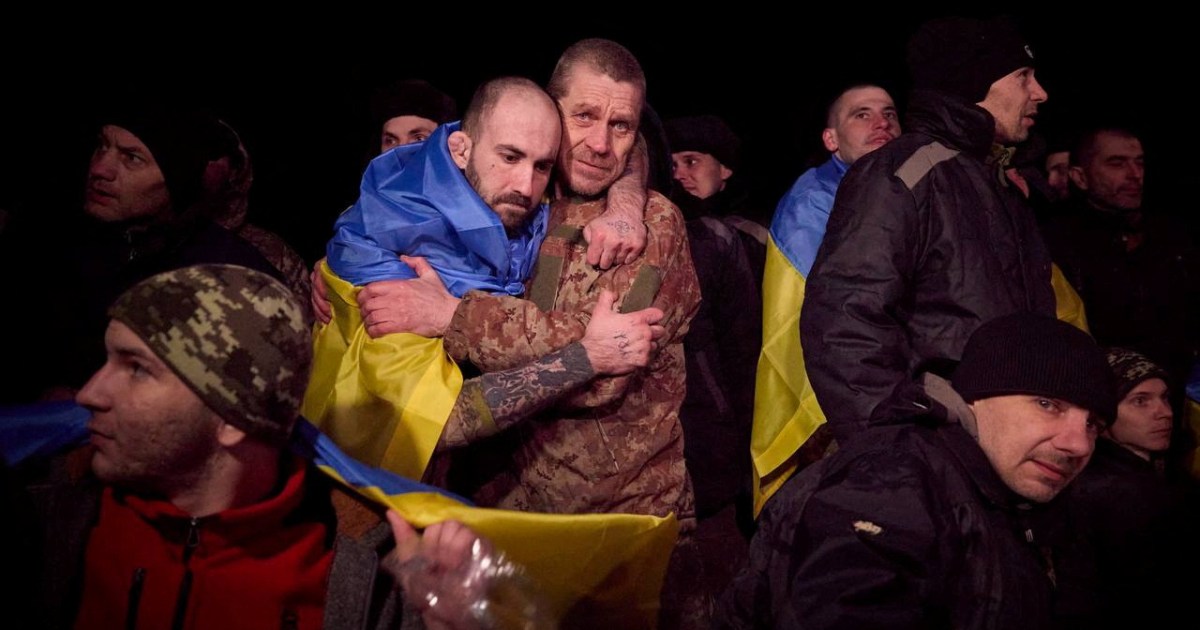
Moscow has announced, with considerable fanfare, a combat battalion made up of Ukrainian "volunteers" fighting under Russian command. The story, as Russia tells it, is one of defectors choosing the Kremlin's cause. But an investigation by DW reveals a far darker account: veterans and former prisoners of war describe a system of torture and coercion that turned captivity into a pipeline for cannon fodder.
At the centre of the reporting is Pavlo Oliynyk, 25, a former senior lieutenant in Ukraine's armed forces captured in the Donbas region in 2024. As a prisoner of war, he says he was electrocuted, beaten and psychologically tortured. When the offer came to join the so-called Maksym Kryvonis battalion — named after a 17th-century Cossack commander — he accepted. Not out of conviction, he says, but to escape captivity.
Oliynyk told DW, which reached him through his lawyer, that he hoped the offer would get him to the front lines, where he could attempt to cross back to Ukrainian-controlled territory. It was, in his telling, not defection but a calculated bid for freedom.
How the units were built
Reports of Russian combat units made up of Ukrainian POWs and former servicemen began surfacing in late 2022. Several smaller detachments were formed, and in August 2026 they were merged into what Moscow calls the "Ukrainian Volunteer Special Forces Brigade."
The Kryvonis battalion has drawn the most public attention for apparently having taken part in combat. Its true size is unknown: Russian media claims around 200 fighters, while available footage suggests only several dozen. An investigative team from Ukraine's public broadcaster Suspilne identified more than 30 members and confirmed all were former Ukrainian servicemen captured by Russian forces between 2023 and 2024.
A propaganda mirror
Pavel Luzin, an expert on Russian defence policy at the Center for European Policy Analysis, argues the units are an "imitation" of the Russian Volunteer Corps and the Freedom of Russia Legion — units inside the Ukrainian armed forces made up of Russian citizens fighting against Moscow. Ukrainian intelligence, according to the reporting, broadly agrees: the "volunteer" label is designed to distract from the very existence of Russia's own foreign-legion-style formations.
The symmetry is convenient for the Kremlin. If Kyiv can field Russians fighting Russia, Moscow can claim Ukrainians are fighting Ukraine. What the comparison omits is consent — and the testimony of men like Oliynyk suggests consent is precisely what was absent.
The legal grey zone
Under international humanitarian law, compelling prisoners of war to serve in the armed forces of a hostile power is prohibited. Recruiting POWs through torture would amount to a war crime. Moscow, of course, frames everything as voluntary, which is why investigations like this one — with named, traceable former soldiers — matter: they convert an abstract legal principle into documented human experience.
The case also touches on a live diplomatic sore point. Seoul's recent recall of its ambassador over a POW dispute shows how the treatment of prisoners has become a weaponised front in the war's wider information battle — one that now stretches well beyond the battlefield.
What happens next
Ukraine's intelligence services and journalists continue to identify members of the brigade, while analysts watch for whether Moscow expands the model. For now, the Kremlin gets its propaganda video of "Ukrainians fighting Ukraine." What it cannot control is what the men in those videos say when they get out — and what they say, increasingly, is that they never chose this war twice.
Frequently Asked Questions
What is the Maksym Kryvonis battalion?
It is a Russian-formed combat unit made up of former Ukrainian servicemen and prisoners of war, named after a 17th-century Cossack commander. In August 2026, it was merged with other similar detachments into the so-called "Ukrainian Volunteer Special Forces Brigade."
Are the fighters really volunteers?
That is the contested claim. Russia calls them volunteers. But DW's investigation found that members were largely Ukrainian POWs captured between 2023 and 2024, and interviewed veterans describe torture and coercion — including electrocution and beatings — preceding their "choice" to join.
Why does Russia maintain these units?
Analysts believe the units serve a dual purpose: propaganda value (countering Ukraine's own Russian-defector units) and raw manpower. Experts also describe them as an imitation strategy — mirroring the Russian Volunteer Corps and Freedom of Russia Legion to neutralise Kyiv's narrative advantage.
How is this connected to the wider diplomacy of the war?
The treatment of prisoners has become entangled with diplomacy, from stalled ceasefire talks to disputes between governments over prisoner treatment. Every verified account of coerced POWs hardens the positions on all sides.
Sources
- DW — "Who are the Ukrainian 'volunteers' under Russian command?" (Oct 11, 2026), including reporting on Pavlo Oliynyk, Suspilne's identification of battalion members, and analysis from Pavel Luzin.
Original reporting by Chronicle Editorial, based on the sources cited above.