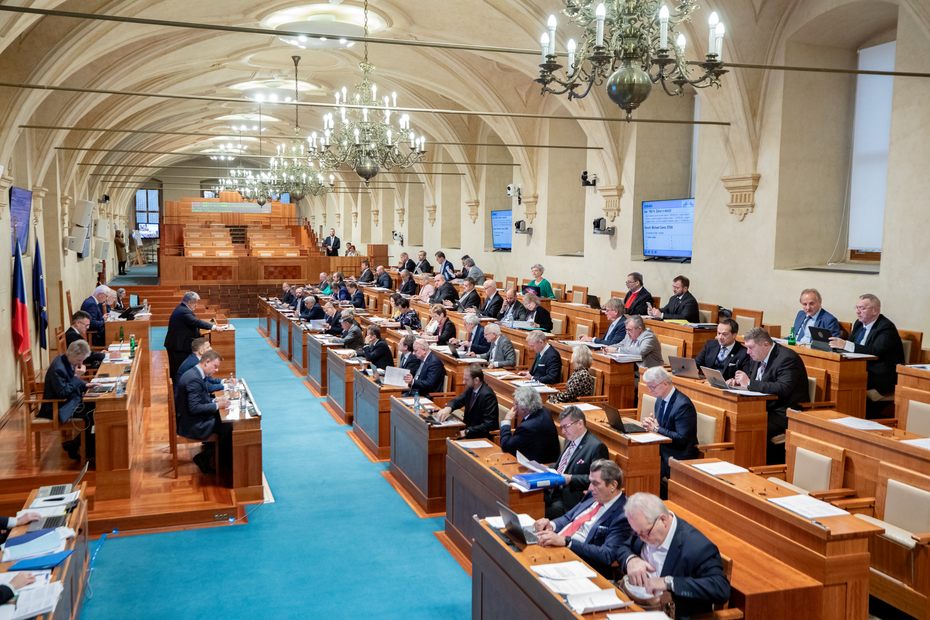
A political movement led by populist billionaire Prime Minister Andrej Babiš finished first in Saturday's opening round of voting for the Czech Senate, with 13 of its candidates advancing to runoffs, but none won a seat outright — a result that denied Babiš an immediate breakthrough in an upper chamber still controlled by pro-Western opposition parties.
Table of Contents
- The results
- What happens next
- A popularity test for Babiš
- Why the Senate matters
- Municipal elections
- Key takeaways
- Frequently Asked Questions
- Sources
- From Chronicle
The results
Voters cast ballots on Friday and Saturday in the first round of the Senate election, in which 27 of the chamber's 81 seats were up for grabs, alongside nationwide municipal elections. According to preliminary results released by the Czech Statistics Office, with votes from more than 93 percent of polling stations counted, Babiš's centrist ANO (YES) movement had the most candidates — 13 — heading into next weekend's runoffs, the Associated Press reported.
Up to six candidates appeared to have crossed the 50 percent threshold needed to win their seats outright in the first round — none of them from ANO. That leaves the remaining 21 seats to be decided in runoff votes on October 16 and 17, where the top two finishers in each district will face off.
What happens next
The second round is set for October 16–17 in districts where no candidate secured a simple majority, according to the 2026 Czech Senate election page on Wikipedia. The 27 contested districts span the country, from Prague's districts and Brno to Ostrava, Karviná and Zlín.
The runoffs will determine whether ANO can convert its first-round momentum into real gains in a chamber it has long struggled to win over — or whether the pro-Western opposition retains its hold.
A popularity test for Babiš
The elections were widely seen as the first test of Babiš's standing since he returned to power after a decisive victory in parliamentary elections in October 2025. The billionaire founder of the Agrofert food and chemicals group, who previously served as prime minister from 2017 to 2021, now heads a nationalist coalition with the Motorists for Themselves (AUTO) and Freedom and Direct Democracy (SPD) parties.
Since taking office, Babiš has distanced himself from support for Ukraine, campaigning on domestic priorities such as energy prices, pensions and housing amid public unease that too much money was being sent to Kyiv. That pivot puts him at odds with President Petr Pavel and the opposition, who remain firm supporters of Ukraine — a dynamic echoed across Europe as war fatigue collides with rising energy costs, as seen in the recent diesel row between Washington and Kyiv.
Babiš also survived a no-confidence vote earlier this month tied partly to the country's widening budget deficit, Time Bulletin reported.
Why the Senate matters
Although the Czech lower house dominates the legislative process, the Senate plays an important role in passing constitutional amendments and approving Constitutional Court judges. That gives the upper chamber real leverage over the country's institutional direction — and explains why Babiš has his sights on it.
The election comes at a politically charged moment for European centrists and populists alike. Just weeks earlier, France's centre-left rallied behind Raphaël Glucksmann, showing how crowded Europe's electoral calendar has become ahead of a pivotal 2026.
Municipal elections
In the parallel municipal elections, various independent candidates and groupings appeared to be winning most seats nationwide, a traditional pattern in Czech local politics. ANO was heading for victories in some regional capitals — but not in Prague.
Key takeaways
- Babiš's ANO led the first round of the Czech Senate election, advancing 13 candidates to runoffs, but won no seat outright.
- 27 of the 81 Senate seats were contested; 21 will be decided in runoffs on October 16–17.
- The Senate, controlled by pro-Western opposition parties, approves constitutional amendments and Constitutional Court judges.
- The vote is the first electoral test for Babiš since he returned as prime minister in October 2025.
- ANO failed to take Prague in the simultaneous municipal elections.
Frequently Asked Questions
How many seats were up for election in the Czech Senate?
Twenty-seven of the chamber's 81 seats were contested in the first round on October 9–10, 2026.
When are the runoffs?
Districts where no candidate won a majority will vote again on October 16–17, with the top two finishers in each race competing.
Why does the Czech Senate matter?
While the lower house dominates lawmaking, the Senate is essential for constitutional amendments and confirms Constitutional Court judges.
Is this Babiš's first electoral test since returning to power?
Yes. The October 2026 local and Senate elections are the first since Babiš's ANO won parliamentary elections in October 2025 and formed a coalition government.