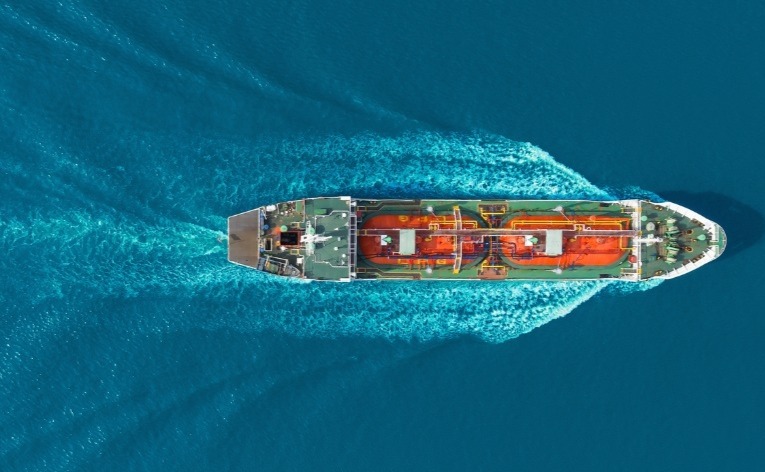
The United States has struck a cargo vessel in the Gulf of Oman that it accused of trying to run the naval blockade on Iran, while a separate attack on an oil tanker near Sharjah on Sunday left all Indian crew members safe, officials said. The two incidents within a single day mark the sharpest escalation yet in the campaign against commercial shipping tied to the Iran war.
The American strike targeted a cargo ship that, according to Washington, was attempting to breach the blockade of Iranian waters, Al Jazeera reported in its early Sunday coverage. Details of casualties on board the vessel were not immediately available.
Tanker attacked off Sharjah, Indian crew safe
Separately, an oil tanker came under attack at the Sharjah anchorage, India's ports and shipping minister Sarbananda Sonowal said, confirming that all Indian crew members aboard were safe. The Indian consulate separately said Indian seafarers were safe after an incident off Ras Al Khaimah, according to Khaleej Times' live coverage.
The United Kingdom Maritime Trade Operations (UKMTO) also acknowledged a maritime incident in the Gulf of Oman, adding to a growing log of reported attacks and interdictions in the waterway that carries a fifth of the world's oil.
It was not immediately clear whether the tanker attacked near Sharjah was the same vessel targeted by US forces or a separate incident. No group had publicly claimed responsibility for the attack on the tanker by Sunday morning.
A blockade under fire
The incidents land in the middle of an intensifying pressure campaign at sea. Washington has tightened its naval blockade on Iran as part of the wider war effort, and commercial vessels suspected of breaking the embargo have increasingly become targets. Shipping insurers and operators have warned for months that the Gulf of Oman's busy lanes are becoming a grey zone where a routine transit can turn into an international incident.
The escalation comes days after Saudi Arabia's airports came under deadly attack and amid warnings from the White House of possible US strikes on the Houthis (see our earlier coverage). The region's two chokepoints — the Strait of Hormuz and the Gulf of Oman — are now both flashpoints. Maritime safety has become a defining economic dimension of the war, with sailors in the Hormuz corridor already demanding pay bonuses for the risk.
Markets on edge
Oil markets have been swinging violently on each new incident, and Wall Street has repeatedly slid on Iran-war fears. Analysts say the real danger is not a single strike but the slow strangulation of commercial confidence: every attack nudges insurance premiums higher and pushes some operators to reroute around the Arabian Peninsula entirely.
For India, which relies heavily on Gulf energy and employs large numbers of seafarers in the region, the crew's safety was the immediate good news. New Delhi has repeatedly urged restraint at sea while steering clear of taking sides in the confrontation.
What to watch next
Washington has not yet said whether Sunday's strike on the cargo ship was a one-off enforcement action or the start of a broader interdiction campaign against blockade runners. The Saudi-led coalition, for its part, said it had destroyed a drone overnight, signalling the air campaign over the Gulf is also widening. With US, Saudi, Houthi and Iranian forces all operating in the same crowded waters, the margin for a miscalculation that drags shipping — and the global oil market — deeper into the conflict has rarely been narrower.
Frequently Asked Questions
What happened in the Gulf of Oman on Sunday?
US forces struck a cargo vessel accused of trying to run the blockade on Iran, while an oil tanker was attacked near Sharjah. All Indian crew members on the tanker were reported safe.
Were the two incidents connected?
It was not immediately confirmed whether they involved the same vessel. US officials described a strike on a blockade runner; the Sharjah attack was reported separately by Indian authorities.
What is the Iran blockade?
The United States has imposed a naval blockade on Iran as part of the wider 2026 war, interdicting vessels suspected of violating sanctions or supplying the Iranian war effort.
How is this affecting oil markets?
Each maritime incident has triggered price swings and pushed shipping insurance premiums higher, raising fears of broader disruption to energy flows through the Gulf of Oman and the Strait of Hormuz.