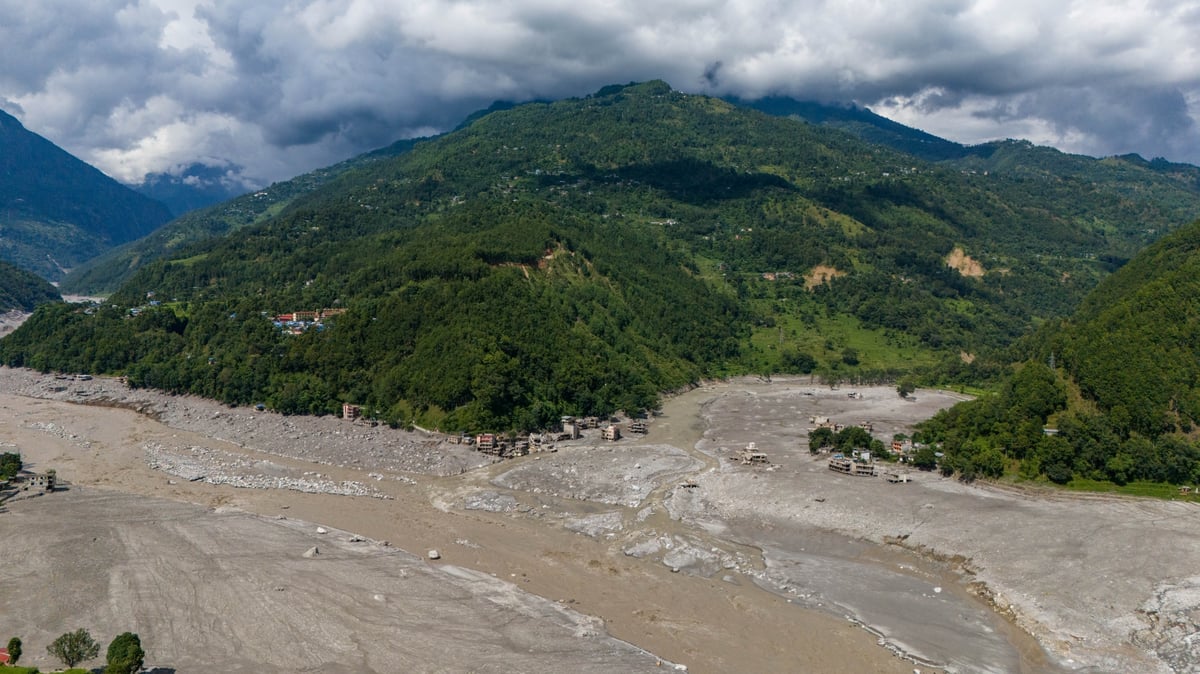
Nepalese authorities urged thousands of villagers to move to higher ground on Sunday after a landslide blocked a major river in the central Himalayas, unleashing a flash flood that swept away homes, bridges and a hydropower camp downstream — the second major water disaster to hit the country in less than three months.
The disaster unfolded in Chumnubri village in Gorkha district, roughly 100 kilometres west of Kathmandu, where a dry landslide blocked the Budhi Gandaki River overnight. With its natural course dammed, the river breached the blockage and sent a surging wall of black, debris-laden water downstream in the early hours of the morning, Reuters reported.
Table of Contents
- A river dammed overnight
- Damage across five districts
- A country still grieving August's catastrophe
- Rescue operations and warnings
- Frequently Asked Questions
A river dammed overnight
Gorkha's chief district officer, Dharmendra Kumar Mishra, said officials first learned of a major flood around 4:35 am local time. Nepal's National Disaster Risk Reduction and Management Authority (NDRRMA) measured the Budhi Gandaki rising from 3.66 metres at 6:30 am to 8.43 metres by 8:40 am — well above the danger mark of 5 metres — with the water climbing more than two metres in just ten minutes at one point.
The agency confirmed that the flooding was not caused by rain. Instead, a landslide above the settlement of Siuribas blocked the Chumke Khola stream, and the released water thundered downstream. Videos shared on social media showed the river turning completely grey-black with thick mud and debris, carrying boulders the size of cars.
In a sign of the flood's violence, the surge washed away the very measurement station tracking it. "Since the flood also washed away the measurement center, including the bridge, further details could not be obtained," the NDRRMA said in a statement.
Damage across five districts
Officials reported about a dozen houses swept away along with two suspension bridges, a damaged hydropower project camp, and a highway bridge connecting Gorkha with neighbouring Dhading district. Indian news outlet NDTV put the number of destroyed structures higher, reporting more than 35 houses and bridges washed away.
Crucially, no deaths or injuries were reported — a fact officials attributed to rapid SMS alerts sent from the NDRRMA's Flood Forecasting Section at 6:40 am, warning riverside residents not to approach the river and to stay on high ground until the flood passed.
The national disaster authority placed communities along the river in Gorkha, Tanahun, Chitwan, East Nawalparasi and West Nawalparasi districts on alert, warning residents as far downstream as Trishuli Dobhan that conditions remained "extremely high risk."
A country still grieving August's catastrophe
Sunday's flood carries a painful echo. The Budhi Gandaki is a tributary of the Trishuli River, downstream from another tributary where a glacier collapse triggered a catastrophic flood on August 26 that killed 1,457 people, with thousands still missing — one of the deadliest mountain disasters in Nepal's modern history.
The proximity has intensified scrutiny of Nepal's ability to anticipate cascading disasters in the Himalayas, where warming temperatures destabilise glaciers, glacial lakes and mountain slopes alike. The country's glacial lake drainage programme was launched partly in response to this growing threat, but experts say remote valleys like Chumnubri remain perilously difficult to monitor in real time.
Rescue operations and warnings
Army and police rescue personnel reached the affected area and were monitoring conditions from a helicopter, officials said. Prime Minister Balendra Shah said in a social media post that the army had rescued six people from Jagat who faced landslide risk, while another 18 workers at the damaged hydropower camp escaped to safety on their own, according to the NDRRMA's Dharam Raj Uprety.
"We have asked villagers living along the river banks downstream to evacuate and remain safe," Mishra told Reuters, as authorities warned of aftershock landslides that could dam the river again.
The episode underlines a widening pattern of sudden-onset natural disasters across Asia this autumn, straining the region's emergency response systems and raising fresh questions about climate adaptation in mountain communities.
Frequently Asked Questions
What caused the Nepal flash flood on October 11, 2026?
A dry landslide in Chumnubri village, Gorkha district, blocked the Budhi Gandaki River overnight. When the natural dam breached, it released a sudden surge of muddy water downstream. The NDRRMA confirmed the flood was not caused by rainfall.
Were there any casualties?
No deaths or injuries had been reported as of Sunday. Officials credited early-warning SMS alerts sent at 6:40 am with getting riverside residents to higher ground in time. About a dozen houses, two suspension bridges, a hydropower camp and a highway bridge were destroyed or damaged.
How is this connected to the August flood disaster?
The Budhi Gandaki is a tributary of the Trishuli River, downstream from the tributary where a glacier collapse caused catastrophic flooding on August 26, 2026, killing 1,457 people with thousands still missing. Sunday's landslide-triggered flood struck a nearby valley, compounding trauma in the region.
Which areas were put on alert?
The NDRRMA alerted residents along the Budhi Gandaki in Gorkha, Tanahun, Chitwan, East Nawalparasi and West Nawalparasi districts, warning that rivers remained extremely high risk and urging people to stay in high places.