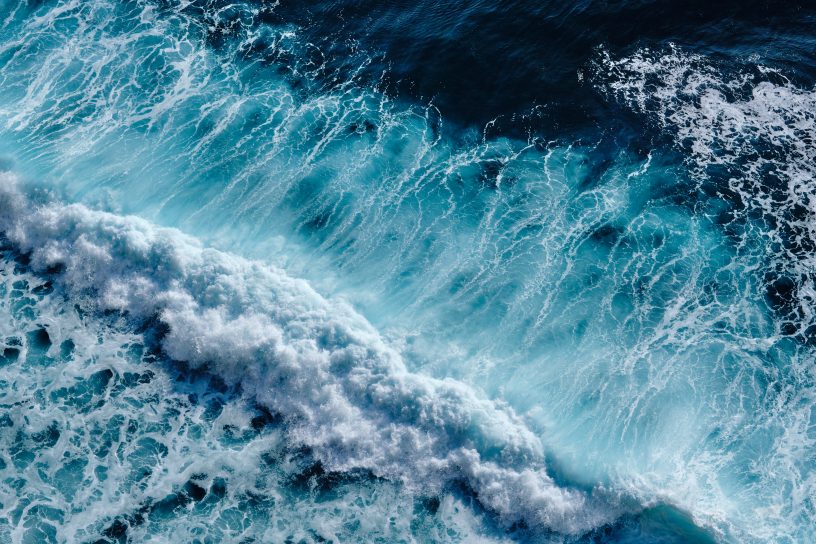
President Donald Trump has floated renaming one of the world's two largest oceans after himself, telling supporters at a campaign rally in Clarksville, Tennessee, on Saturday that the Atlantic or Pacific should become the "Trump Ocean" or "Ocean of the Americas" before he leaves office. The remark marks the latest — and by far the grandest — entry in his ongoing campaign to redraw the world's maps with his own name.
Speaking to a cheering crowd on October 10, ahead of the November 3 midterm elections, Trump said he wanted an ocean and a major river renamed before the end of his presidency in 2028. "We need a river, we need an ocean," he told supporters. "So, I was thinking of either the Atlantic or the Pacific. We call it 'Trump Ocean' or 'Ocean of the Americas.' Something like that." The audience, according to The New York Post, erupted in laughter and applause.
A running obsession with the map
The ocean proposal is not an isolated joke. Trump has already renamed several landmarks since returning to the White House in January 2025. Within weeks of taking office, he signed an executive order renaming the Gulf of Mexico as the Gulf of America for federal purposes, and restored the name Mount McKinley to Alaska's Denali, reversing the 2015 decision that honoured Alaska Native traditions. In August, he changed the name of Lake Ontario to "Lake America" via executive order, in a move widely read as retaliation over trade tensions with Canada.
He had already tested the waters once before: at an executive order signing ceremony on August 27 he first floated the idea of renaming one of the oceans, then revisited it with gusto in Clarksville. "Before I get out, I think we should have an ocean," he said. "And we need a great river."
Two rivers spared — the rest still in play
Trump did carve out exceptions. He ruled out renaming the Hudson River, citing admiration for the explorer Henry Hudson — "he did a good job sailing up that sucker a long time ago" — and the Mississippi, adding "I love Mississippi. We won that state by so much." According to the Hindustan Times, he did not say which ocean he favoured, nor did he submit any formal proposal.
The president has a growing list of unimplemented name changes: he has floated renaming the state of New Mexico as "New America" and the Strait of Hormuz as the "Trump Strait," though he has not followed through on either. Last year his administration renamed the headquarters of the Institute of Peace as the "Donald J. Trump Institute of Peace," a move that came amid his public campaign for the Nobel Peace Prize — a prize that went, days ago, to ICJ judge Navi Pillay, a decision Trump slammed publicly.
A legal and diplomatic reality check
As the Associated Press has noted, the US government does have authority to change landmark names on domestic maps — but it cannot compel other nations or international organisations to adopt those changes. The "Gulf of America" order, for instance, applies only within the United States; Mexico and the rest of the world still call it the Gulf of Mexico, as they have for more than 400 years. An ocean rename would be even more symbolic: international hydrographic authorities, the United Nations, and the rest of the world's cartographers are under no obligation to follow.
Still, the pattern is familiar: some of Trump's name changes began as apparent jokes at rallies and were later implemented by executive order. That history is precisely why allies and adversaries alike now treat each new proposal seriously rather than dismissing it.
Why it matters beyond the punchline
Beyond the entertainment value, the remark fits a broader pattern of assertive — critics would say unilateral — American unilateralism. The same instinct that renamed a shared gulf also drives Pacific climate politics, where small island nations worry that Washington's attention to branding comes at the expense of attention to substance. Mockery online was swift: social media users across the political spectrum questioned whether renaming oceans was the best use of presidential time, while supporters cheered it as trademark Trump showmanship.
Whether the "Trump Ocean" ever appears on a map outside of campaign merchandise remains to be seen. But the president's point is unmistakable: with two years left in office, he intends to leave his name on as much of the planet as he can.
Frequently Asked Questions
What did Trump actually propose?
At a rally in Clarksville, Tennessee, on October 10, he said he wants to rename either the Atlantic or Pacific Ocean as the "Trump Ocean" or "Ocean of the Americas" — plus a major river — before he leaves office in 2028. He named no formal proposal and did not pick between the two oceans.
Can a US president rename an ocean?
Within the United States, the federal government can change names on domestic maps and for federal purposes. It cannot force other countries, the United Nations, or international cartographic authorities to adopt the new name. The "Gulf of America" order, for example, applies only inside the US.
Which names has Trump already changed?
He renamed the Gulf of Mexico as the Gulf of America and restored the name Mount McKinley to Alaska's Denali by executive order, changed Lake Ontario to "Lake America," and renamed the Institute of Peace headquarters as the "Donald J. Trump Institute of Peace."
Has Trump floated other renaming ideas that went nowhere?
Yes — he has suggested renaming the state of New Mexico as "New America" and the Strait of Hormuz as the "Trump Strait," but has not followed through on either.