The Middle East and Central Asia is heading for an economic contraction in 2026, the International Monetary Fund (IMF) has warned, as the fallout from the United States–Israel war on Iran ripples through energy markets, shipping lanes and government budgets across the region.
In its latest economic outlook, published on Tuesday, the Fund now expects the region's gross domestic product to shrink by 0.3 percent this year. That is a dramatic reversal from the 1.9 percent expansion it had projected as recently as April, and it makes the Middle East and Central Asia the only region in the world forecast to contract in 2026, according to Al Jazeera.
The downgrade captures a war that has moved well beyond the battlefield. Months of strikes, retaliation and disruption around the Strait of Hormuz — the narrow waterway that in peacetime carries about a fifth of the world's oil — have choked one of the global economy's most important arteries, and the economies closest to it are paying the steepest price.
Table of Contents
- The sharpest contractions
- Why Hormuz matters so much
- A region out of step with the world
- What the IMF sees ahead
- Frequently Asked Questions
The sharpest contractions
The Fund's country forecasts show just how unevenly the damage is landing. Kuwait is projected to suffer the deepest contraction in the region, with output falling 16.7 percent. Iraq follows at 16 percent, and Qatar at 15.6 percent. Bahrain's economy is expected to shrink 11.3 percent, while Iran's is projected to contract 7.6 percent.
Saudi Arabia, the region's largest economy, is forecast to record negative growth of 3.3 percent — a more moderate decline that the Fund links in part to Riyadh's ability to offset some of the damage to its energy sector by moving more oil through the East-West pipeline, bypassing the strait.
At the other end of the spectrum, Kyrgyzstan is expected to post the region's strongest growth, with GDP forecast to expand 9 percent — a reminder that Central Asia's smaller, less oil-dependent economies are experiencing a very different year from their Gulf neighbours.
The scale of the Gulf declines is striking. Double-digit contractions of this kind are rare outside wartime economies, and they reflect how completely the conflict has disrupted the normal flow of oil, goods and investment through the region.
Why Hormuz matters so much
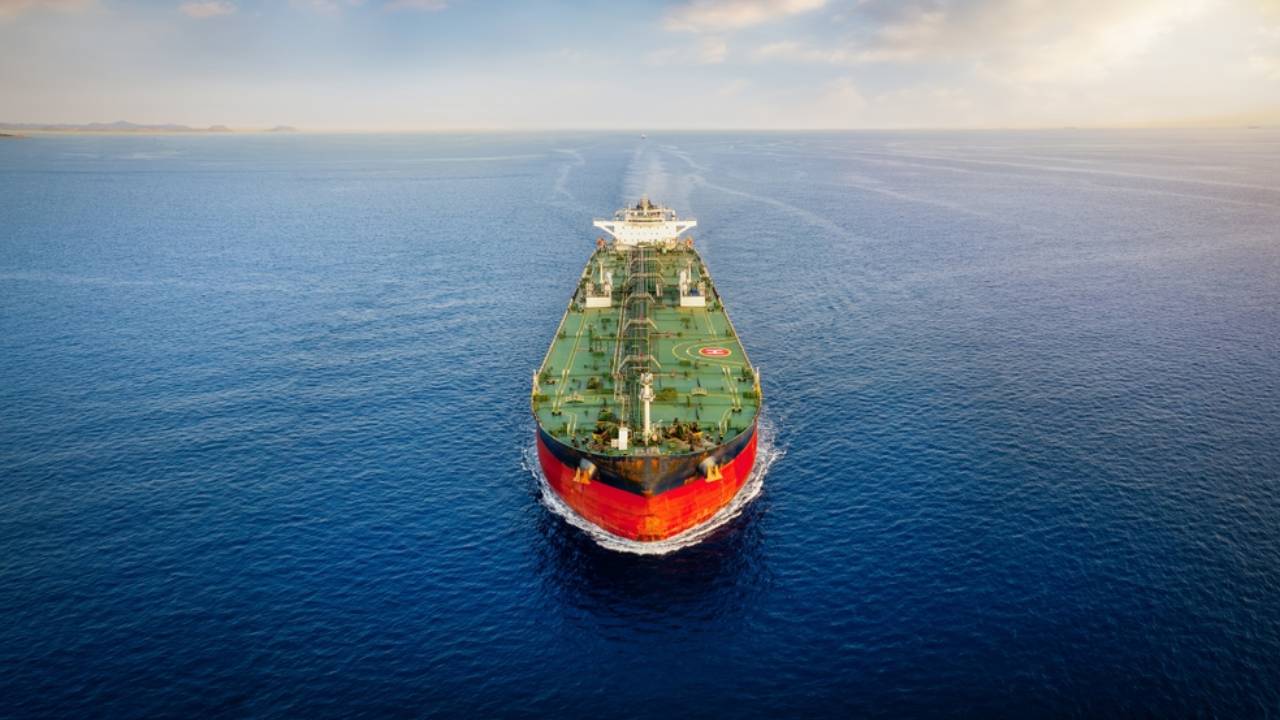
The IMF points to the prolonged disruption of shipping through the Strait of Hormuz as a central driver of the downgrade. The strait, between Iran and Oman, is the world's most important oil transit chokepoint. When vessels cannot move through it safely — or when insurers, crews and shipping companies judge the risk too high — the effects cascade quickly: export revenues fall, import costs rise, and governments that depend on hydrocarbon income face sudden budget holes.
That disruption has not been abstract. Tanker traffic through Hormuz has faced repeated projectile strikes in recent weeks, and the security situation has forced shippers to reroute, delay or suspend voyages. For economies built around energy exports, the strait is not one trade route among many — it is the route.
Saudi Arabia's experience illustrates both the vulnerability and the limits of workarounds. By pushing more crude through its East-West pipeline to Red Sea terminals, Riyadh has been able to keep some exports flowing despite the strait disruption. But pipelines cannot fully replace seaborne capacity, and the costs of rerouting, insurance and security still weigh on the economy.
The Fund's outlook also lands against a backdrop of wider energy-market strain. Governments elsewhere have been tapping emergency reserves to cushion fuel markets, as G7 nations moved to release oil and diesel reserves in response to the same shock.
A region out of step with the world
What makes the IMF's forecast especially notable is the contrast with the rest of the world. While the Middle East and Central Asia contracts, every other major region is still expected to grow this year.
Emerging and developing Asia is forecast to expand 5.1 percent, and Sub-Saharan Africa 4.5 percent. Latin America and the Caribbean are projected to grow 2.3 percent. The United States is forecast to grow 2.3 percent, China 4.5 percent, and the eurozone 1.1 percent.
Globally, the Fund actually nudged its growth forecast up slightly, to 3.1 percent from 3 percent in its previous outlook — a sign that, outside the conflict zone, economic activity has proved more resilient than expected this year. The war's economic damage, in other words, is concentrated rather than universal: devastating for the countries in and around it, manageable so far for the rest of the world.
That concentration carries its own risk. A region that falls behind while others advance can face compounding problems — weaker currencies, higher borrowing costs, reduced investment — that make recovery slower even after the shooting stops.
What the IMF sees ahead
The Fund cautioned that the global economy still faces multiple risks. Further escalation of conflicts tops the list, alongside a reassessment of expectations around artificial intelligence, renewed trade tensions, and fiscal vulnerabilities in heavily indebted economies. Any of those, the Fund warned, could weaken growth.
On the upside, it pointed to stronger momentum in AI investment and productivity gains from artificial intelligence, or a sustained easing of geopolitical and trade tensions, as factors that could strengthen growth.
For the Middle East and Central Asia, the path back to growth runs through the same channel that caused the damage: an end to the disruption of shipping and energy flows. Until the strait is reliably safe and the war's economic aftershocks fade, the region's economies will remain hostage to a conflict they did not all choose. The Fund's latest numbers put a price on that exposure — and it is one of the steepest downgrades it has issued for any region this year.
The outlook also underscores a broader point made at recent IMF and World Bank meetings, where debt and the war agenda dominated discussions: the intersection of armed conflict and economic fragility is now one of the defining risks to the global outlook, not a distant tail risk.
Frequently Asked Questions
What does the IMF now forecast for the Middle East and Central Asia in 2026?
The IMF expects the region's GDP to contract by 0.3 percent in 2026, a sharp downgrade from the 1.9 percent expansion it projected in April. It is the only region in the world forecast to shrink this year.
Which countries face the steepest declines?
Kuwait is forecast to contract 16.7 percent, followed by Iraq at 16 percent and Qatar at 15.6 percent. Bahrain is projected to shrink 11.3 percent, Iran 7.6 percent, and Saudi Arabia 3.3 percent.
Why is the region contracting?
The Fund cited the prolonged disruption to shipping in the Strait of Hormuz, a conduit for about one-fifth of global oil supplies in peacetime, as a key driver, alongside the wider fallout of the US–Israel war on Iran.
How does the rest of the world compare?
Every other major region is still expected to grow. Global GDP is forecast to expand 3.1 percent, with emerging and developing Asia at 5.1 percent, Sub-Saharan Africa at 4.5 percent, the United States at 2.3 percent, China at 4.5 percent and the eurozone at 1.1 percent.
Which country in the region is growing fastest?
Kyrgyzstan is expected to record the region's strongest growth, with GDP forecast to expand 9 percent.
What risks does the IMF flag for the global economy?
The Fund warned that further escalation in conflicts, a reassessment of expectations around artificial intelligence, renewed trade tensions and fiscal vulnerabilities could all weaken growth, while stronger AI investment and productivity gains or an easing of geopolitical tensions could strengthen it.