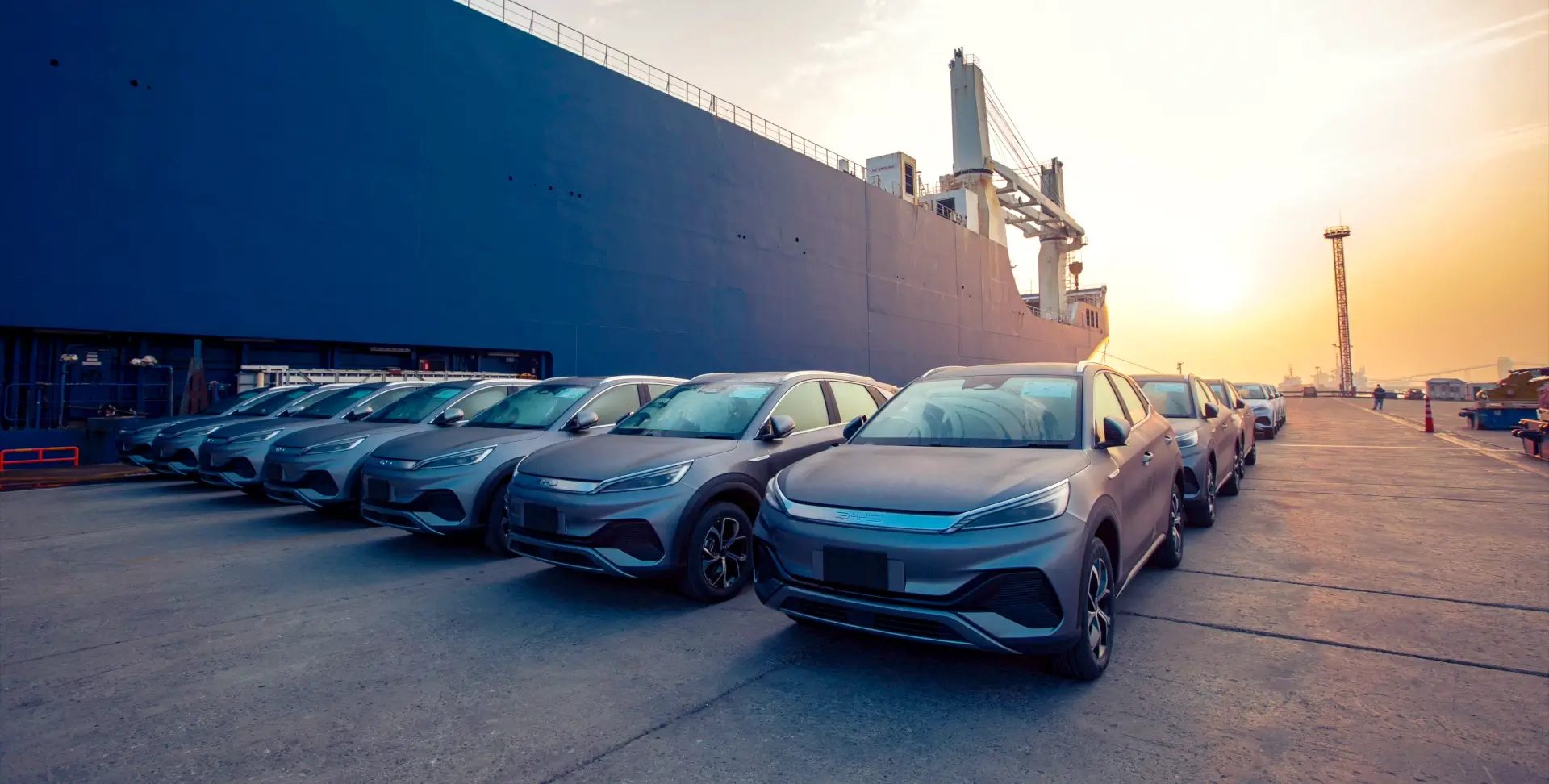
The European Union has struck a deal with China to limit imports of Chinese-built hybrid vehicles to 350,000 a year, according to The Guardian. The cap closes the plug-in hybrid loophole that Chinese carmakers turned into a booming workaround after Brussels slapped heavy anti-subsidy tariffs on their pure-electric cars in 2024.
The agreement is the concrete outcome of talks that began just days ago, when EU negotiators headed to Beijing seeking curbs on cheap hybrid imports — a mission this site reported on October 7. Brussels has now moved from asking to agreeing: a hard numerical ceiling on the hybrids entering the European market each year.
From tariff walls to quota caps
The story of this deal starts in 2024. After an anti-subsidy investigation, the EU imposed tariffs of up to 35.3% on battery-electric cars made in China, arguing that Beijing's subsidies gave brands like BYD and SAIC's MG an unfair edge over Europe's own manufacturers. The tariffs worked — up to a point. Chinese exporters simply changed what they shipped.
Plug-in hybrids were never covered by the investigation, so they sailed through European customs untouched. Chinese brands redirected their export mix toward hybrids, and showrooms across Europe filled with competitively priced Chinese plug-in models. The competitive pressure on European carmakers never lifted; it merely moved to a different drivetrain.
Brussels spent months deciding what to do. Raising tariffs on hybrids risked a retaliation spiral; doing nothing left the original anti-subsidy measures looking hollow. A negotiated cap is the compromise: it gives European manufacturers breathing room without another tariff shock.
What 350,000 vehicles actually means
A cap of 350,000 vehicles a year is not a ban — it is a ceiling. Chinese hybrid sales in Europe have been climbing fast enough that a finite number, however large, changes the strategic calculus in Beijing. Export plans built on unlimited growth now have to fit inside a fixed envelope, forcing Chinese brands to choose between volume and margin on each model they ship.
For European manufacturers, the number is more important than it sounds. The quota buys time: time to scale up their own hybrid and affordable electric ranges, time to restructure production, and time to lobby for the industrial support that Volkswagen's leadership has already said Europe needs. The broader China-EU hybrid export negotiations have been running for months; this cap is their first hard output.
The open question is how the quota will be enforced — whether imports will be allocated by brand, auctioned, or simply halted at the border once the counter hits 350,000. Those mechanics matter enormously: a poorly designed allocation could reward the fastest importers rather than the fairest. Details of the enforcement mechanism have yet to be made public.
A managed trade-off, not a trade peace
Nobody should mistake this for the end of the China-EU car wars. Beijing has leverage of its own — retaliatory probes into European brandy, pork and dairy, plus the raw-material dominance that underpins battery production. A quota deal that suits Brussels today could become a bargaining chip in tomorrow's dispute over something else entirely.
There is also an irony here. Europe's own climate targets need affordable electrified transport, and Chinese hybrids are among the cheapest ways to get consumers out of pure combustion cars. The cap protects European jobs and plants — but it also slows, at the margins, the very transition Brussels wants to accelerate.
Still, the deal marks a shift in how Europe handles Chinese industrial competition: away from blunt tariffs and toward negotiated, rules-based containment. If the quota holds, expect it to become the template — first hybrids, then whatever the next export surge turns out to be.
Frequently Asked Questions
What did the EU and China agree?
According to The Guardian, the EU and China agreed to cap annual imports of Chinese-built hybrid vehicles into Europe at 350,000 vehicles.
Why are hybrids being restricted now?
The EU imposed tariffs of up to 35.3% on Chinese battery-electric cars in 2024, but plug-in hybrids were outside that investigation's scope. Chinese exporters shifted to hybrids, so the competitive pressure simply moved from one category to another.
Is this a tariff?
No. It is a quota — a numerical limit on how many vehicles can be imported per year — rather than a tax on each vehicle. It follows days of negotiations after EU officials travelled to China seeking curbs.
What happens to Chinese brands like BYD?
They can still sell hybrids in Europe, but within a fixed total envelope of 350,000 vehicles a year. That forces them to prioritise their most profitable models and markets.
Where can I read the original reporting?
The Guardian's original report is here.