The Saudi-led military coalition fighting Yemen's Houthis said on Thursday, 15 October 2026, that it had intercepted and destroyed a cruise missile in the Medina region — home to one of Islam's holiest cities — but the Houthis swiftly denied carrying out any such attack, calling Riyadh's claim a "shameless and brazen lie."
Coalition spokesman Major General Turki Al-Malki announced the interception on X, writing that his forces had carried out the "interception and destruction of a cruise missile in the Medina region." State media published the same statement. No further details were provided about the missile's origin or its intended target, as reported by Channel News Asia.
Table of Contents
- The Coalition's Claim
- The Houthis' Denial
- A Week of Escalation
- Why Medina Matters
- Frequently Asked Questions
The Coalition's Claim
Thursday's announcement is the latest in a string of air-defence claims by the Saudi-led coalition as the confrontation with the Iran-backed Houthis intensifies. Al-Malki's brief statement — delivered on social media and echoed by Saudi state outlets — said the cruise missile was intercepted in the Medina region in western Saudi Arabia.
The coalition has supported Yemen's government militarily against the Houthis since 2015, in a long-running civil war that has created one of the world's worst humanitarian crises. Air-defence interceptions over Saudi cities have become a regular feature of the conflict, but a claim involving Medina — the burial place of the Prophet Mohammed — carries exceptional symbolic weight.
The Houthis' Denial
The Houthis responded within hours. Military spokesman Yahya Saree wrote on X that Yemen's armed forces had "not carried out any operation today targeting Saudi territory," and described the Saudi claim of an attack on Medina as "a shameless and brazen lie," according to Malay Mail citing AFP.
The denial fits a commitment the group made earlier in the week. On Sunday, the Houthis said the holy cities of Mecca and Medina would be spared from their campaign, even as they vowed to continue targeting airports and other sites across Saudi Arabia.
In a separate and unverified claim on Wednesday, the Houthis said they had struck a Saudi Typhoon fighter jet with a surface-to-air missile over the northern Yemeni province of Saada, reporting a direct hit on an aircraft that had taken off from an airbase in Taif, western Saudi Arabia. Saudi authorities did not immediately comment on that allegation, Shafaq News reported.
A Week of Escalation
The Medina dispute comes at the end of a dramatic week in which Saudi Arabia has come under sustained Houthi attack — the kingdom's deadliest in years — and Riyadh has hit back with strikes against the group's stronghold in the Yemeni capital, Sanaa.
On Wednesday, the Houthis said they had targeted facilities belonging to Saudi oil giant Aramco, while Saudi officials reported a strike on a building in an area housing the energy giant's operations centre. The same day, the group claimed it had targeted King Khalid International Airport in Riyadh with a ballistic missile. According to Shafaq News, five Saudi airports have come under Houthi attack since 5 October, leaving 20 people dead and hundreds injured, disrupting air traffic and damaging property.
The escalation follows earlier rounds of the confrontation, including Houthi strikes that prompted international airlines to suspend flights to Riyadh and Saudi retaliation strikes on Yemeni targets.
Why Medina Matters
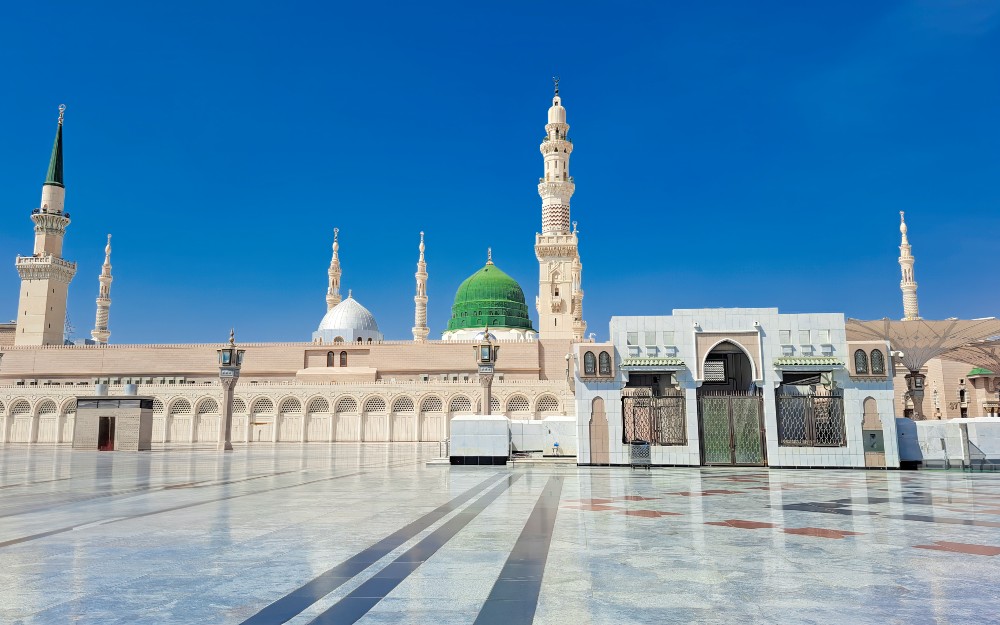
Medina ranks alongside Mecca as one of Islam's two holiest cities. It is the burial place of the Prophet Mohammed and home to Al-Masjid an-Nabawi, the Prophet's Mosque — a site of pilgrimage for millions of Muslims. Any real attack near the city, or even a credible claim of one, would mark a sharp escalation in the conflict and carry enormous religious and political reverberations across the Muslim world.
That is precisely why both sides are treating the claim with such gravity: Riyadh framing itself as the defender of the holy cities, and the Houthis insisting they have deliberately placed them off-limits.
Whether the missile existed — and whose it was — remains unverified. Neither side has presented wreckage evidence publicly, and independent verification is unlikely to emerge quickly in a conflict where both sides routinely issue competing claims.
Frequently Asked Questions
What did the Saudi-led coalition claim on Thursday?
Coalition spokesman Turki Al-Malki said the coalition had intercepted and destroyed a cruise missile in the Medina region of western Saudi Arabia. No details were given about the missile's origin or intended target.
How did the Houthis respond?
Houthi military spokesman Yahya Saree denied the group had carried out any operation targeting Saudi territory that day, calling the claim "a shameless and brazen lie." He noted the group had previously vowed to spare Mecca and Medina.
Why is Medina so significant in this conflict?
Medina is the burial place of the Prophet Mohammed and home to the Prophet's Mosque, making it one of Islam's two holiest cities alongside Mecca. The Houthis had publicly pledged on Sunday to spare both holy cities while continuing to strike other Saudi targets.
What else happened in the Saudi-Houthi confrontation this week?
The Houthis claimed strikes on King Khalid International Airport in Riyadh and on Aramco facilities, and said they had hit a Saudi Typhoon fighter jet over Saada — all unverified. Saudi Arabia retaliated with strikes on Houthi positions in Sanaa.
How has the confrontation escalated overall?
Saudi Arabia has faced sustained Houthi attacks since early October, including strikes on multiple airports that have killed 20 people and injured hundreds, while Riyadh has responded with airstrikes on Sanaa. The conflict is part of a war that began in 2015 and has produced a severe humanitarian crisis in Yemen.