Saudi Arabia said on Saturday that it had intercepted two ballistic missiles launched by Yemen's Houthi rebels towards the Mecca and Medina regions, with shrapnel falling in several locations across the kingdom's west — an incident that brings the escalating war across the Saudi-Yemeni border closer than ever to Islam's two holiest cities.
The General Directorate of Saudi Civil Defence said fragments from the intercepted missiles fell in Wadi Mughamas outside Mecca, the Al-Nuzha neighbourhood of Jeddah, Wadi Jalil in Taif, and an uninhabited area in Rabigh. No casualties were reported in the civil defence statement. Earlier on Saturday, the agency had warned residents of four western provinces, including Mecca, of a potential threat and urged them to move to the nearest safe location. The Week
The Houthis denied targeting the holy cities. Military spokesperson Yahya Saree called the Saudi claim "a great and huge lie", insisting the group's operations were aimed at Saudi oil facilities and military bases, and that it publicly announces its attacks when they occur. NDTV
A dispute over what was targeted
The disagreement over Saturday's incident is, in itself, the story. Riyadh says two missiles were headed for the Mecca and Medina regions; the Houthis say their targets were elsewhere entirely. Both accounts cannot be true in full, and the gap between them illustrates how much of this conflict is now fought through competing public claims as well as through missiles.
What is not in dispute is the scale of the Houthi campaign the incident sits within. Hours before the civil defence statement, Saree said the group had targeted several Saudi sites over Friday and Saturday, including three airports, two oil facilities, a pipeline and an air base. The claimed targets included King Khalid International Airport in Riyadh, airports in Dammam and Najran, the Khamis Mushait air base in the south, crude oil pumping stations and the east-west crude oil pipeline. The Week's account adds an Aramco facility in Yanbu and the Rabigh oil refinery to the claimed target list.
The Houthis also renewed their warning against using Riyadh's international airport, calling it a "military target" and urging airlines, airport staff and travellers to avoid it. The warning came hours after Saudi authorities announced that the airport would resume operations with Terminal 1 handling domestic flights and Terminal 2 serving international flights operated by national carriers. Airport operations were suspended on 10 October after an attack claimed by the Houthis that reportedly killed 13 people and wounded more than 300 — described as the deadliest attack in the kingdom in more than a decade.
Why Mecca and Medina change the stakes
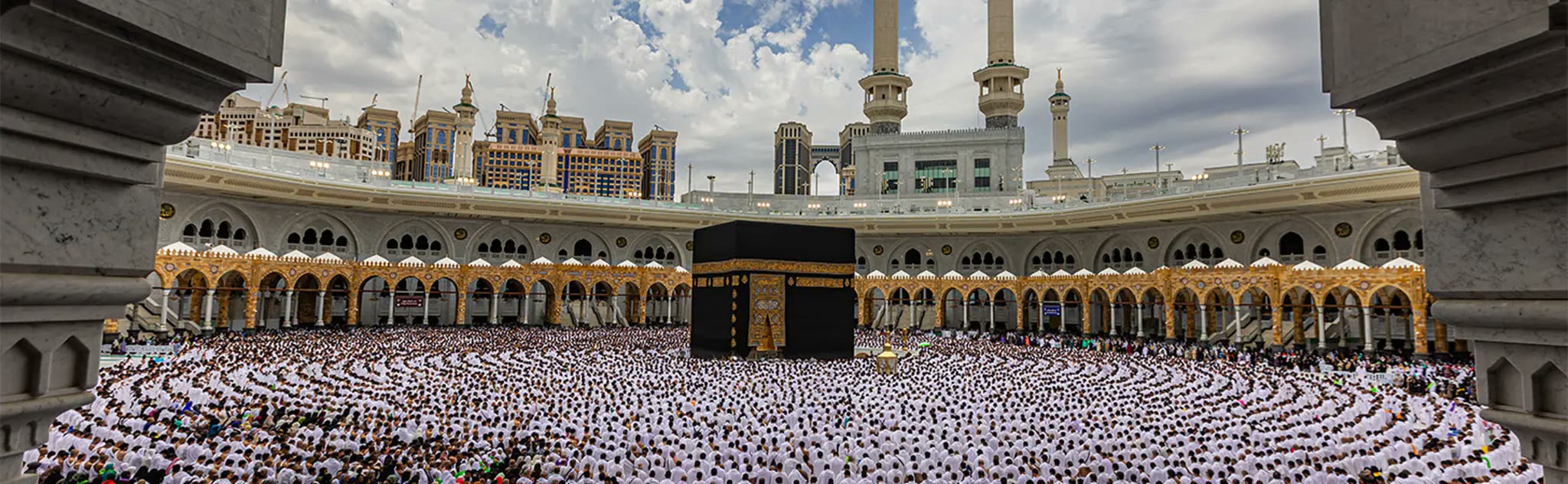
Mecca and Medina are not ordinary cities in this conflict. They are home to the Grand Mosque and the Prophet's Mosque, drawing millions of Muslim pilgrims every year, and any suggestion that they are within range of missile fire carries a symbolic weight far beyond the military damage involved. That is precisely why both sides contest the narrative so fiercely: for Riyadh, the incident demonstrates the threat the Houthis pose to sites sacred to Muslims worldwide; for the Houthis, any suggestion they targeted the holy cities would be a reputational disaster, and they deny it in the strongest terms.
The incident also marks a departure from the relative restraint of recent years. A United Nations-mediated truce agreed in 2022 had largely prevented cross-border strikes between the Houthis and the Saudi-led coalition. That restraint has now unravelled. Riyadh has intensified its military involvement in Yemen, launching strikes against the group and supporting a government counteroffensive after the Houthis seized strategic territory along the Red Sea coast last month. Yemen's Saudi-backed government said on Saturday that the Houthis had also fired three ballistic missiles at coast guard facilities in the southern port of Aden.
This is not the first time the two sides have clashed over claims involving the holy cities. Earlier this month, Riyadh said it had intercepted a cruise missile over the Medina region — a claim the Houthis likewise dismissed as a fabrication, as reported in our earlier coverage of that incident. Read our earlier report on the Medina missile dispute
Regional fallout already under way
The escalation has already drawn in regional diplomacy. Egypt's top security body recently pledged "all necessary support" to Saudi Arabia as Houthi attacks escalated, a sign that Cairo views the widening campaign as a threat to regional stability rather than a bilateral Saudi-Yemeni affair. Egypt pledges support to Saudi Arabia
The Houthi campaign against Saudi airports has been running for weeks, with repeated strikes and claims against aviation and energy infrastructure. Houthi airport attacks and Saudi retaliation For airlines and travellers, the practical question is now whether Riyadh's airport can safely resume normal operations — and whether the Houthis' repeated warnings to avoid it will deter carriers even if Saudi authorities declare it open.
For the wider region, the question is whether Saturday's incident becomes a new baseline or a peak. The pattern of recent weeks — Houthi claims against airports and oil infrastructure, Saudi strikes inside Yemen, government counteroffensives on the Red Sea coast — points to a conflict that is widening rather than contained. The debris that fell near Mecca on Saturday may have caused no casualties, but it landed in places whose names carry enormous weight, and both sides know it.
Frequently Asked Questions
What happened near Mecca and Medina on Saturday?
Saudi civil defence said it intercepted two ballistic missiles launched by Yemen's Houthis towards the Mecca and Medina regions, and that shrapnel fell in Wadi Mughamas outside Mecca, Al-Nuzha in Jeddah, Wadi Jalil in Taif, and an uninhabited area in Rabigh. No casualties were reported.
Did the Houthis admit targeting Mecca and Medina?
No. Houthi military spokesperson Yahya Saree denied targeting the holy cities, calling the Saudi claim "a great and huge lie" and saying the group's operations target Saudi oil facilities and military bases.
What other targets did the Houthis claim?
The group said it targeted three airports (Riyadh, Dammam and Najran), two oil facilities, a pipeline and an air base over Friday and Saturday, including King Khalid International Airport in Riyadh, the Khamis Mushait air base, crude oil pumping stations and the east-west pipeline.
Is Riyadh's airport operating again?
Saudi authorities announced that Terminal 1 would handle domestic flights and Terminal 2 international flights operated by national carriers from Sunday, after operations were suspended on 10 October following a deadly attack. The Houthis continue to warn airlines and travellers against using the airport.
Why does this incident matter beyond the military damage?
Mecca and Medina are Islam's holiest cities, visited by millions of pilgrims each year. Any suggestion they are within range of missile fire carries major symbolic and political weight, and the incident signals the breakdown of the relative restraint that followed the 2022 UN-mediated truce.