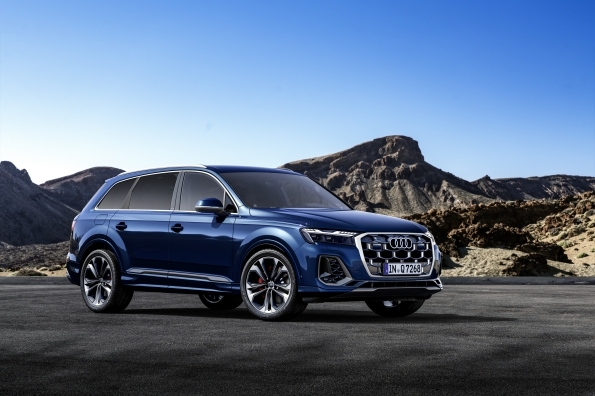
Audi will build its first factory in the United States, investing around $4 billion in a new plant in Peach County, Georgia, that will create about 4,500 jobs and produce up to 200,000 premium SUVs a year. The announcement, made on Saturday at a campaign rally in Perry, Georgia, ends decades of speculation about when the German luxury brand would finally manufacture on American soil — and hands President Donald Trump a manufacturing headline days before the midterm elections.
Audi chief executive Gernot Döllner joined Trump on stage at the rally to confirm the plan, telling the crowd the company would bring its "biggest and most premium SUVs" to Macon. "We have much greater ambitions for Audi in America," Döllner said. "The United States is one of the world's most important premium markets, and we have not yet realized our full potential. We are determined to change that — with premium products, a stronger brand and a competitive local production base." Audi
Table of Contents
- What Audi announced
- Why Georgia, and why now
- The tariff question
- A late arrival among German rivals
- What it means for Georgia
- Key takeaways
- Frequently Asked Questions
What Audi announced
The plant will be built at the Middle Georgia Megasite, a 1,474-acre industrial property in Peach County near Interstate 75, about 90 minutes south of Atlanta's Hartsfield-Jackson airport. Site preparation and grading are scheduled to begin in 2027, construction in 2028, and full commercial production in 2031, according to Georgia state officials. Audi itself says construction is scheduled to begin in 2027, with production planned for the early 2030s.
The factory will focus on premium SUVs tailored to North American customers — the Q7, Q8 and Q9 models, according to industry reports — with annual capacity of up to 200,000 vehicles. Once complete, it would rank among Audi's largest manufacturing sites worldwide. The company says the investment establishes North America as a third major pillar of its global production network, alongside Europe and China.
Georgia Governor Brian Kemp announced the project alongside Döllner on Saturday. "We are proud that Audi has selected Georgia as the home of their first US manufacturing facility, delivering truly historic investment and jobs to middle Georgia," Kemp said. Fox 5 Atlanta
Why Georgia, and why now
Georgia already hosts a substantial automotive footprint. Kia and Hyundai both manufacture in the state, Porsche and Mercedes-Benz run their US headquarters out of Atlanta, and the state has spent years developing megasites precisely to attract a manufacturer of this calibre. "Georgia combines an investment-ready site, skilled workforce, established automotive supplier network and strong logistics infrastructure," Audi said in its announcement.
The timing, however, is impossible to separate from politics. Trump announced the plant himself at a midterm campaign rally, calling it "the single largest investment in US auto industry history, modern times" and pegging the figure at $4.2 billion — slightly above Audi's own $4 billion estimate. Georgia is a battleground state in the November 3 midterms: Democratic Senator Jon Ossoff is defending his seat against Republican Representative Mike Collins, and a tight governor's race is under way. A 4,500-job factory announcement is exactly the kind of news a campaign wants in the final stretch.
That political framing cuts both ways. Supporters see proof that tariff policy is reshoring manufacturing; critics note that production will not start until the early 2030s, long after the current political cycle, and that the investment decision reflects years of planning rather than a single rally.
The tariff question
Trump was blunt about the cause: "If it weren't for the tariff, they would not have come in." US import tariffs have hit European carmakers hard, raising the cost of every vehicle shipped from Germany to American showrooms. Building locally sidesteps those duties entirely — a powerful incentive for a brand that sells hundreds of thousands of cars a year in the US but has, until now, imported every one of them.
The tariff backdrop has been a running theme of the midterm campaign, with voters feeling the pinch of higher prices even as the administration touts reshoring wins. Tariffs and the voter backlash shaping the midterms Audi's move will be cited by the White House as evidence the strategy works, but economists will watch whether other European manufacturers follow — and whether consumers see any benefit in showroom prices before the next decade.
A late arrival among German rivals
Audi is the only German auto brand without a US factory. Its corporate cousin Volkswagen builds cars in Tennessee, BMW has a huge plant in South Carolina, and Mercedes-Benz manufactures in Alabama. The idea of an American Audi plant has been discussed for at least two decades, and the brand's absence has long been an anomaly in an industry where local production is the norm for high-volume sellers.
The delay also reflects Audi's recent struggles. The brand has lost ground in China, its largest market, and has faced pressure on margins in Europe, where carmakers are simultaneously navigating emissions rules and the shift to electric vehicles. France and Germany strike a car emissions deal A Georgia plant does not solve those problems, but it gives Audi a hedge: a third production pillar that reduces its exposure to both transatlantic trade friction and Asian market swings.
What it means for Georgia
For middle Georgia, the project is transformative in scale. The state will partner with local technical colleges through its Georgia Quick Start workforce programme, designing a custom curriculum and building a dedicated training centre for assembly, maintenance and advanced manufacturing roles. Supplier firms typically follow a plant of this size, multiplying the employment effect beyond the headline 4,500 jobs.
There are caveats. The production start date of 2031 means the economic payoff is years away, and the history of megasite announcements includes projects that shrank or stalled. But Audi's commitment — a named site, a named product line and a named timeline — is more concrete than a vague pledge, and the involvement of both the governor and the company's chief executive signals serious intent.
Key takeaways
- Audi will invest around $4 billion in its first US plant, in Peach County, Georgia, creating about 4,500 jobs.
- The plant will build premium SUVs — reportedly the Q7, Q8 and Q9 — with annual capacity of up to 200,000 vehicles.
- Grading begins in 2027, construction in 2028, and full production is targeted for 2031.
- Trump announced the project at a Georgia campaign rally, framing it as a tariff-policy win days before the November 3 midterms.
- Audi is the last German car brand without a US factory; BMW, Mercedes-Benz and Volkswagen already manufacture in the American South.
Frequently Asked Questions
Where will Audi's first US plant be built?
At the Middle Georgia Megasite in Peach County, Georgia, near Macon and Interstate 75, about 90 minutes south of Atlanta's Hartsfield-Jackson airport.
How much is Audi investing, and how many jobs will the plant create?
Audi says it will invest around $4 billion and create approximately 4,500 jobs. President Trump pegged the investment at $4.2 billion at the announcement rally.
When will the Georgia plant start producing cars?
Site preparation is scheduled for 2027, construction for 2028, and full commercial production for 2031, according to Georgia state officials. Audi says production is planned for the early 2030s.
Which vehicles will the plant build?
Premium SUVs tailored to North American customers — industry reports name the Q7, Q8 and Q9 — with annual capacity of up to 200,000 vehicles.
Why did Audi choose the United States now?
Audi cites the US as the world's second-largest premium market and a long-term growth opportunity. The announcement also comes amid US import tariffs that raise the cost of shipping cars from Germany, making local production financially attractive — a point Trump emphasised at the rally.
Is Audi the only German carmaker without a US factory?
Yes. Volkswagen builds cars in Tennessee, BMW in South Carolina and Mercedes-Benz in Alabama. Audi's Georgia plant ends its status as the only German brand manufacturing no vehicles in America.