Ukraine's satellite lifeline is running at full speed again after more than a week of throttling that disrupted front-line operations — and the man behind the slowdown has now named himself. Elon Musk admitted on Saturday that his company, SpaceX, deliberately restricted Starlink speeds in Ukraine, saying Kyiv had violated the service's terms by using it for offensive drone strikes. Hours earlier, President Volodymyr Zelenskyy had announced that Starlink and its military-grade counterpart, Starshield, were restored to the speeds Ukraine needs to fight jet-powered Russian drones.
The episode lays bare an uncomfortable reality of modern warfare: one of the world's most important battlefield communications networks is controlled not by a government, but by a single billionaire — and its rules can change mid-war.
Table of Contents
- What happened this week
- Musk's accusation — and Kyiv's rebuttal
- Why Starlink matters so much on the front line
- The Trump connection
- A diplomatic backdrop: talks and a local ceasefire
- Key takeaways
- Frequently Asked Questions
What happened this week
For more than a week, Ukrainian commanders reported that Starlink and Starshield connections had slowed sharply, disrupting missions and, in some cases, causing the loss of drones. Ukrainian officials said the restrictions capped Starshield operations at speeds of around 160 kilometres per hour (100 mph) — a limit that hampered the military's ability to intercept Russian attack drones and forced the cancellation of some operations, according to Reuters.
The restoration began overnight into Saturday, Zelenskyy said on social media. "The speeds are now where they need to be," he wrote, adding that the recovery was sufficient by Saturday morning to improve front-line logistics and defences against Russian jet-powered Shahed drones. Ukraine's defence ministry said the connection remained stable at over 400 kph, according to Reuters.
Neither Musk nor the US government, which operates Starshield using Starlink technology, had taken responsibility for imposing the curbs — until Musk spoke out on Saturday.
Musk's accusation — and Kyiv's rebuttal
In a post on X, Musk acknowledged that SpaceX had throttled the service and gave his reason in blunt terms. "Using Starlink, a civilian commercial service, for offensive drone strikes to kill people has never been allowed, nor should it be," he wrote. "Ukraine military violated Starlink terms of service and used it for offensive drone strikes to kill people. That loophole was closed last week," as reported by the South China Morning Post.
Musk also maintained that Starshield is a separate system controlled by the US government, and defended SpaceX's role in bolstering Ukraine's defences since Russia's full-scale invasion in February 2022. He underscored Ukraine's reliance on the service, saying it "remains critical to the defense of Ukraine" and claiming that if Starlink were turned off, "the Ukrainian front line would collapse immediately," according to CNN.
Kyiv pushed back firmly. Zelenskyy's adviser Serhiy Beskrestnov said Ukraine is "physically unable" to use commercial Starlink for medium- and long-range strikes into Russia, citing both the speed restrictions and the service's unavailability over Russian territory. Serhiy Sternenko, a former Ukrainian defence ministry adviser, also denied Musk's claims, saying that as someone involved in the process at the ministry, he could say "with certainty that this is not true" — all drone missions requiring satellite communication could only be carried out using Starshield, not the civilian system, CNN reported.
Ukraine's general staff and defence ministry did not immediately comment on Musk's accusation itself, focusing instead on confirming that full access had been restored.
Why Starlink matters so much on the front line
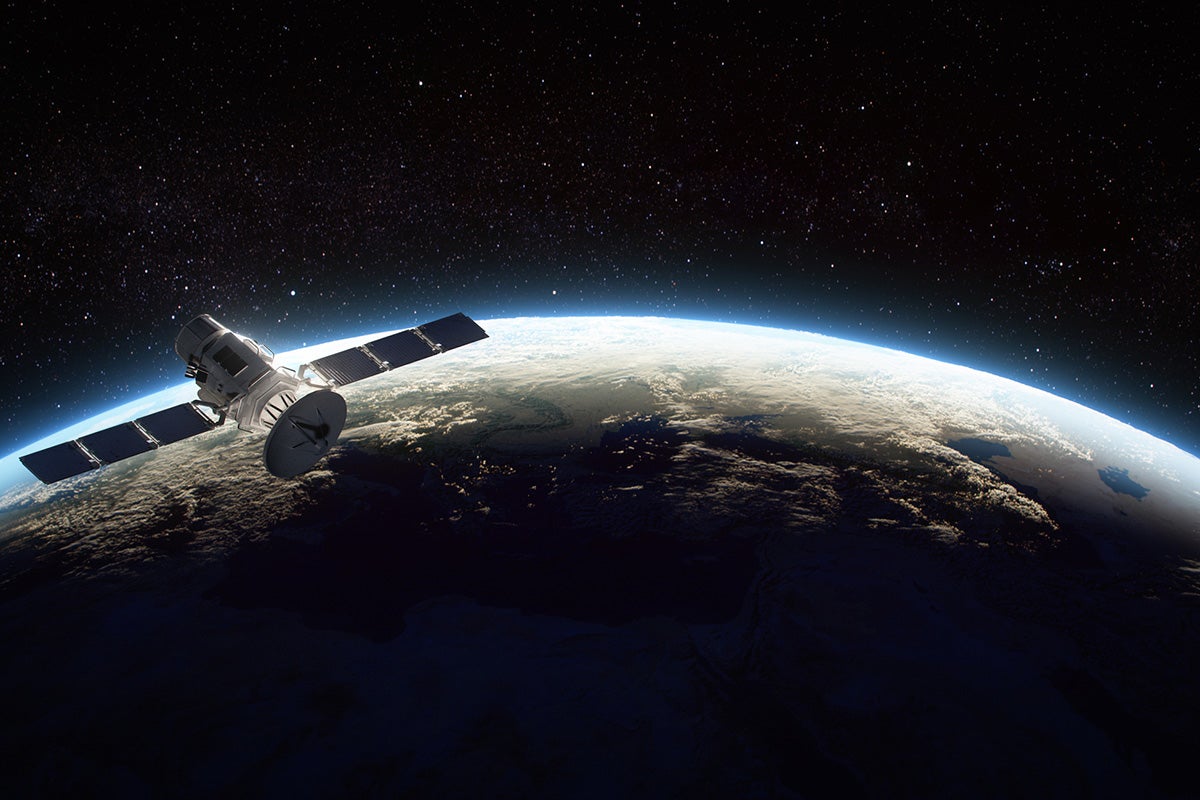
Starlink has been one of Ukraine's most important military tools since the early days of the invasion. When Russian strikes knocked out ground-based communications, the constellation of low-orbit satellites kept Ukrainian units connected — coordinating artillery, guiding drones, and linking command posts that would otherwise have gone dark.
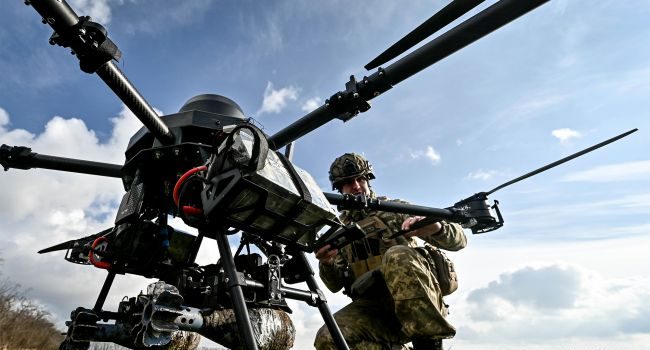
Starshield, the military-grade version built on the same technology, is the backbone of Ukraine's drone operations and battlefield communications. That is precisely why a speed cap mattered so much: modern drone warfare depends on fast, stable links, and a throttled connection can mean a lost aircraft, a missed interception, or an aborted mission.
The episode has revived a question European allies have asked before: can a country stake its national defence on infrastructure owned by a private company whose chief executive can change the terms unilaterally? For now, there is no European alternative of comparable scale, which leaves Kyiv — and its partners — with little leverage beyond diplomacy.
The Trump connection
The timing raised eyebrows in Kyiv. The Starshield problems surfaced after US President Donald Trump announced a deal to buy Russian diesel while pressing Kyiv to stop striking Russian oil refineries — a sequence Ukrainian officials noted, though no evidence has emerged directly linking the two events.
Trump later said he had asked Musk to lift the restrictions on Kyiv's use of the military-grade service. The restoration followed that intervention, and it comes alongside a renewed American diplomatic push to end the war — a context that makes the satellite dispute inseparable from the wider politics of the conflict.
The dispute also sits within a longer pattern of friction between Musk and Ukraine's leadership over Starlink's role, including earlier arguments about the service's use in Crimea and the financing of terminals. Each flare-up has ended the same way: with Kyiv dependent, Washington mediating, and Musk holding the switch.
A diplomatic backdrop: talks and a local ceasefire
The restoration coincides with movement on the diplomatic front. Russia agreed on Wednesday to resume three-way negotiations with Washington and Kyiv next month, and on Friday Kyiv and Moscow agreed to a localised ceasefire brokered by First Lady Melania Trump around Oleshky, a war-ravaged, Russian-occupied town in Ukraine's southern Kherson region.
Whether that momentum survives depends on far more than satellite speeds. But for Ukrainian commanders, the immediate effect is tangible: drones flying, logistics moving, and a communications network they can — for now — rely on again.
For related coverage, see our earlier reporting on Ukraine's strikes on a Russian oil hub amid the Miami talks and on Kyiv's accusation that Russia violated the energy ceasefire.
Key takeaways
- Ukraine says Starlink and Starshield are fully restored after more than a week of speed restrictions that disrupted front-line operations.
- Elon Musk admitted SpaceX deliberately throttled the service, accusing Ukraine's military of violating Starlink's terms by using it for offensive drone strikes.
- Kyiv disputes the accusation, saying it is physically unable to use civilian Starlink for long-range strikes, which rely on Starshield instead.
- The restrictions capped speeds at around 160 kph, hampering drone interceptions; service is now reported stable above 400 kph.
- The episode highlights Ukraine's dependence on privately controlled satellite infrastructure — and the absence of a European alternative at comparable scale.
Frequently Asked Questions
What is the difference between Starlink and Starshield?
Starlink is SpaceX's commercial satellite internet service, sold to civilians and businesses. Starshield is a military-grade version built on the same satellite technology but operated for government and defence use — in Ukraine's case, under US government control. Kyiv says all drone missions requiring satellite communication run on Starshield, not the civilian service.
Why did Musk say he throttled Starlink in Ukraine?
Musk said Ukraine's military violated Starlink's terms of service by using the civilian commercial service for offensive drone strikes, and that SpaceX "closed that loophole" last week. He maintains that using a civilian service to kill people was never allowed under its terms.
How did Ukraine respond to Musk's accusation?
Ukrainian officials denied it. Presidential adviser Serhiy Beskrestnov said Ukraine is physically unable to use commercial Starlink for medium- and long-range strikes into Russia, and former defence ministry adviser Serhiy Sternenko said it was technically impossible to use the civilian system for drone missions.
Is Starlink fully working in Ukraine now?
According to President Zelenskyy and Ukraine's defence ministry, yes — speeds returned to pre-restriction levels on Saturday morning and remained stable above 400 kph, improving front-line logistics and defences against Russian drones.
Could this happen again?
In principle, yes. Starlink remains privately owned by SpaceX, and the terms governing its use are set by the company. Unless Ukraine secures alternative satellite capacity or formal guarantees, the service remains subject to decisions made in Hawthorne, California — not Kyiv.