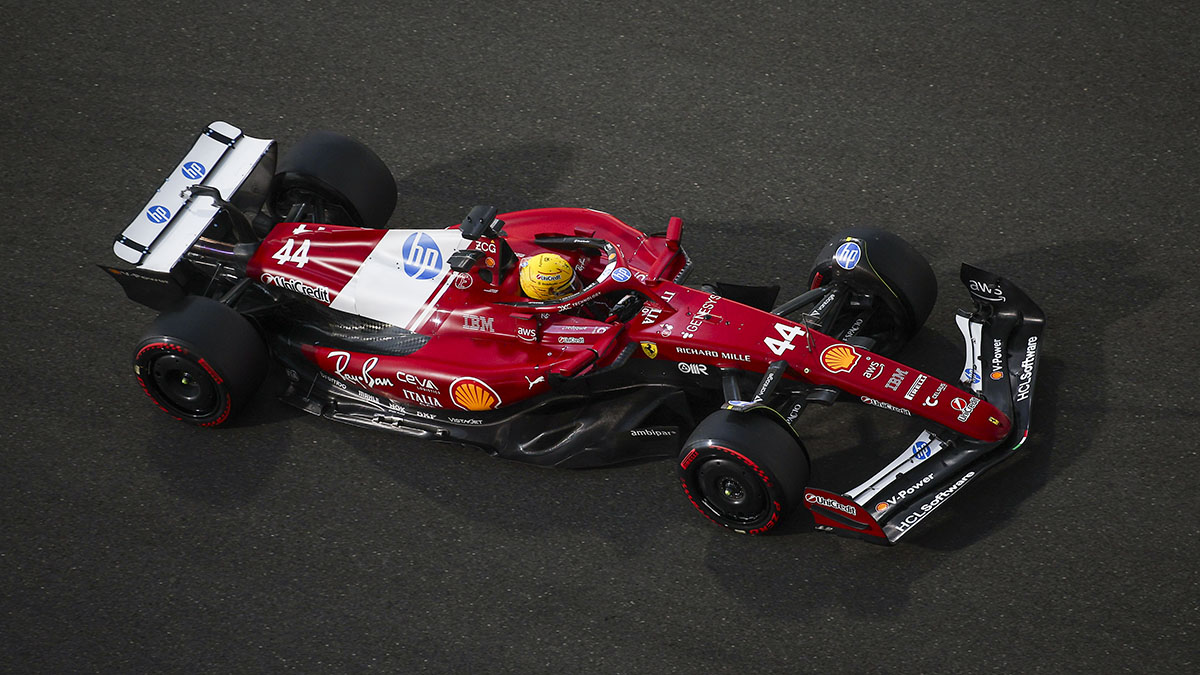
Lewis Hamilton has given the clearest signal yet that he intends to extend his Formula 1 career into the early 2030s, telling reporters at the United States Grand Prix that the sport's planned return to Africa has changed his retirement calculus. "I'm now forced to stay a lot longer because we have a race in Africa, and that's been my dream, to be able to race in Africa," the seven-time world champion said at a press conference in Austin on Thursday, alongside championship leader Kimi Antonelli. "I have to keep fighting to try and stay fit. If I can still punch out good results over the next year, we'll keep it going."
The remarks, reported by The Straits Times, land just days after Formula 1 confirmed a long-term agreement that will bring the sport back to the African continent for the first time in more than three decades. For Hamilton, the sport's first and only Black world champion, the announcement is the payoff of a campaign he has waged for years — and, by his own account, a reason to keep going when many drivers of his age would be planning their exit.
Table of Contents
- A dream deferred for more than 30 years
- The arithmetic of staying: 42 now, 45 then
- Years of lobbying behind the deal
- What the Rwanda race will look like
- The criticism the deal has drawn
- Key takeaways
- Frequently Asked Questions
- Sources
- Chronicle related reading
A dream deferred for more than 30 years
Africa last hosted a Formula 1 championship race in 1993, at South Africa's Kyalami circuit. Since then the calendar has expanded across the Americas, Asia and the Middle East, but never returned to the continent — an absence Hamilton has repeatedly questioned in public. "It's about more than just one country. It's about the continent itself," he said in Austin, adding that an African race would make people more aware of the continent and its culture.
Hamilton's framing of the race as a continental milestone, rather than a single country's event, is consistent with how he has spoken about the project for years: not as a personal bucket-list item, but as a correction to a calendar that had overlooked an entire continent. The younger driver sitting beside him in Austin agreed. Antonelli, 20, who replaced Hamilton at Mercedes last season, urged the veteran on: "You got to do at least the first one."
The arithmetic of staying: 42 now, 45 then
The timeline Hamilton sketched out is demanding. He turns 42 in January and is contracted to Ferrari through 2027. If the African race arrives at the earliest point in its early-2030s window, he would be 45 — the current age of Fernando Alonso, the oldest active driver on the grid, who recently signed for another season with Aston Martin. Hamilton would also be contesting roughly his 24th season in the sport.
Hamilton was careful not to present the extension as guaranteed. His condition was performance: if he can still deliver strong results over the next year, he will keep going. That caveat matters. The 2026 season has been a testing one for the Ferrari driver, and the grid's next generation — led by Antonelli — is not waiting politely. Hamilton's argument, in effect, is that motivation is no longer the question; fitness and results are.
Years of lobbying behind the deal
Hamilton also used the Austin press conference to describe the unglamorous work behind the headline. He spoke of "countless meetings" with Formula 1 chief executive Stefano Domenicali, both at Domenicali's London office and on race weekends, and of calls and meetings with presidents from several African countries. "Countless calls: 'What's happening? Where are we going? Who are you meeting with?'" he recalled.
The account gives a sense of how long the campaign ran and how personal it was. Hamilton did not merely lend his name to the idea; by his telling, he worked the phones and the paddock for years, pressing both the sport's commercial leadership and African heads of state. That persistence is part of why the Austin comments resonated: the race is not an abstract future event to him, but something he helped push into existence.
What the Rwanda race will look like
Formula 1's agreement is with Rwanda, where the race will be held at Bugesera, about 40 kilometres south of the capital, Kigali, and close to Kigali International Airport. A new purpose-built circuit will be created, which is why no settled date has been announced yet. The grand prix will be sponsored by Visit Rwanda, and Formula 1 has said it is "designed to create a legacy by supporting tourism, attracting investment, developing local talent and creating new opportunities for communities and businesses."
The deal itself was covered in detail when it was announced — see Formula 1's African return: Rwanda lands a Grand Prix for the early 2030s. What Hamilton's comments add is the human dimension: the first African race of the modern era may well feature, on the grid, the driver who campaigned hardest for it — if he can hold off time, and the next generation, for a few more seasons.
The criticism the deal has drawn
The announcement has not been universally welcomed. Amnesty UK has criticised the Rwanda race as rewarding "sportswashing", and Rwanda has faced accusations of supporting the M23 rebel group in the conflict in neighbouring DR Congo — an allegation the Rwandan government has denied. Rwanda also has a poor human rights record, according to its critics.
Hamilton acknowledged in Austin that there were concerns around the race, without going into detail. The tension is a familiar one in modern sport: a landmark event for a continent, delivered through a host whose record draws scrutiny. How Formula 1 handles that scrutiny — and whether the promised legacy of tourism, investment and local talent materialises — will shape how the race is remembered long after the first chequered flag in Bugesera.
Key takeaways
- Lewis Hamilton says Formula 1's planned African race has "forced" him to extend his career beyond his current Ferrari deal
- The seven-time champion, who turns 42 in January, is contracted to Ferrari through 2027; the Rwanda race is slated for the early 2030s, when he would be at least 45
- Hamilton described years of lobbying F1 chief Stefano Domenicali and African presidents to bring the race about
- Africa last hosted a Formula 1 race in 1993 at Kyalami, South Africa; the new race will be at Bugesera, near Kigali
- Hamilton's condition for staying is performance: he will keep going if he can still deliver strong results
- The Rwanda deal has drawn criticism from Amnesty UK over sportswashing and human rights concerns
Frequently Asked Questions
Why does Lewis Hamilton want to race in Africa?
Hamilton, Formula 1's first and only Black world champion, has campaigned for years for the sport to return to Africa, which last hosted a race in 1993. He has described racing on the continent as a long-held dream and says it is about the continent itself, not just one country.
When will the African Grand Prix take place?
Formula 1 has agreed a deal with Rwanda for a grand prix in the early 2030s. The race will be held at Bugesera, about 40 kilometres south of Kigali, on a new purpose-built circuit, so no exact date has been set yet.
How old will Hamilton be when the race happens?
Hamilton turns 42 in January and his Ferrari contract runs through 2027. If the race takes place at the earliest point in its window, in 2030, he would be 45 — the same age as Fernando Alonso, currently the oldest active driver.
Has Hamilton confirmed he will still be racing then?
No. Hamilton said he would keep going if he can stay fit and keep delivering good results, saying: "If I can still punch out good results over the next year, we'll keep it going." He has not announced a firm retirement date or a contract extension.