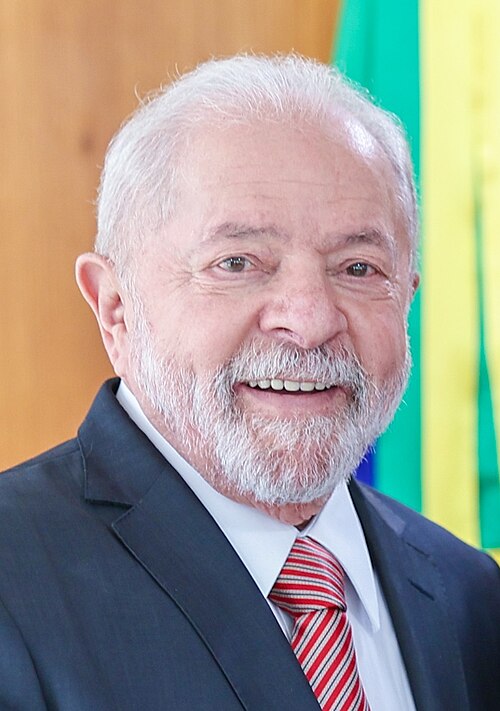
Luiz Inácio Lula da Silva has been re-elected to an unprecedented fourth term as president of Brazil, defeating Senator Flávio Bolsonaro in a runoff that split the country almost evenly and ended with the defeated candidate refusing to concede. With nearly all ballots counted, Brazil's Superior Electoral Court (TSE) put Lula at 51.76% of valid votes against 48.24% for Bolsonaro — a margin of roughly 4.4 million votes — reversing the order of the first round and making Lula the first candidate since direct presidential elections returned in 1989 to win a runoff after finishing second in the opening round.
The result, declared on Sunday night, caps one of the most bitterly fought campaigns in Brazil's recent history, fought over the cost of living, crime and corruption — and over the country's relationship with the United States. It also interrupts a run of right-wing victories across Latin America that Washington had welcomed, and it sets up a confrontation over the result itself, with Bolsonaro announcing he will ask the courts to annul it.
Table of Contents
- A comeback sealed on Sunday night
- A first-round deficit overturned
- Bolsonaro refuses to concede
- A messy election day
- What the result means for Brazil and the region
- Key takeaways
- Frequently Asked Questions
- Sources
- Chronicle related reading
A comeback sealed on Sunday night
The count swung back and forth through the evening before breaking decisively for the incumbent. Lula led the first returns, then Bolsonaro moved ahead with about 42% of polling stations counted, before Lula regained the lead and stretched it as the count neared completion. The TSE's final figures gave Lula 64,256,232 votes, or 51.79% of valid ballots, against Bolsonaro's 59,826,041, or 48.21%, according to The Statesman.
Celebrations broke out quickly in Lula's strongholds. In Rio de Janeiro, supporters hugged, sounded car horns and raised the "L" sign; in Belo Horizonte, capital of the key swing state of Minas Gerais, crowds chanted and sang into the night, CNN reported. Lula, 80, thanked Brazilians for their "generosity", singling out young voters who, he said, "took to the streets to defend democracy".
"I can assure you that we are going to change the way we govern this country. We are going to give the people a greater role in our decisions," Lula said after his re-election, in remarks carried by CNN. In a sharper passage aimed at both his rival and Washington, he added: "People went to vote because we convinced them it was important to preserve democracy. This country doesn't accept being anybody's colony."
A first-round deficit overturned
The scale of the turnaround is what makes this result historic. In the October 4 first round, Flávio Bolsonaro finished first with 47.03% of valid votes against Lula's 45.16% — and no candidate who had trailed after a first round had ever gone on to win a runoff under Brazil's current two-round system. Lula's victory breaks that pattern, and it extends a political career spanning more than four decades: he first governed from 2003 to 2010, returned to office in 2022, and will now, by the end of this term, have spent 16 years in the presidency — a record in Brazil's democratic history, second only to Getúlio Vargas overall.
The campaign itself was dominated by kitchen-table concerns. The cost of living, crime and corruption topped voters' worries, and both candidates carried baggage on the last of those: Lula spent more than a year in prison on corruption convictions that were later annulled, while Bolsonaro's family and allies have faced their own corruption allegations. Bolsonaro, 45, a senator from Rio de Janeiro and the eldest son of former president Jair Bolsonaro, built his campaign on a tough-on-crime message and a promise to bring down food prices, and he leaned heavily on his closeness to the Trump administration.
Bolsonaro refuses to concede
The defeated candidate moved quickly to dispute the outcome. Addressing supporters in Brasília after Lula's victory was declared, Bolsonaro said it was "impossible to recognize the election result given how these events unfolded", and announced: "We will take legal action. We will ask for this election to be annulled."
His objection centres on a last-minute decision to extend voting by two hours. Supreme Court Justice Cristiano Zanin ordered the extension after reports of suspended public transport in some areas and polling stations shut by heavy rain in the south. Bolsonaro called the ruling "unacceptable" and accused judicial authorities of changing election procedures during voting — though he presented no evidence that the extension had altered the outcome. Both campaigns had in fact sought an extension on the day: Lula's team cited transport suspensions in its strongholds, while Bolsonaro's cited rain in the south.
The legal challenge echoes the refusal to concede that followed the 2022 election, when Jair Bolsonaro — now imprisoned — also declined to accept defeat by Lula. Whether the courts give the new challenge any traction will be one of the first tests of the coming transition, and of how much of the Bolsonaro movement accepts the result.
A messy election day
Sunday's vote was marred by allegations of voter suppression and by the confusion of the extended hours. Reports of suspended public transport in areas favourable to Lula prompted his campaign to complain to the electoral authorities, while heavy rain closed polling stations in southern states where Bolsonaro is strong. The two-hour extension, granted to both sides' requests in different regions, became the flashpoint of the night — and then of the dispute that followed.
For the electoral authorities, the result itself was not close enough to be plausibly overturned by any single procedural decision: a gap of 4.4 million votes is wide by the standards of recent Brazilian runoffs. But the dispute matters politically even if it fails legally, because it signals that a large part of the electorate — nearly half of valid votes — will enter Lula's fourth term believing, or at least being told, that the process was unfair.
What the result means for Brazil and the region
For markets, the result was an immediate shock. Investors had been betting on a Bolsonaro win to deliver a tougher line on Brazil's strained public finances; Lula has focused more on boosting growth through consumption than on cutting spending. An exchange-traded fund tracking Brazilian stocks fell 13% in Japan as the result landed, according to Business Standard.
For the region, the result breaks a pattern. Right-wing candidates backed or favoured by US President Donald Trump have recently won across Latin America, in Bolivia, Chile, Costa Rica, Colombia, Ecuador, Honduras and Peru. Lula's win denies Trump a new ideological partner in the Western Hemisphere at a moment when Washington has been shifting resources and attention to the region, and it keeps in power the leader who has been the most prominent face of resistance to that project. Trump did not formally endorse Bolsonaro ahead of the vote, but Lula accused the American government of intervening on his rival's behalf during the campaign.
For Brazil itself, the central question now is governability. Lula won, but he won narrowly, against a rival movement that commands nearly half the country and now disputes the result. His promise to govern differently — giving "the people a greater role" — will be tested first against that divided mandate, and against the same pressures that made this election so close: prices, crime and a fiscal position that markets are already pricing with alarm.
Key takeaways
- Lula won Brazil's presidential runoff with about 51.8% of valid votes to Flávio Bolsonaro's 48.2%, a margin of roughly 4.4 million votes.
- It is the first time since direct elections returned in 1989 that a candidate who finished second in the first round has won the runoff.
- Bolsonaro refuses to concede and says he will ask the courts to annul the result, objecting to a two-hour extension of voting on election day.
- The result is a blow to markets that had bet on Bolsonaro and to a run of right-wing victories across Latin America.
- Lula, 80, becomes the first person elected president of Brazil four times, after wins in 2002, 2006 and 2022.
Frequently Asked Questions
Who won Brazil's 2026 presidential election?
President Luiz Inácio Lula da Silva won the runoff on October 25, 2026, defeating Senator Flávio Bolsonaro with about 51.8% of valid votes. It is his fourth presidential election victory, after 2002, 2006 and 2022.
Why is Lula's win historic?
It is the first time since Brazil returned to direct presidential elections in 1989 that a candidate who finished second in the first round went on to win the runoff. Lula had trailed Bolsonaro 45.16% to 47.03% in the October 4 first round.
Has Flávio Bolsonaro conceded defeat?
No. Bolsonaro said it was "impossible to recognize the election result" and announced he would take legal action to seek annulment, objecting to a Supreme Court decision to extend voting by two hours on election day. He presented no evidence that the extension changed the outcome.
What happens next?
The electoral court has declared Lula the winner, and the legal challenge will now be tested in the courts. Attention turns to the transition and to whether Bolsonaro's movement accepts the result, as well as to how Lula governs with a narrow mandate in a deeply divided country.