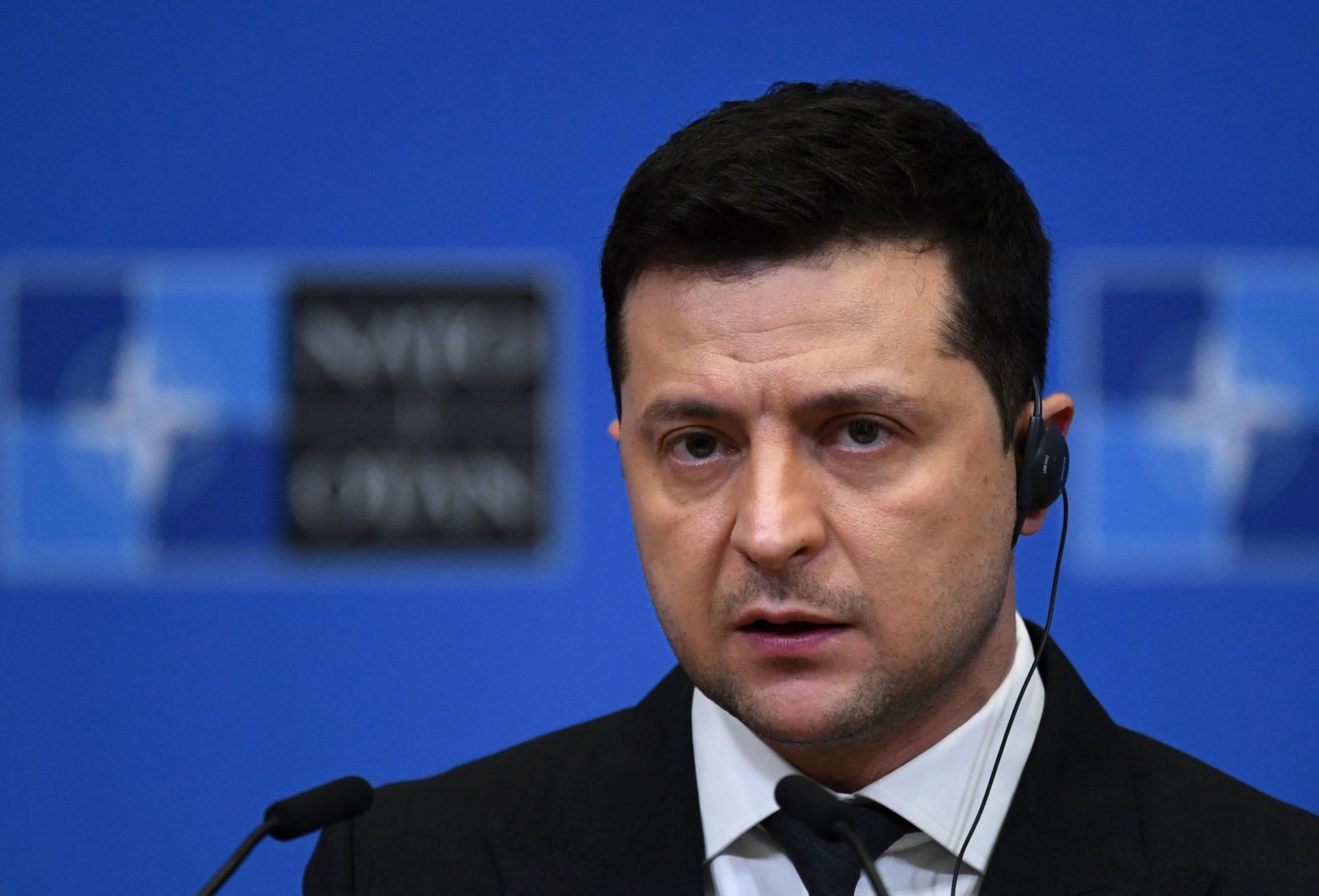
Ukrainian President Volodymyr Zelenskyy has called for a four-party meeting of Ukraine, Europe, the United States and Russia to be held "as soon as possible" to end the war, telling NATO lawmakers on Monday that Kyiv is ready to sit down as early as Tuesday. The appeal, delivered by video link to the NATO Parliamentary Assembly in Berlin, is the clearest statement yet of the format Kyiv wants — but it comes with a condition that could slow everything down: the Western allies must first agree a joint agenda among themselves.
"We must do everything to make sure that the four-party meeting — Ukraine, Europe, America and Russia — happens as soon as possible. We are ready to do this. Literally tomorrow," Zelenskyy said, according to France 24. "We have heard from our partners that they want to try to make it happen before Christmas. We hope it happens sooner."
Table of Contents
- A format that puts Europe at the table
- The agenda comes first
- What Moscow has — and has not — said
- NATO membership back on the agenda
- What happens next
- Frequently Asked Questions
A format that puts Europe at the table
The four-party proposal matters because of who it includes — and who it excludes from the sidelines. The most recent round of talks, held in Abu Dhabi, brought together only Ukraine, the United States and Russia. Europe, despite being the continent where the war is fought and the bloc that would underwrite much of any settlement, was not in the room.
That changed, in principle, earlier this month. After more than four hours of talks with President Vladimir Putin in Moscow, US envoys Steve Witkoff and Jared Kushner flew to Dublin to brief Zelenskyy, and both sides said Europe would join the next round. Zelenskyy's intervention on Monday turns that promise into a formal demand — and frames it as a matter of principle rather than protocol, as covered in our earlier report on Europe joining the next round of Ukraine peace talks.
"This means that on one side of the table sit Ukraine, Europe and America, and on the other side sits Russia," Zelenskyy told the assembly, in remarks reported by Ukrinform. "In essence, this is a negotiation between NATO and Russia, between the European Union and Russia, between the West and Russia."
That framing is deliberate. By describing the meeting as the West facing Russia, rather than Ukraine facing Russia with Western help, Zelenskyy is arguing that the talks should settle the wider European security order, not just the terms of a ceasefire. It is a much bigger ambition than the Abu Dhabi format allowed, and it is one Moscow has consistently resisted.
The agenda comes first
Kyiv's readiness to meet "literally tomorrow" is real, but it is not unconditional. Zelenskyy insisted that Ukraine, Europe and the United States must first agree on a clear, joint agenda — and he repeated the point on November 21, saying the date of the next round would depend on Washington agreeing that agenda with all parties, according to Interfax-Ukraine.
"We must come to this meeting with a clear agenda, prepared and agreed upon by all of us. All of us — Ukraine, Europe, and America," he said.
The insistence on preparation reflects hard experience. Previous rounds have produced long sessions and thin results, with the two sides arriving with incompatible starting positions on territory, security guarantees and the sequencing of any ceasefire. A meeting without an agreed agenda risks becoming another round of public disagreement — and Kyiv, which has the most to lose from a failed summit, is determined not to walk into one unprepared.
The agenda question also explains the gap between Kyiv's urgency and its partners' timetable. Western officials have told Zelenskyy they aim to convene the meeting before Christmas; the Ukrainian president hopes it happens sooner, but he is not willing to trade preparation for speed.
What Moscow has — and has not — said
So far, Russia has not confirmed that it will attend a four-party meeting, or accepted the format. After the Kremlin session with Witkoff and Kushner, the Russian side stopped short of endorsing Europe's participation, and Putin has not publicly responded to Zelenskyy's latest call.
That silence is the largest single obstacle. Moscow has historically preferred bilateral channels with Washington, where it can negotiate over Ukraine's head, and has treated European involvement as an unwelcome complication. A format that seats NATO and the European Union across from Russia, as Zelenskyy describes it, is precisely the arrangement the Kremlin has spent years trying to avoid.
There is, however, one encouraging signal from a European capital. German Chancellor Friedrich Merz has said he is open to peace talks in a four-party format involving Ukraine, the United States and Europe, and has named the United Arab Emirates as one possible venue — a suggestion that keeps the Abu Dhabi channel alive while changing who sits at the table.
NATO membership back on the agenda
Zelenskyy used the Berlin address to repeat a demand that has run alongside the diplomacy all year: a path to full NATO membership for Ukraine, rather than security guarantees from individual alliance members alone. The plea, reported by The Korea Times, links the format of the talks to the substance of any deal — Kyiv wants the settlement to anchor Ukraine inside Western institutions, not leave it in a grey zone that a future Russian government could revisit.
That demand remains one of the hardest issues in any negotiation. The United States has been cool on near-term membership, several European allies are divided, and Russia treats Ukrainian NATO accession as a red line. But by raising it in the same breath as the four-party call, Zelenskyy is signalling that Kyiv will not accept a deal that trades territory for promises that carry no institutional weight.
What happens next
Three things will decide whether the meeting happens before Christmas. First, Washington must settle the agenda with Kyiv and the Europeans — the precondition Zelenskyy set on November 21 and repeated on Monday. Second, Moscow must accept a format that gives Europe a seat, something it has so far avoided confirming. Third, a venue and date must be fixed, with the UAE the only location publicly floated so far.
The backdrop is a war that has widened even as diplomacy has accelerated. Ukraine's long-range campaign against Russian naval and energy targets — including the sinking of a Russian warship off Libya at the weekend — has raised the stakes for both sides, and for the countries hosting the talks. The diplomacy and the fighting are now moving in parallel, each shaping the other's leverage.
For now, Kyiv's message is simple: the table is ready, the chair is pulled out, and the only question is whether the other three parties will sit down together — and on whose terms. Our earlier coverage of the Abu Dhabi trilateral talks and the Berlin meeting on the peace process traces how the format has evolved to this point.
Frequently Asked Questions
What is the four-party format Zelenskyy is proposing?
A meeting involving Ukraine, Europe, the United States and Russia to negotiate an end to the war. Unlike the recent Abu Dhabi talks, which excluded Europe, the four-party format gives European governments a seat at the table alongside Kyiv and Washington.
When could the meeting take place?
Zelenskyy said Ukraine is ready to meet as early as Tuesday, November 24. Western partners have told Kyiv they aim to organise the meeting before Christmas, though the Ukrainian president hopes it happens sooner.
What must happen before the meeting?
Ukraine, Europe and the United States must first agree a clear, joint agenda. Zelenskyy has made this a precondition, saying the Western allies must arrive with a common position before facing Russia.
Has Russia agreed to attend?
Not yet. Moscow has not confirmed it will take part in a four-party meeting or accepted Europe's participation, despite the US envoys' four-hour session with President Putin in Moscow earlier this month.
Where could the talks be held?
No venue has been confirmed. German Chancellor Friedrich Merz has named the United Arab Emirates as one possible location, which would build on the Abu Dhabi channel used for the most recent round.
Why is Zelenskyy also raising NATO membership?
He argues that any settlement must anchor Ukraine in Western institutions rather than relying on promises from individual countries. He wants a path to full NATO membership, not only security guarantees — a demand Russia opposes and several allies have been cautious about.