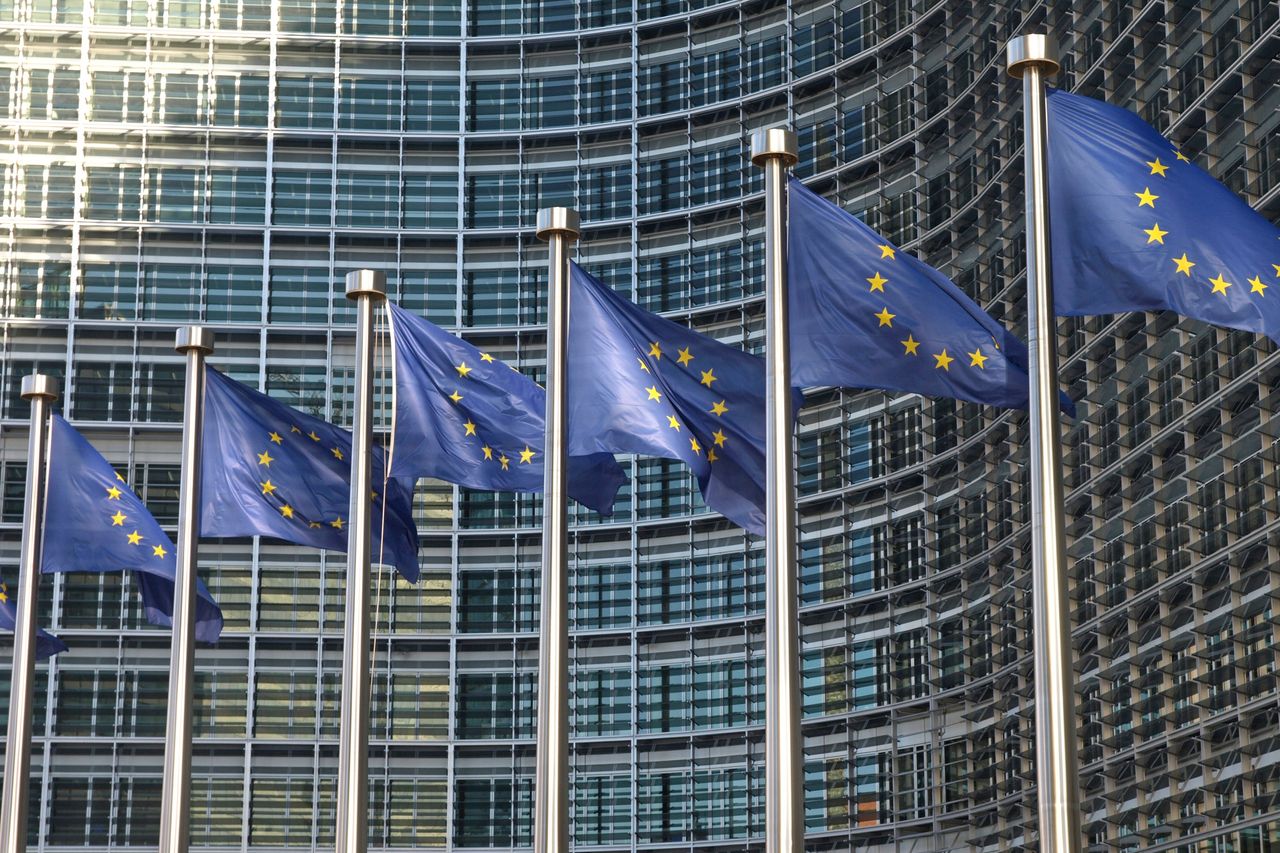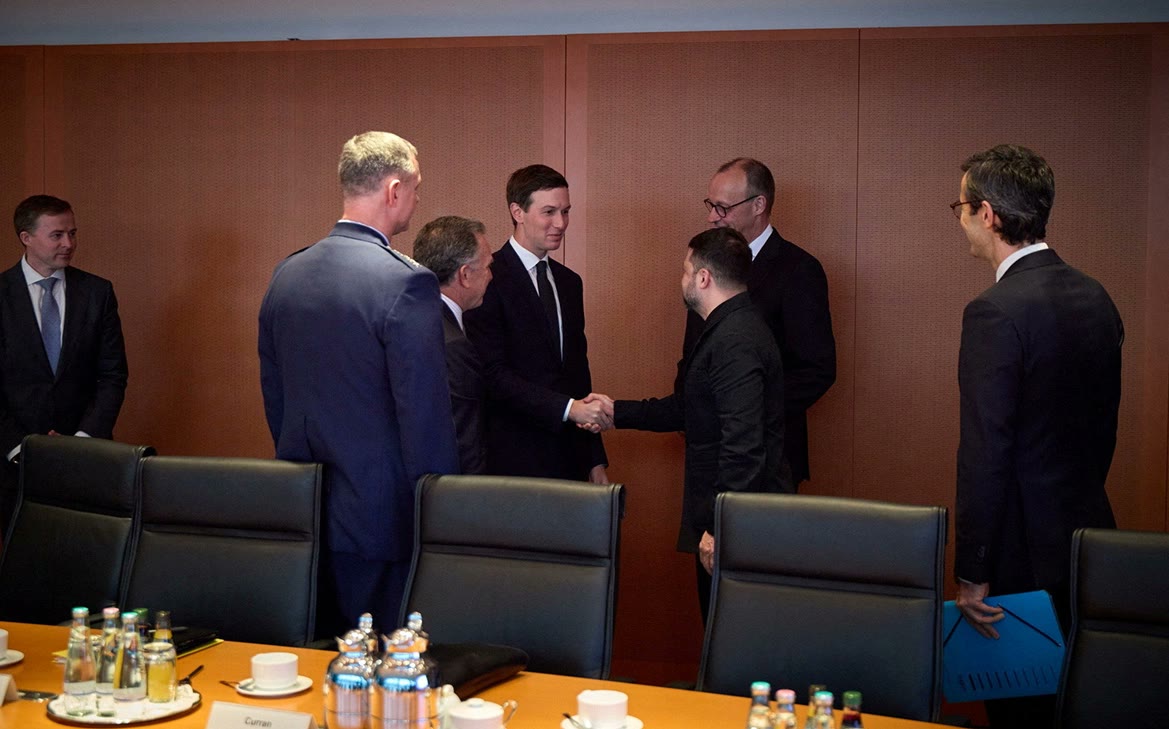
Europe will take a seat at the next round of negotiations on ending the war in Ukraine, President Volodymyr Zelenskyy and US envoy Jared Kushner said on Thursday, after a day of shuttle diplomacy that carried Donald Trump's two envoys from the Kremlin to an airbase outside Dublin. The announcement, if it holds, would end Europe's exclusion from talks about a war fought on its own continent — but Moscow has not confirmed it, and the substance of any deal remains as far away as ever.
Steve Witkoff and Kushner spent more than four hours with President Vladimir Putin in the Kremlin on Thursday before flying to Ireland to debrief Zelenskyy, who was in Dublin for a European summit. Speaking to journalists on the tarmac at Casement Aerodrome in Baldonnel, west of Dublin, Zelenskyy said Europeans would take part in the next round rather than remaining "separately" on the sidelines, as they were at this week's talks in Abu Dhabi. "They will have a voice," he said, according to Free Malaysia Today.
Kushner, standing beside him, was emphatic: "We cannot conclude this deal without Europeans being at the table." He added that Putin was "willing to give it a try". Witkoff had earlier told Russian state television that "the Europeans will join at the next meeting, which we consider to be a very important moment because they are our partners and it's important to us that they take part."
Table of Contents
- A day of shuttle diplomacy
- The Kremlin's silence
- A prisoner exchange on the table
- Who speaks for Europe?
- Putin's hard line unchanged
- What happens next
- Key takeaways
- Frequently Asked Questions
- Sources
- Chronicle related reading
A day of shuttle diplomacy
The pace of the diplomacy has quickened sharply this week. The two days of trilateral talks in Abu Dhabi were the first direct US-mediated negotiations between Russia and Ukraine in nine months, and Thursday's round took the envoys on to Moscow and then Dublin within a single day. An EU official told AFP that representatives of five European capitals, as well as the European Commission, also met the US envoys, and that a new multilateral meeting "will be fixed soon".
Zelenskyy said he hoped the agenda of the next round would include steps towards de-escalation and a ceasefire. "We decided that we will work on an agenda about any kind of de-escalation, some kind of ceasefires... I hope that we will have such agenda. Yes, this is important," he said. He also stressed that the process had resumed after the long gap since the last round of talks, and welcomed the prospect of further meetings.
The Kremlin's silence
The one voice missing from the announcement was Russia's. Kremlin aide Yuri Ushakov, briefing journalists after the Moscow meeting, did not confirm that the Europeans would join the next round of talks. Instead he said the Europeans "must decide whether they want peace or the continuation of the war", and described their current stance as amounting to "a recipe for endless war".
The gap between the two accounts matters. Washington and Kyiv presented European participation as agreed; Moscow presented it as, at best, conditional on Europe changing its approach. Until the Kremlin confirms it in its own words, the seat at the table remains an American and Ukrainian claim rather than a settled fact — and the history of this negotiation is full of announcements that unravelled on contact with the other side's readout.
A prisoner exchange on the table
Alongside the question of who sits at the table, the envoys said work was under way on what Kushner described as the largest prisoner exchange of the war, "potentially reuniting thousands of people with their families". Zelenskyy had earlier put the scale at 1,000 to 1,200 prisoners on each side, though Ushakov said the parameters of the exchange were still being agreed. Chronicle covered the earlier agreement on an exchange in its report on the Abu Dhabi talks.
A swap on that scale would be the most tangible humanitarian outcome of the resumed diplomacy, and the easiest to deliver quickly. Prisoner exchanges have been one of the few areas where Russia and Ukraine have repeatedly managed to cooperate even while fighting continued, and both sides have an interest in bringing their captured soldiers home. Whether the exchange happens before the next round of talks, or is held back as an incentive for it, will be an early test of how serious the current round of diplomacy is.
Who speaks for Europe?
Even if Europe is invited, nobody has yet been named to take the seat. More than 40 European leaders ended their Dublin summit without designating a representative, and the question of format is unresolved. German Chancellor Friedrich Merz named two possibilities — the E3 of Germany, France and the United Kingdom, and a group of five adding Italy and Poland — while EU foreign policy chief Kaja Kallas argued that the EU treaties give the seat to European Council President Antonio Costa and herself. French President Emmanuel Macron said the format "will be determined" later.
The Coalition of the Willing — the group of European states preparing security guarantees for Ukraine — meets in Berlin next week, which would be the next occasion for Europe to settle who it sends. The question is not merely procedural: the representative would need authority to speak for a continent whose capitals disagree among themselves about how far to press Ukraine to compromise, and about what security guarantees Europe itself is willing to underwrite.
Putin's hard line unchanged
For all the talk of a breakthrough, Putin gave no sign of softening his demands. He told the two envoys he would not compromise on Russia's territorial claims in Ukraine or accept foreign peacekeepers on Ukrainian soil, according to the reports of the meeting. Kushner told Putin that Washington had detected what he called "a big change" on the European side and was confident that expanding the talks would not hinder progress — a claim the Kremlin's own account did not echo.
That leaves the negotiation where it has been for months: a process that is moving, but on a track where the two sides' positions on territory, security guarantees and the future of Ukraine's armed forces remain far apart. Europe's arrival at the table would change the shape of the negotiation, but it would not by itself close the gap between what Moscow demands and what Kyiv and its allies can accept.
What happens next
Witkoff said another meeting was already "on the schedule", though he gave no date or place. The immediate markers to watch are whether the Kremlin confirms European participation in its own words, whether the prisoner exchange moves from discussion to a date, and whether the Coalition of the Willing in Berlin produces a named European representative. If all three happen, the next round will look genuinely different from the talks that came before it. If they do not, Thursday's announcement will join a long list of diplomatic breakthroughs that faded before the next meeting began.
The war is approaching its fifth year. For Ukraine, a seat for Europe is not a courtesy but a necessity — as Zelenskyy put it in Dublin, "the war is in Europe". The test now is whether that seat comes with a voice that changes the outcome, or merely a chair at a table where the hard questions are still decided elsewhere.
Key takeaways
- Zelenskyy and US envoy Jared Kushner said on Thursday that Europe will join the next round of Ukraine peace talks, after Witkoff and Kushner spent more than four hours with Vladimir Putin in Moscow.
- Kushner said "we cannot conclude this deal without Europeans being at the table" and that Putin was "willing to give it a try"; Zelenskyy said Europeans "will have a voice".
- The Kremlin did not confirm the agreement: aide Yuri Ushakov said Europe must decide whether it wants peace or "the continuation of the war".
- The envoys also said work was under way on what would be the largest prisoner exchange of the war, with Zelenskyy earlier citing 1,000 to 1,200 prisoners on each side.
- No European representative has been named; the Coalition of the Willing meets in Berlin next week, and the date and place of the next round are not yet set.
- Putin told the envoys he would not compromise on Russia's territorial claims or accept foreign peacekeepers in Ukraine.
Frequently Asked Questions
What was announced about Europe joining the Ukraine peace talks?
President Volodymyr Zelenskyy and US envoy Jared Kushner said on Thursday, November 12, that Europe will take part in the next round of talks with Russia. The announcement followed more than four hours of talks between US envoys Steve Witkoff and Kushner and President Vladimir Putin in the Kremlin, and a debriefing of Zelenskyy at an airbase outside Dublin. The Kremlin has not confirmed the agreement.
Why has Europe not been at the table until now?
The resumed US-mediated talks in Abu Dhabi this week were trilateral — the United States, Russia and Ukraine — with European governments on the sidelines. Kyiv and its allies have long sought a European seat, arguing that the war is fought in Europe and that any settlement touches European security directly.
Who would represent Europe?
Nobody has been named. German Chancellor Friedrich Merz suggested the E3 (Germany, France and the United Kingdom) or a group of five adding Italy and Poland; EU foreign policy chief Kaja Kallas argued the seat belongs to European Council President Antonio Costa and herself under the EU treaties; French President Emmanuel Macron said the format "will be determined" later.
What prisoner exchange is being discussed?
Kushner said the US is working toward what would be the largest prisoner exchange of the war, "potentially reuniting thousands of people with their families". Zelenskyy had earlier cited 1,000 to 1,200 prisoners on each side, though Kremlin aide Yuri Ushakov said the parameters were still being agreed.
What did Putin say about his demands?
Putin told the US envoys he would not compromise on Russia's territorial claims in Ukraine or accept foreign peacekeepers on Ukrainian soil. His aide Yuri Ushakov said Europe must decide whether it wants peace or "the continuation of the war".