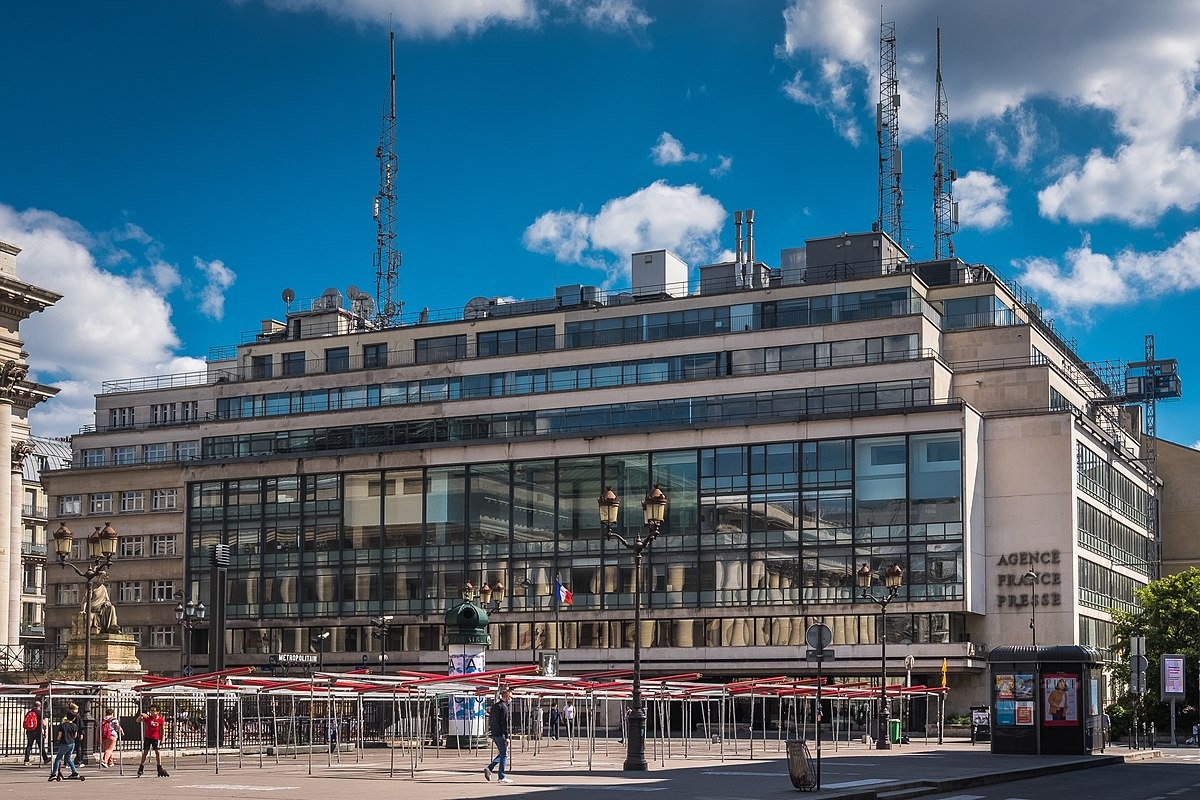
Agence France-Presse, one of the world's three global news agencies, was hit by a cyberattack in the early hours of Thursday, forcing it to take offline AFP Forum, the platform its clients use to browse and download its reporting. The attack began at 1:30 a.m. Paris time, according to an internal message from AFP management, and the platform remained inaccessible on Thursday evening while an investigation continued with outside experts. No group has claimed responsibility, and AFP says it has no information yet about who was behind the intrusion.
"As soon as the intrusion was detected, our teams moved immediately to contain the intrusion and took AFP Forum offline as a precautionary measure. AFP Forum remains unavailable until further notice," the internal email said, as reported by Al Jazeera. AFP said it was offering backup solutions to subscribers while the portal is down, so clients can still reach its output through other channels.
The incident is striking not because a newsroom was hacked — news organisations are frequent targets — but because of what AFP is. Alongside the Associated Press and Reuters, it forms the trio of agencies whose wires feed much of the world's news. A disruption to its distribution pipeline is felt far beyond Paris.
What was hit — and what was not
The target was narrow: AFP Forum, the client-facing platform where subscribers browse and download text, photos and video. AFP Forum is the tool media organisations use to buy and download AFP photos and videos to illustrate their stories, according to Le Figaro, via CyberSixT, and most French media are AFP clients. On Thursday evening the Forum website showed only a rotating loading symbol.
Crucially, AFP has not reported any disruption to its news production itself. The agency's journalists kept filing, and its wires kept moving. The shutdown was a containment decision — isolate the compromised platform to protect it — rather than a collapse of the agency's operations. That distinction matters: the attack interrupted how clients receive AFP content, not how AFP produces it.
Still, the scale of what flows through that platform is enormous. AFP employs 1,840 journalists in 210 bureaus and, according to its 2025 annual report, produces on average 2,300 text dispatches, 3,000 photos and 300 videos a day. A prolonged outage of its main client platform would be felt by newsrooms worldwide, and the fallback arrangements AFP has offered are a stopgap, not a substitute.
What is still unknown
AFP's public statements have been careful, and the gaps in them are the story's most important feature. The agency has not said how the attackers got in, whether any client or account data on the platform was accessed or copied, or whether ransomware was involved. No group has claimed the attack, and AFP's wording — an intrusion that was detected and contained by isolating the platform — describes containment rather than confirmed data theft.
"An investigation is underway with the help of outside experts. At this stage, we have no information on who is behind the attack," AFP said, as reported by Arab News. AFP has also not announced when AFP Forum will return to normal operations.
Until the agency says more, its clients have reason for caution. Subscribers should be wary of emails or calls about AFP Forum accounts, log-ins or invoices, and should verify anything suspicious through their usual AFP contact before acting — the period after a breach is exactly when impersonation attempts flourish.
Part of a wider pattern in France
The AFP attack did not happen in isolation. It comes amid a series of cyberattacks targeting companies and public institutions in France and other countries in recent months, as Times Now noted. France has been a repeated target this autumn: earlier this month we reported on a cyberattack on France's Socialist Party during the election period, and French supermarkets were hit by a second wave of fridge-system cyberattacks in the same period.
The pattern extends beyond France. The FBI and the US Department of Agriculture were targeted in November, and in a separate incident this month the fan-fiction library Archive of Our Own was forced offline for more than a week by a cyberattack, leaving its 11 million users without access. The AFP intrusion fits a landscape in which attackers are probing institutions of every kind — political, commercial, cultural and now journalistic.
What sets the AFP case apart is the target's function. Hacking a supermarket's refrigeration or a party's servers disrupts a business or a campaign. Hacking a wire service's distribution platform touches the infrastructure through which much of the world learns what is happening. That is presumably the point: an attack on a news agency is an attack on the information supply chain itself.
Why newsrooms are soft targets — and why it matters
News agencies are attractive targets for several reasons. They hold vast archives of unpublished material, they maintain accounts for thousands of client organisations, and their platforms are built for wide access — the opposite of a locked-down corporate network. AFP Forum exists precisely so that subscribers around the world can log in and pull content quickly, and that openness is also a vulnerability.
There is also a symbolic dimension. A successful intrusion into a global news agency, even one limited to a distribution platform, sends a message that no institution is out of reach. Whether the attackers' motive was espionage, extortion, disruption or simple opportunism is unknowable until the investigation advances — and AFP's silence on motive is itself a reminder of how little is confirmed at this stage.
For the public, the practical effect is limited for now: the news keeps flowing, and AFP's reporting reaches audiences through its clients' own channels. But the episode is a warning. The systems that carry the news are as exposed as any other part of the digital economy, and the next attack on a wire service may not stop at the distribution platform.
Frequently Asked Questions
What happened to AFP?
Agence France-Presse was hit by a cyberattack overnight between Wednesday, 25 November and Thursday, 26 November 2026, starting at 1:30 a.m. Paris time. The attack targeted AFP Forum, the platform clients use to browse and download its content, and AFP took the platform offline as a precaution.
Is AFP still publishing news?
Yes. The attack targeted the client distribution platform, not AFP's news production. The agency's journalists continue to file, and AFP says it is offering backup solutions to subscribers so they can still access its content while AFP Forum is offline.
Who was behind the attack?
Nobody knows yet. AFP says it has no information on the identity of the perpetrators, no group has claimed responsibility, and an investigation is underway with the help of outside cybersecurity experts.
Was any data stolen?
AFP has not said. It has not disclosed how the attackers got in, whether any client or account data was accessed or copied, or whether ransomware was involved. Its statements describe an intrusion that was detected and contained, not confirmed data theft.
When will AFP Forum be back online?
AFP has not announced a restoration date. The platform remained inaccessible on Thursday evening, 26 November, and AFP says it will stay offline until further notice while the investigation continues.
Why does an attack on a news agency matter?
AFP is one of the world's three global news agencies, alongside the Associated Press and Reuters. It employs 1,840 journalists in 210 bureaus and produces about 2,300 text dispatches, 3,000 photos and 300 videos a day. An outage of its main client platform affects newsrooms worldwide that depend on its output.