TEHRAN — Iran's foreign minister has said that talks with Qatari mediators have produced a plan under which navigation through the Strait of Hormuz could be restored within two days — but only if the United States first meets a set of Iranian conditions, including sanctions relief, the release of frozen funds and a reduced American military footprint in the region.
Abbas Araghchi told Al Jazeera on Saturday that Tehran's original proposal envisaged a seven-day implementation window for reopening the waterway, and that mediation had steadily compressed that timetable. Qatar first proposed cutting it to five days, he said; the version now under discussion would do it in two.
"The plan currently under discussion is the one Iran originally presented at the beginning," Araghchi said, describing a sequence in which the United States would implement a set of measures on day one, with the strait reopening and navigation returning to normal on day two.
The offer is the most concrete diplomatic signal yet in a war that has choked one of the world's most important energy arteries for eight months — and it arrives alongside a warning from Tehran's highest authority that Iran is preparing for the possibility of renewed fighting.
Table of Contents
- What the two-day plan involves
- Tehran's conditions, in detail
- The Vance letter and the Doha channel
- A warning from the supreme leader
- Why Hormuz matters to the world economy
- What happens next
- Key takeaways
- Frequently Asked Questions
- Sources
- Related Chronicle coverage
What the two-day plan involves
The proposal is, in essence, a compressed version of a framework Iran has been advancing for weeks. Under the original Iranian plan, reopening the strait was tied to a seven-day implementation period. Qatari mediators, who visited Tehran this week, pressed for a shorter window — first five days, then, after further discussion, two.
Araghchi said an Iranian delegation is now in Doha to continue consultations, with one of his aides remaining in Qatar to carry the talks forward. Qatari and Pakistani mediators are both involved in the shuttle diplomacy, according to his account, and mediators have also shared proposals concerning Iran's nuclear programme, which Tehran says it is reviewing as part of a second phase.
Crucially, the minister stressed that there are currently no plans for direct meetings with American officials. "We see no need to meet with the Americans at this stage," he said. "Our conditions are clear, and mediators are continuing their consultations regarding them." Whether any future negotiation is direct or indirect, he added, would be decided only once Washington agrees to Iran's conditions — dismissing reports of an imminent US–Iran meeting as media speculation.
Tehran's conditions, in detail
Araghchi set out five main demands, as reported by Al Jazeera and the Business Times:
- Lifting sanctions imposed after the Islamabad memorandum — the June ceasefire agreement between the US and Iran that later collapsed, after which new sanctions were imposed.
- Reducing US forces in the region, easing the American military posture around the Gulf.
- Restoring oil waivers that allow other countries to buy Iranian crude.
- Releasing all of Iran's frozen funds, including money held in Qatar.
- Recognition of shipping routes through the strait that Iran has discussed with Oman, and the closure of other routes.
It is a steep price, and one Washington has previously resisted: an earlier version of the framework, which reportedly included lifting the blockade of Iranian ports and waiving oil sanctions, was said to have been rejected by the United States. As of publication, there has been no public White House response to the shortened two-day version.
The structure of the offer matters as much as its content. By putting the American steps first — day one — and the reopening second, Tehran is asking Washington to move before it sees any ships pass. That sequencing is likely to be the hardest part of the plan to sell in Washington, where officials have historically demanded Iranian concessions up front.
The Vance letter and the Doha channel
One element of Araghchi's account may explain why Tehran believes the moment is different now: a letter from US Vice President JD Vance to Iran's security chief, Mohsen Rezaei. Araghchi said the letter had been studied in high-level meetings in Tehran, and Rezaei himself has said Washington's "tone has changed completely."
Araghchi described the American outreach as "a positive step" and an attempt "to open the door to broader dialogue and understanding" — careful, measured language from a government that has spent months exchanging fire with the United States and Israel. The letter, he said, aims "to keep negotiations ongoing… and reach a peaceful settlement of the outstanding differences."
The choreography around the letter is telling. Qatari mediators travelled to Tehran, and within a day an Iranian delegation was in Doha. That pace — mediator visit, then delegation, then a revised two-day timetable — is the strongest evidence so far that the channel is active rather than performative. Whether it is productive is a different question, and one that depends on whether Washington is prepared to pay Tehran's price.
A warning from the supreme leader
Even as his foreign minister talked up diplomacy, Iran's Supreme Leader Mojtaba Khamenei struck a very different note. On Saturday he met senior military commanders and ordered them to deliver an "immediate, effective response without geographical limitations" to any potential enemy threat, according to Iranian state media reported by the Business Times.
The dual messaging is deliberate, and familiar. Tehran has repeatedly paired diplomatic openings with military warnings throughout this war: talk, but from a position that threatens escalation if talks fail. For Washington and its allies, the warning is a reminder that the two-day plan is not the only Iranian track in play — and that the military option, on both sides, has not been taken off the table.
It also reflects the domestic politics of the moment. A supreme leader who orders his commanders to prepare for wider war gives his diplomats cover: any deal can be presented at home not as a concession extracted under pressure, but as a choice made by a country ready to fight on.
Why Hormuz matters to the world economy
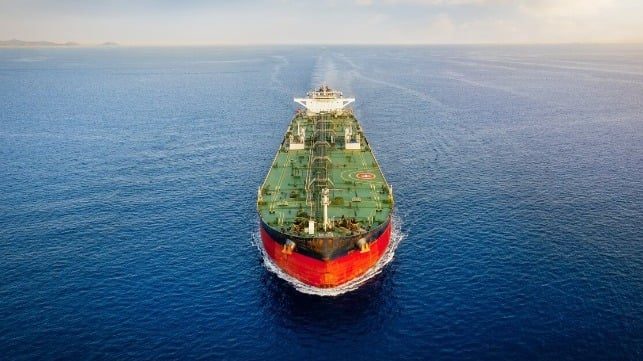
The Strait of Hormuz, the narrow channel between Iran and Oman linking the Persian Gulf to the open ocean, carries a large share of the world's seaborne oil and liquefied natural gas. Its disruption since the US–Iran war began in late February has been one of the conflict's most consequential global effects, pushing energy prices sharply higher and forcing shippers to reroute or idle vessels.
On Friday, Brent crude, the global benchmark, settled at $117.64 a barrel and US crude at $104.12 — both their highest since late April, according to Reuters figures cited in reporting on the talks. Those prices are the market's verdict on the current state of play: a strait still effectively closed to normal traffic, and a diplomatic process that has not yet produced a breakthrough.
Reopening Hormuz on Tehran's terms would not just lower oil prices. It would remove one of the main transmission mechanisms through which a regional war becomes a global economic shock — affecting fuel costs, shipping insurance, and inflation in importing countries from Asia to Europe. That is precisely why mediators in Doha and Islamabad have invested so heavily in the channel, and why a two-day timetable, if real, would be significant.
What happens next
Three questions will decide whether the two-day plan becomes a breakthrough or another diplomatic cul-de-sac. First, will Washington respond publicly — and if so, will it accept, reject or seek to renegotiate the conditions? Second, will the Doha consultations produce anything beyond the timetable itself, such as agreement on verification or on the nuclear proposals mediators have reportedly shared? And third, will the military posturing on both sides stay rhetorical while the talks proceed?
For now, the honest assessment is that the plan is a signal, not a settlement. Iran has shown it is willing to shorten its timeline dramatically — from seven days to two — which is a real concession of form, even if the substance of its demands has not moved. Whether the United States treats that as an opening worth paying for will determine whether ships return to the strait this week, or whether the war grinds on into its ninth month.
Key takeaways
- Iran's foreign minister Abbas Araghchi says talks with Qatari mediators have produced a plan to reopen the Strait of Hormuz within two days.
- Under the plan, the US would implement a set of measures on day one, with navigation restored on day two.
- Tehran's conditions include lifting post-ceasefire sanctions, reducing US forces in the region, restoring oil waivers, releasing frozen funds and recognising shipping routes agreed with Oman.
- An Iranian delegation is in Doha for further talks; Araghchi says there are no current plans for direct meetings with US officials.
- Araghchi called a letter from US Vice President JD Vance to Iran's security chief a "positive step," with a changed American tone.
- Supreme Leader Mojtaba Khamenei simultaneously ordered commanders to prepare an "immediate, effective response without geographical limitations" to any attack.
- Brent crude settled at $117.64 a barrel on Friday, its highest since late April, reflecting continued disruption to Gulf shipping.
- There has been no public White House response to the two-day plan so far.
Frequently Asked Questions
What is Iran's two-day plan for the Strait of Hormuz?
It is a revised proposal, worked out with Qatari mediators, under which the United States would implement a set of Iranian conditions on day one, and the Strait of Hormuz would reopen with navigation restored on day two. It compresses an earlier Iranian proposal that envisaged a seven-day implementation period.
What conditions has Iran set for reopening the strait?
Lifting sanctions imposed after the collapse of the June Islamabad memorandum ceasefire, reducing US military forces in the region, restoring waivers for Iranian oil sales, releasing all frozen Iranian funds including those held in Qatar, and recognising shipping routes through the strait discussed with Oman while closing other routes.
Are Iran and the US talking directly?
Not according to Tehran. Foreign Minister Abbas Araghchi says there are no plans for meetings with US officials at this stage, and that consultations are running through Qatari and Pakistani mediators, with an Iranian delegation now in Doha.
What is the JD Vance letter?
A letter from US Vice President JD Vance to Iran's security chief Mohsen Rezaei, which Tehran says it has studied in high-level meetings. Araghchi described it as a "positive step" towards broader dialogue, and Rezaei said Washington's tone had "changed completely."
Why does the Strait of Hormuz matter so much?
It is the narrow waterway through which a large share of the world's seaborne oil and liquefied natural gas passes. Its disruption since the war began in February 2026 has pushed Brent crude above $117 a barrel and raised fuel and shipping costs worldwide.
Has the United States accepted the plan?
There has been no public White House response to the two-day version so far, and an earlier version of Iran's framework was reportedly rejected by Washington.
Sources
- Al Jazeera — Iran FM says US outreach a "positive step" as delegation in Qatar for talks.
- Al Jazeera — Iran war live: Araghchi says talks under way on 2-day plan to reopen Hormuz.
- Business Times — Iran threatens wider US strikes even as talks make progress.