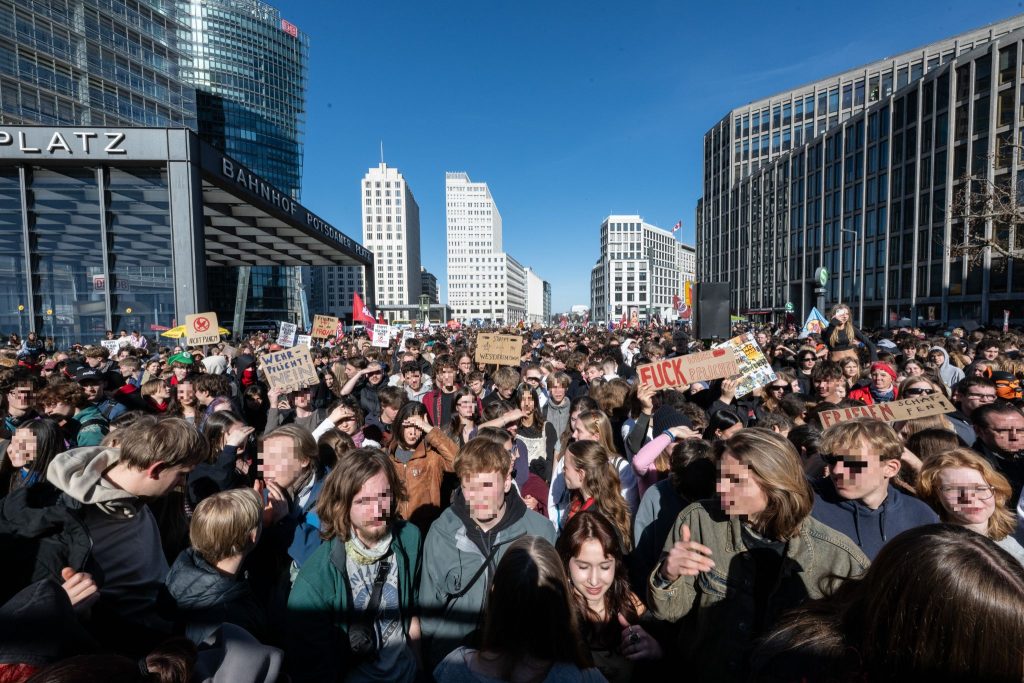
More than 160,000 people are expected to take to the streets across Germany on Saturday, October 31, as a youth-led protest movement that has already shaken politics elsewhere in Europe arrives in the continent's largest economy. Organised by the campaign group Gen Z regelt — "Gen Z takes charge" — the demonstrations are planned in 34 cities, including Berlin, Frankfurt and Munich, and coincide with Halloween festivities, a timing that has complicated policing and sharpened public attention.
The German rallies are the latest chapter in a year of youth-driven unrest across Europe. In Serbia, sustained student-led activism helped unseat the country's long-time leader at the ballot box, while in France mass protests have at times descended into rioting and looting. Germany's organisers insist their movement is peaceful and focused on the everyday pressures facing young people: underfunded schools and universities, rising living costs, and a government they accuse of answering their concerns with cuts and new burdens.
Table of Contents
- What is planned for Saturday
- The demands: education, living costs and conscription
- A European wave, with a German accent
- Authorities brace for a peaceful day — with warnings attached
- Who is really behind the movement?
- Why the timing matters for Merz
- What happens next
- Key takeaways
- Frequently Asked Questions
- Sources
- Chronicle related reading
What is planned for Saturday
According to organisers, cited by Reuters, turnout could exceed 160,000 people nationwide. Rallies are scheduled in 34 cities, with the largest expected in Berlin, Frankfurt and Munich. The choice of Halloween weekend is deliberate in one sense — a Saturday when students and young workers are free — and awkward in another, as city centres fill with revellers in costume alongside demonstrators, stretching police resources.
In Berlin, some businesses along the luxury Kurfürstendamm shopping boulevard have already boarded up windows and planned early closures, anticipating possible unrest. The precaution captures the nervous mood: officials expect a largely peaceful day, but nobody wants to be caught out if a fringe turns confrontational.
The demands: education, living costs and conscription
At the heart of the protests is a complaint that will sound familiar to young Europeans everywhere: that the state is asking more of their generation while giving it less. The organisers say they want substantially greater investment in education, relief from rising living costs, and an end to compulsory military service plans that would fall disproportionately on the young.
One 18-year-old due to speak at the Munich rally put the grievance directly to Chancellor Friedrich Merz, saying the government had answered young people's concerns with nothing but further cuts and burdens, and vowing that protesters would keep exercising their right to assemble until they stopped being ignored.
The education complaint is concrete, not abstract. Sean Baker, a student at the Technical University of Berlin who plans to join Saturday's protests, described campus buildings in a state of disrepair, saying some rooms look abandoned — yet that is where students are expected to study every day. Crumbling infrastructure has become a potent symbol for a generation told that Germany cannot afford to fix the places where it learns.
A European wave, with a German accent
Germany is not the first stop on this wave, and its organisers draw open inspiration from movements elsewhere. Serbia's student movement showed that sustained, disciplined youth protest could translate into electoral change. France's far larger and more volatile protests showed the opposite risk: that a movement can lose control of its own street presence.
The German variant sits somewhere between the two. Its demands are domestic and practical — classrooms, rents, conscription — rather than revolutionary, and its organisers have worked to present a disciplined, peaceful image. But the French precedent looms over every official statement about Saturday, and over the precautions taken by Berlin shopkeepers.
Authorities brace for a peaceful day — with warnings attached
German authorities say they expect Saturday's demonstrations to be largely peaceful, but they have paired that assessment with a pointed warning: extremist groups may try to exploit the movement. The federal interior ministry has said parts of Germany's far-left extremist scene, along with some groups linked to foreign extremist movements, have joined efforts to mobilise support for the rallies.
Roman Poseck, interior minister for the state of Hesse — home to financial hub Frankfurt — was blunt about the fear. He said everyone had images from France in mind: looting, burning houses, burning police vehicles and attacks on officers. "France must not be held up as a model in this regard," he said.
The warning cuts both ways. It gives police a rationale for a heavy presence, but it also risks tarring a mainstream youth protest with the actions of a fringe it does not control — a tension the organisers have been keen to highlight.
Who is really behind the movement?
One of the sharpest questions around Saturday is also the most basic: how genuinely youth-led is this movement? The broad mix of political and civil society groups involved has prompted scrutiny of who is driving the campaign and to what end.
Germany's national school student umbrella organisation, BSK, has publicly distanced itself from the Gen Z regelt initiative, while stressing that it is not distancing itself from students themselves, whose concerns it calls legitimate. BSK secretary-general Amy Kirchhoff said the organisation would hold its own separate day of protest on November 20.
The split matters. It suggests Saturday's movement is not the unified voice of German youth, but one current within a wider, more fragmented discontent — and it leaves open the question of whether the rallies will consolidate into a durable force or fragment after a single day of action.
Why the timing matters for Merz
The protests land at a difficult moment for the Merz government and for Germany more broadly. Europe's largest economy is struggling to revive growth, while pension and public-service costs climb as baby boomers retire and the working-age population shrinks. That demographic squeeze is precisely what makes the generational argument so potent: young Germans are being asked to fund a system under strain while their own schools decay and their rents rise.
For Merz, Saturday is therefore more than a policing challenge. A turnout anywhere near the 160,000 organisers predict would make the generational grievance impossible to dismiss as a fringe concern — and would put pressure on a government already juggling defence spending, economic stagnation and the politics of conscription.
What happens next
Saturday's turnout, and whether the day stays peaceful, will determine what follows. A large, disciplined demonstration would strengthen the organisers' hand and raise the pressure for a substantive government response on education funding and living costs. Violence or a low turnout would do the opposite, handing critics evidence that the movement is either dangerous or marginal.
Either way, the calendar already points beyond Saturday: BSK's separate protest day on November 20 will test whether student discontent can sustain momentum, and whether the various strands of Germany's youth movement can find common ground after a day in which they marched separately.
Key takeaways
- More than 160,000 people are expected at Gen Z-led rallies in 34 German cities on Saturday, October 31, organised by the group Gen Z regelt.
- The core demands are greater education investment, lower living costs and opposition to compulsory military service.
- Authorities expect largely peaceful protests but warn extremist groups may try to exploit the movement, citing the French precedent.
- Germany's national student umbrella organisation, BSK, has distanced itself from the initiative and plans its own protest day on November 20.
- The protests arrive as Germany grapples with weak growth and rising pension and public-service costs as its population ages.
Frequently Asked Questions
What are the Gen Z protests in Germany about?
The protests are driven by young people's concerns over underfunded education, rising living costs and plans for compulsory military service. Organisers say the government has responded to their concerns with cuts and additional burdens rather than investment.
How many people are expected at Saturday's rallies?
Organisers expect more than 160,000 people across 34 cities, including Berlin, Frankfurt and Munich, according to Reuters.
Are the protests expected to be peaceful?
German authorities say they expect the demonstrations to be largely peaceful, but they have warned that extremist groups may attempt to exploit the movement, and some Berlin businesses have boarded up windows as a precaution.
Why has Germany's national student organisation distanced itself?
The BSK umbrella organisation says it is distancing itself from the Gen Z regelt initiative, but not from students themselves, whose concerns it describes as legitimate. It plans a separate day of protest on November 20.
How do the German protests fit into the wider European picture?
They follow a wave of youth-led demonstrations across Europe in 2026, including student activism in Serbia that contributed to electoral change and large, sometimes violent protests in France.
Sources
- Reuters — "Gen Z protests reach Germany as over 160,000 expected at Halloween rallies"