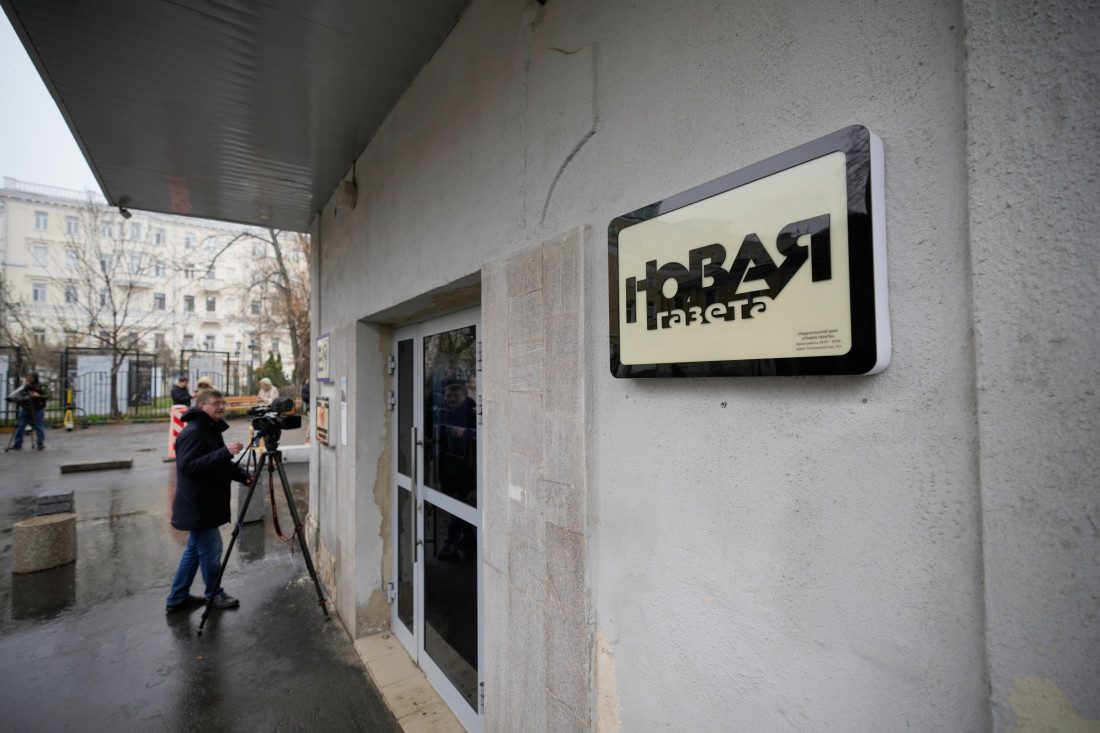
Russia's flagship independent newspaper, Novaya Gazeta, announced on Friday, October 30, that it is ending its existence after 33 years, saying the Russian authorities had "killed" it through a sustained campaign of raids, prosecutions, censorship and administrative pressure that intensified sharply after the full-scale invasion of Ukraine in 2022.
In a statement entitled "We were killed", the paper's editorial board said the security services had forced the newsroom to stop work. Editor-in-chief Sergei Sokolov said in a video message that on November 9 the paper would "turn off the lights in our home, where we have lived for 30 years", shut down its servers and leave its Moscow office. The announcement marks the end of one of the last news outlets inside Russia still willing to criticise the Kremlin openly, and it drew swift condemnation from press-freedom groups and the United Nations.
Table of Contents
- A newsroom under siege
- From Nobel Prize to 'foreign agent'
- The final weeks: eviction and arrest
- What survives — and what does not
- A wider chill across Russian media
- Key takeaways
- Frequently Asked Questions
A newsroom under siege
Founded in 1993, in the years after the Soviet Union collapsed, Novaya Gazeta built its reputation on investigations into corruption, human rights abuses and the wars in Chechnya — reporting that repeatedly put its journalists in danger. Six of its journalists and staff members have been murdered over the years, most famously Anna Politkovskaya, shot dead outside her Moscow home in 2006. The paper kept publishing anyway, and its defiance became part of its identity.
That history is why Friday's announcement landed so heavily. Sokolov said the paper had managed to keep working "while completely surrounded by intelligence services" for nearly five years of war, but that the pressure had finally become unsurvivable. "For nearly five years of war, we managed to operate while completely surrounded by intelligence services. But now, that's it. We've ended up in a kill zone," he said, according to Al Jazeera.
The paper's founder, Dmitry Muratov, who jointly won the Nobel Peace Prize in 2021 for his efforts to safeguard freedom of expression, described the closure as "part of a giant military campaign being waged by the Russian Federation", The Hindu reported. The language was deliberate: the newsroom presented its own demise not as a business failure but as a casualty of the same machinery of repression it had spent three decades documenting.
From Nobel Prize to 'foreign agent'
The arc of Novaya Gazeta's last five years tracks the narrowing of independent journalism in Russia almost exactly. After the invasion of Ukraine in February 2022, the paper suspended print publication inside Russia when its licence was revoked and wartime censorship laws made reporting on the conflict a criminal risk. It continued online, in reduced form, publishing through its website and other formats despite court orders against it.
The legal screws tightened steadily. Its journalists and editors were questioned, detained and had their homes searched. In September 2026, Russia's Justice Ministry designated the newspaper itself a "foreign agent" — a label, redolent of Soviet-era repression, that carries onerous reporting requirements and a stigma designed to deter sources and advertisers alike. Muratov had already been personally designated a foreign agent and forced to step down as editor-in-chief.
The designation matters beyond symbolism. Once an outlet is branded a foreign agent, every article must carry a disclaimer, every financial transaction invites scrutiny, and ordinary readers risk being associated with a stigmatised organisation simply by sharing its work. For a newsroom already operating in a legal grey zone, it was another step towards impossibility.
The final weeks: eviction and arrest
The end came quickly once the last supports gave way. On October 15, Sokolov was detained by police after a search of his Moscow home and questioned for hours by the Investigative Committee. Reporters Without Borders called the detention a new escalation, noting that Sokolov had previously been arrested in 2024 and prosecuted for "discrediting the armed forces" over an article.
Then, on October 29, the paper's landlord terminated the lease on the office it had occupied for 33 years. The loss of its physical home — the newsroom where generations of reporters had worked, and where colleagues had gathered to mourn murdered staff — removed the last practical base for operations inside the country. The next morning, the editorial board published its farewell.
The human cost behind the institutional story is stark. The paper's own account of its history is inseparable from the colleagues it lost, and its legacy is examined in our earlier article on Anna Politkovskaya's legacy. That two-decade thread — from Politkovskaya's murder in 2006 to the closure of the paper she wrote for — frames what Friday's announcement means: not just the loss of a title, but the closing of a chapter in Russian journalism that survived assassinations, wars and crackdowns before finally being squeezed out by administrative means.
What survives — and what does not
One important distinction has been lost in some early reactions to the news. Novaya Gazeta Europe, the separate project founded by exiled journalists after 2022, continues to operate from abroad and is not affected by the Moscow newsroom's closure. Its reporters, working outside Russian jurisdiction, can still publish investigations that would be criminal inside the country.
But the distinction also underlines the loss. A newsroom in exile, however brave, cannot replicate a newsroom on the ground: it cannot cultivate sources in provincial courts, attend trials, knock on doors or maintain the daily, unglamorous contact with ordinary Russians that made the original paper distinctive. The Moscow operation's closure removes independent reporting from inside Russia at precisely the moment when reliable information about the country is hardest to obtain.
The international reaction reflected that understanding. Reporters Without Borders said the paper would "never stop inspiring us", while United Nations High Commissioner for Human Rights Volker Turk said he was "deeply concerned and saddened" by the closure, describing it as another "devastating blow" for the remaining independent media in Russia. More than 30 journalists from various outlets are currently in prison in Russia, according to press-freedom monitors.
A wider chill across Russian media
Novaya Gazeta's closure is the most prominent, but far from the only, recent blow to Russian independent media. The pattern of the past four years — foreign-agent designations, licence revocations, criminal cases over "discrediting" the armed forces, and pressure on landlords and printers — has systematically removed the infrastructure on which independent reporting depends. Outlets that once operated openly now work from exile, under pseudonyms, or not at all.
The timing also matters. The closure comes as Russia's war in Ukraine continues into its fifth year, with domestic dissent more tightly policed than at any point since the Soviet era. Without newsrooms like Novaya Gazeta, Russians lose one of the few remaining domestic sources willing to challenge official narratives about the war, corruption and the state itself. The debate about press freedom is not confined to Russia — concerns about political pressure on newsrooms have surfaced in other countries too, as examined in our article on press-freedom fears at major US networks — but the Russian case is distinct in its completeness: the independent press inside the country is now, for practical purposes, gone.
For the journalists themselves, the immediate future is uncertain. Some will join the Europe-based operation; others may leave journalism altogether or face prosecution if they continue. The paper's farewell statement accused the security services, the Justice Ministry and the Prosecutor's Office of having "privatised the state and usurped power" — a final editorial judgement from a newsroom that spent 33 years holding power to account, and that chose to name its killers rather than fade quietly.
Key takeaways
- Novaya Gazeta announced on October 30, 2026, that it is ceasing operations after 33 years, saying Russian authorities "killed" it through sustained pressure.
- The paper will leave its Moscow office on November 9 and shut down its servers, ending the last openly critical newsroom operating inside Russia.
- The closure followed the paper's designation as a "foreign agent" in September 2026, the detention of editor-in-chief Sergei Sokolov on October 15, and the termination of its office lease on October 29.
- Novaya Gazeta Europe, the separate exile project, continues to operate from abroad.
- Press-freedom groups and the UN human rights chief condemned the closure as a devastating blow to independent media in Russia.
Frequently Asked Questions
Why did Novaya Gazeta close?
The paper said years of pressure from the Russian authorities made it impossible to continue: its media licence was revoked after the 2022 invasion of Ukraine, it was designated a "foreign agent" in September 2026, its editor-in-chief was detained in October, and its landlord terminated the lease on its Moscow office of 33 years. In its farewell statement, the editorial board said the security services had forced it to end its work.
What was Novaya Gazeta known for?
Founded in 1993, it was one of Russia's most respected independent newspapers, known for investigations into corruption, human rights abuses and the wars in Chechnya and Ukraine. Its founder, Dmitry Muratov, won the Nobel Peace Prize in 2021 for defending freedom of expression. Six of its journalists and staff members were murdered over the years, including Anna Politkovskaya in 2006.
Does Novaya Gazeta Europe still exist?
Yes. Novaya Gazeta Europe is a separate project founded by exiled journalists after 2022 and operating from outside Russia. It is not affected by the Moscow newsroom's closure, although it cannot replace on-the-ground reporting from inside the country.
What has the international reaction been?
Reporters Without Borders said the paper would "never stop inspiring" journalists, and UN High Commissioner for Human Rights Volker Turk called the closure another "devastating blow" for independent media in Russia. The closure has been widely reported as a landmark in the Kremlin's crackdown on dissent since the invasion of Ukraine.