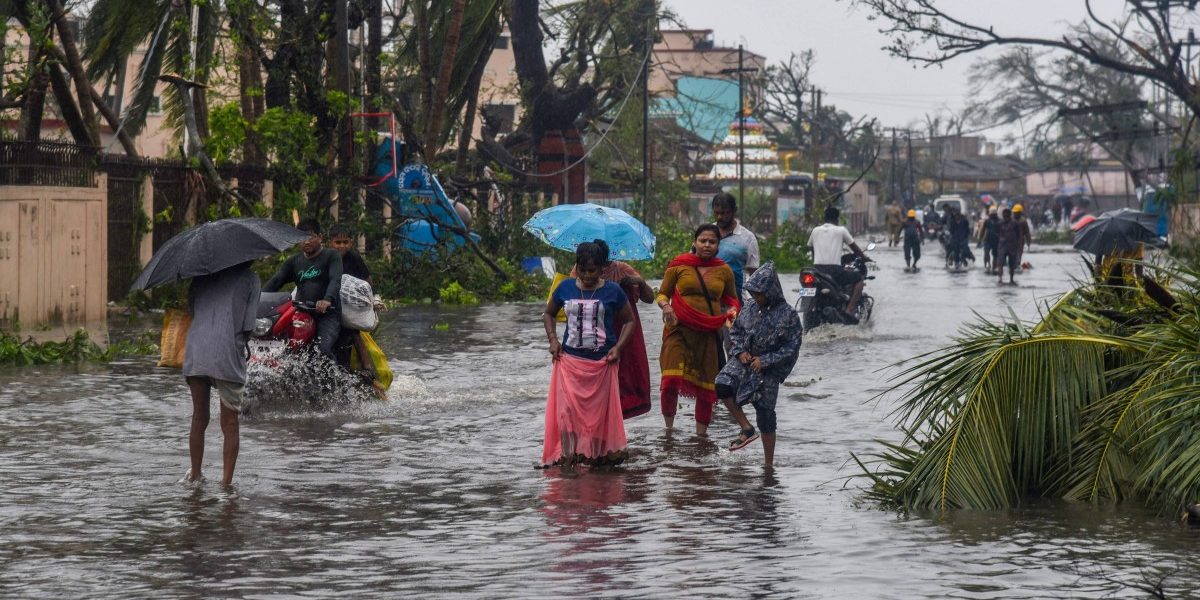
Two days after Cyclone Arnab slammed into India's eastern seaboard, the storm's second act is proving just as destructive as its first: floodwaters are swamping districts in Odisha, where nearly 59,000 people have been evacuated, while Andhra Pradesh has put a preliminary price tag of ₹4,600 crore on the damage and is racing to restore power, roads and mobile networks.
Arnab made landfall on October 28 as a very severe cyclonic storm, crossing the Andhra Pradesh coast with gusts of around 150 km/h. The landfall itself was extensively prepared for — and, by the account of Andhra Pradesh's chief minister, that preparation kept the death toll in check. But the deluge the cyclone dragged inland has kept the emergency going well past the moment the winds died down, shifting the centre of the crisis north into Odisha.
Table of Contents
- Odisha: nine districts under water
- Andhra Pradesh: counting the cost
- Trains, trees and a stranded ship
- The politics of relief
- Why the flooding came after the storm
- Frequently Asked Questions
Odisha: nine districts under water
The Odisha government said on Thursday that it had deployed more than 300 rescue teams across flood-hit Ganjam and eight other districts, as heavy rain unleashed by the cyclone washed away roads, marooned villages and triggered landslides. According to officials, 59,028 people — including 11,882 from Ganjam alone — were evacuated to safety after their homes were inundated.
State Disaster Management Minister Suresh Pujari said 313 teams were engaged in the rescue effort: nine from the National Disaster Response Force, 60 from the Odisha Disaster Rapid Action Force and 244 from the Fire Services Department. The evacuees included 3,001 pregnant women, moved as a precaution.
The damage to connectivity has been severe. A stretch of National Highway 326 linking Berhampur with Mohana was washed away by floodwaters, and road infrastructure in the hilly Gajapati district suffered extensive damage as torrents rushed downhill into low-lying areas, triggering landslides and halting traffic. In Ganjam, the swollen Bahuda river crossed the danger mark at two railway bridges, forcing the disruption of services on the busy Howrah–Chennai route.
Andhra Pradesh: counting the cost
In Andhra Pradesh, where the cyclone first came ashore, the focus has shifted from rescue to repair and accounting. Chief Minister N. Chandrababu Naidu, after an aerial survey of the Krishna and Godavari regions and a visit to flood victims in Konaseema district, put the preliminary loss at ₹4,600 crore. He said the casualty count stood at seven, crediting advance preparation for limiting the loss of life.
The power sector alone accounts for an estimated ₹500 crore of the damage, according to Energy Minister Gottipati Ravi Kumar, with the worst-hit pockets around Palakollu, Bhimavaram and Narsapur. Restoration is under way at scale: electricity has been brought back to 4,771 of the 5,400 affected villages under the eastern distribution company, with 629 still waiting, and some 1,700 personnel are engaged in repairs, reinforced by 500 more from other distribution companies and nearly 2,000 staff and emergency material sent by neighbouring Telangana.
Naidu has directed officials to speed up power restoration and road repairs and to keep working until every affected household and village has electricity again, while also pressing telecom companies to restore mobile networks faster. Officials told him that rainfall between October 26 and 29 brought around 380 thousand million cubic feet of water into the state and lifted groundwater levels by roughly 44 thousand million cubic feet — a measure of just how much water the system had to absorb.
One quieter success story emerged from the evacuation effort: of 4,228 pregnant women identified ahead of the storm, 3,100 were shifted to medical facilities, and 367 babies have since been born in those facilities.
Trains, trees and a stranded ship
The disruption has rippled well beyond the two worst-hit states. On the Howrah–Chennai rail corridor, 36 trains were cancelled, 30 diverted and eight regulated or rescheduled after the Bahuda river threatened bridges in Ganjam — 24 cancellations by East Coast Railway and 12 by South Coast Railway.
In Visakhapatnam, the Greater Visakhapatnam Municipal Corporation reported 1,192 uprooted trees across ten zones; by Thursday evening, 902 had been fully cleared, with crews working round the clock using 45 earthmovers to reopen roads and restore water supply. And off the Andhra coast, the Indian Coast Guard airlifted all 20 crew members of the Marshall Islands-flagged bulk carrier Sigma Pearl, which had been stranded in rough seas near Antaravedi village, transferring them to the Coast Guard ship Sujay.
The politics of relief
As with every major Indian disaster, the relief effort quickly acquired a political dimension. Congress president Mallikarjun Kharge said he was "deeply distressed by the loss of lives in Andhra Pradesh and the massive disruption to people's lives in Odisha," and called on the Union government to lead coordinated relief and rehabilitation with the states, including assistance through the PM CARES fund. Congress leader Rahul Gandhi likewise urged governments to ensure swift relief and rehabilitation for every affected family.
The state governments, for their part, are already looking to New Delhi: Andhra Pradesh is preparing for a central team to assess the damage, the first step toward central assistance for a bill that already runs into thousands of crores.
Why the flooding came after the storm
Arnab's aftermath is a textbook example of why cyclones remain dangerous long after landfall. The storm's winds caused the first wave of destruction along the coast, but its rain bands kept dumping water over the interior for days, swelling rivers like the Bahuda past danger levels and saturating hilly terrain until slopes gave way. For readers following this storm from the start, our earlier report covered the landfall itself and the 150 km/h gusts that struck the Andhra coast, while the wider pattern of Bay of Bengal storms this season is covered in our report on the earlier cyclone to hit the Andhra coast.
The coming days will test whether the recovery keeps pace with the receding water. Power restoration in the remaining 629 villages, the reopening of washed-out highways and the resumption of full rail services are the immediate benchmarks — and for tens of thousands of evacuees, the question is not just when the water drains, but what will be left of their homes when it does.
Sources: The Hindu (live updates, October 30, 2026); The Indian Express (live updates, October 30, 2026).
Frequently Asked Questions
How many people have been evacuated in Odisha because of Cyclone Arnab?
Nearly 59,000 people — 59,028 according to state officials — have been evacuated across nine districts, including 11,882 from Ganjam district, after floodwaters inundated their homes. More than 300 rescue teams are working in the affected areas.
What is the estimated damage in Andhra Pradesh?
Andhra Pradesh Chief Minister N. Chandrababu Naidu put the preliminary damage estimate at ₹4,600 crore after an aerial survey of the Krishna and Godavari regions. The power sector alone suffered an estimated ₹500 crore in damage.
How many people died in Cyclone Arnab?
According to the Andhra Pradesh chief minister, the casualty count stood at seven, with advance preparation and large-scale evacuations credited for limiting the loss of life.
Which transport routes have been disrupted?
On the Howrah–Chennai route, 36 trains were cancelled, 30 diverted and eight regulated or rescheduled after the Bahuda river crossed the danger mark at two railway bridges in Odisha's Ganjam district. National Highway 326 between Berhampur and Mohana was also washed away.
When did Cyclone Arnab make landfall?
Arnab crossed the Andhra Pradesh coast on October 28, 2026, as a very severe cyclonic storm, with gusts of around 150 km/h.