A broker network backed by Pyongyang has been moving North Korean workers into Russian factories under the cover of student enrolments, in conditions the investigators describe as forced labour and in breach of United Nations sanctions, according to a report published on Thursday, 29 October 2026. The Hague-based legal foundation Global Rights Compliance (GRC) says the scheme channels most of the workers' wages back to the North Korean state, helping to finance its ballistic missile development, while some of the labour feeds factories producing goods used by Moscow in the war in Ukraine.
The findings, drawn from a nine-month undercover investigation, add a civilian workforce to a military partnership that has already deepened dramatically since 2022: North Korea has sent troops and munitions to support Russia's war effort, while Russia has offered Pyongyang political cover and economic lifelines. The report argues that the labour pipeline is not a fringe abuse but a state-authorised revenue stream operating in plain sight, through a website, a price list and a minimum order.
Table of Contents
- A marketplace for workers, priced per head
- The student-visa cover story
- Where the money goes — and who keeps it
- Why Russia needs the workers
- A partnership built since 2023
- Denials, silence and what remains unproven
- What happens next
- Key takeaways
- Frequently Asked Questions
- Sources
- Related reading from Chronicle
A marketplace for workers, priced per head
At the centre of the report is a Russian businessman, Vladimir Sokolov, and an online platform, KNDR.su, which the investigators say supplies North Korean workers to Russian companies for a fee of between 100,000 and 150,000 roubles per worker — roughly $1,240 to $1,860. Prospective clients were told they had to order at least 50 workers at a time, according to Ruslan Zhukov, the network's operations director, speaking to investigators who posed as company representatives.
That commercial framing is central to the report's argument. This was not, in GRC's account, informal migration or a handful of overstayed visas, but a structured service with a catalogue, a tariff and a sales operation. The investigators say they combined open-source research, facial-recognition analysis to identify North Korean officials connected to the network, and evidence gathered by their own staff working undercover as prospective employers.
Sokolov is already on the European Union's sanctions list: on 12 October, the bloc froze his assets over his promotion of industrial cooperation projects with North Korea. The new report now ties that commercial activity to a specific labour pipeline, and to factories whose output supports Russia's war economy.
The student-visa cover story
United Nations sanctions prohibit member states from employing North Korean workers, a measure designed to cut off a revenue source for Pyongyang's weapons programmes. According to GRC, the network gets around that ban by bringing workers into Russia on student visas, on the pretence that they are enrolling at colleges.
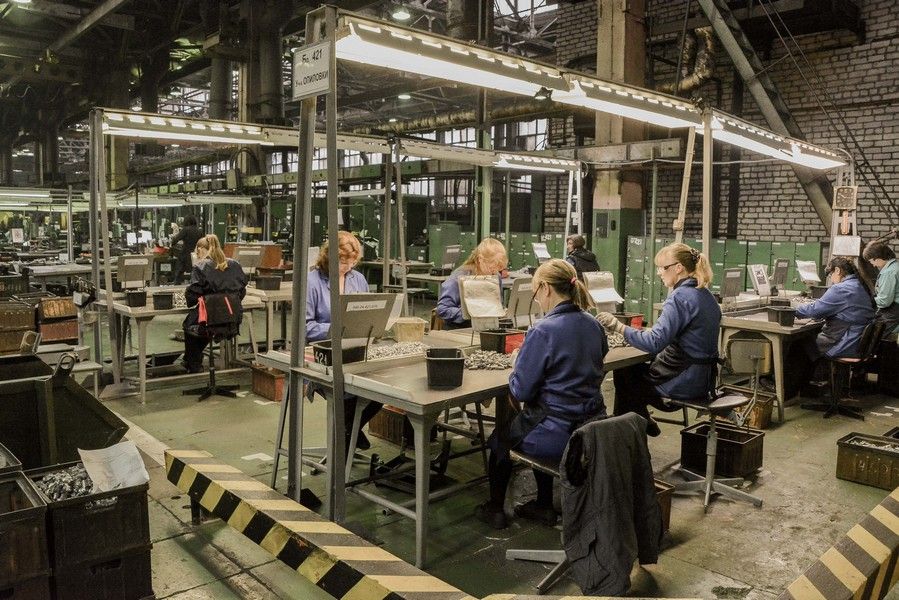
Once inside the country, the report says, the workers are put to work in factories rather than classrooms, under arrangements that leave them little freedom to leave. The investigators describe workers kept in place under threat of retribution — a pattern familiar from earlier documented cases of North Korean overseas labour, in which workers' families back home and the threat of punishment are used to enforce compliance, and in which wages are largely confiscated before they ever reach the worker.
The mechanism matters because it is designed to be deniable. A student visa looks routine; a factory roster does not invite the same scrutiny as a troop deployment. The report's claim is that this deniability is precisely the point: a sanctions regime built around formal employment can be sidestepped when the paperwork says "student" and the reality says "shift worker".
Where the money goes — and who keeps it
GRC's core allegation is financial. North Korea, the report says, takes much of the wages earned by its workers in Russia, leaving the workers themselves with a fraction of what their labour is worth. That income, the foundation argues, helps fund Pyongyang's ballistic missile development — the same weapons programmes the UN sanctions were imposed to constrain.
The foundation's legal adviser, Elise Lauriot Prevost, described the findings as exposing "a dangerous convergence" between two states' military ambitions: "North Korea's use of overseas forced labour to finance its weapons programme, and Russia's growing reliance on labour to sustain its war economy." The phrasing captures the report's central thesis — that this is not two separate stories, one about sanctions evasion and one about a wartime labour shortage, but a single transaction in which each side gets what it needs.
Some of the workers, the report adds, were placed at factories turning out items that Moscow uses in the Ukraine war, tightening the link between the labour scheme and the battlefield. The report does not claim that every worker was placed in a defence plant; its argument is that the network serves Russia's war economy broadly, including its military supply chain.
Why Russia needs the workers
Russia's demand for labour is the other half of the equation. The war in Ukraine has drained the Russian workforce: some estimates put the number of soldiers killed at around 1.5 million, and the country faces declining birth rates alongside sanctions that have restricted the inflow of foreign workers. Factories running wartime production schedules need hands, and the usual sources of migrant labour have narrowed.
North Korea, for its part, has a long history of exporting workers to earn hard currency, and a state apparatus capable of organising, transporting and disciplining them. The report presents the Sokolov network as the meeting point of those two needs: a Russian economy short of workers, and a North Korean state short of cash, connected by a broker who profits from the arrangement.
A partnership built since 2023
The labour allegations sit within a relationship that has transformed in the past three years. Moscow and Pyongyang pledged renewed cooperation at a summit of their leaders in 2023, and signed a partnership treaty the following year in which a mutual defence pact is a cornerstone. Since 2024, North Korea has sent more than 10,000 troops to fight alongside Russian forces in the Ukraine war, according to South Korea's intelligence agency, as well as weapons to replenish Russia's dwindling armoury — gaining battlefield experience in return.
Against that backdrop, the report argues, a labour pipeline should not be surprising: the two states have already shown they are willing to trade soldiers and shells. Workers, in this telling, are simply the next commodity in the same exchange, moved through civilian paperwork rather than military channels.
Denials, silence and what remains unproven
The allegations are contested and, in important respects, unproven in a court of law. GRC says it contacted two Russians identified as key figures in the network; only one replied, denying the accusations. Zhukov, the operations director, categorically denied the claims when contacted by the foundation. Sokolov and Zhukov did not respond to separate approaches from other news outlets before publication. Russia's foreign ministry and the North Korean embassy in Moscow did not respond to requests for comment.
Readers should also note the limits of the evidence as presented. The investigation relied on undercover methods, open-source material and facial-recognition analysis — powerful tools, but ones whose underlying datasets have not been published in full. The report's conclusions about where wages ultimately go, and about which specific factories serve the war effort, rest on the foundation's analysis of that material rather than on independently audited accounts. What is firmly established is narrower: that a broker network offering North Korean workers exists, that its principal has been sanctioned by the EU for North Korea-related industrial cooperation, and that UN sanctions ban precisely this kind of employment.
What happens next
The report lands at a moment when enforcement options are limited. Russia, as a permanent member of the UN Security Council, can block new sanctions measures, and the existing ban has already been circumvented, if the report is correct, through a visa loophole. The practical levers are therefore more likely to be secondary sanctions on brokers and facilitators — as the EU applied to Sokolov — pressure on third countries whose banking or transport systems touch the network, and public exposure of the companies that use the labour.
For the workers themselves, the prospects are bleaker. Exposure of a scheme does not automatically free the people inside it, and North Korean workers abroad have historically faced severe consequences for attempting to escape or speak out. Any enforcement response that does not account for their safety risks punishing the victims of the arrangement rather than its organisers — a tension that runs through every previous attempt to police North Korean overseas labour, and one this report does not resolve.
Key takeaways
- Global Rights Compliance says a Pyongyang-backed broker network run by Vladimir Sokolov supplies North Korean workers to Russian factories for 100,000–150,000 roubles per worker, with a minimum order of 50.
- Workers enter Russia on student visas to evade UN sanctions banning North Korean employment, the report says, and are kept in exploitative conditions under threat of retribution.
- Pyongyang allegedly takes most of the workers' wages, funding its ballistic missile programme; some workers were placed at factories producing goods used in the Ukraine war.
- Sokolov was sanctioned by the EU on 12 October, with his assets frozen, over industrial cooperation with North Korea.
- The scheme is denied by the network's operations director; Russia's foreign ministry and North Korea's Moscow embassy did not respond to requests for comment.
- The report fits a wider partnership in which North Korea has sent more than 10,000 troops to fight alongside Russia since 2024.
Frequently Asked Questions
What does the Global Rights Compliance report allege?
It alleges that a Russian broker network sponsored by Pyongyang brings North Korean workers into Russia on student visas, places them in factories in exploitative conditions, and channels most of their wages back to the North Korean state, in violation of UN sanctions.
How do the workers get into Russia if UN sanctions ban their employment?
According to the report, they enter on student visas on the pretence of enrolling at colleges, which sidesteps the formal employment ban. Once in Russia, they are put to work in factories instead of studying.
Who is Vladimir Sokolov?
He is the Russian businessman identified by the report as operating the network through the platform KNDR.su. The European Union sanctioned him on 12 October and froze his assets over his promotion of industrial cooperation projects with North Korea.
Has anyone denied the allegations?
Yes. Ruslan Zhukov, the network's operations director, categorically denied the claims when contacted by the investigators. Russia's foreign ministry and the North Korean embassy in Moscow did not respond to requests for comment.
Why does Russia need North Korean workers?
The report points to a wartime labour shortage: heavy casualties in Ukraine, declining birth rates and sanctions that have restricted the inflow of foreign workers have left Russian factories, including those serving the war economy, short of staff.
What is the link to the Ukraine war?
Beyond the general labour shortage, the report says some workers were placed at factories producing items Moscow uses in the war. It also sits alongside the wider military partnership, under which North Korea has sent more than 10,000 troops to fight alongside Russian forces since 2024, according to South Korean intelligence.
Sources
- Reuters — "Moscow, Pyongyang back network sending workers to Russian factories, report says"
- Al Jazeera — "North Koreans being recruited into forced labour in Russia, report says"
- Nikkei Asia — "Russia imports North Korean workers disguised as students, report shows"