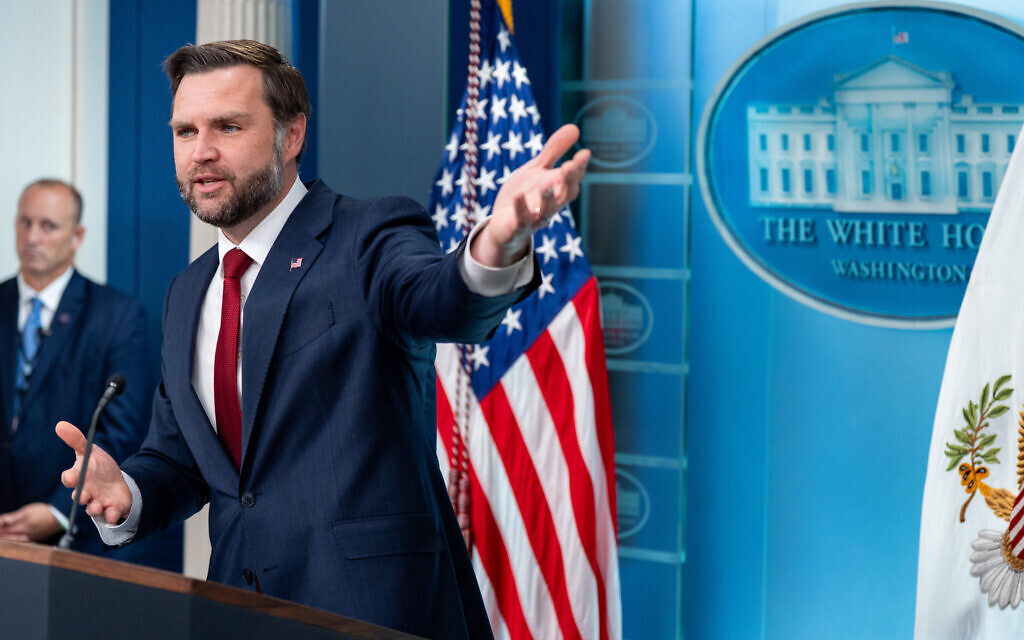
US Vice President JD Vance has written to one of Iran's most powerful hard-liners in an attempt to restart peace negotiations, even as President Donald Trump threatens to resume the war after next week's midterm elections, The Wall Street Journal reported on Wednesday, October 29, 2026. The letter, addressed to Mohsen Rezaei, secretary of Iran's Supreme National Security Council, marks the most direct diplomatic opening in weeks between two countries that have spent months trading threats alongside missiles.
The outreach arrives at a moment of acute tension. Trump has repeatedly signalled that a fresh military campaign could follow the midterms, and only last week he insisted his administration was not talking to Tehran at all. Vance's letter tests whether a channel to the men now running Iran's security apparatus can produce enough common ground to head off that outcome — or whether it will simply confirm that the two sides remain too far apart to talk.
Table of Contents
- A letter to the man at the centre of Iran's security state
- What Trump said — and what he did not say
- Why the hard-liners, and why now
- A framework, not yet a proposal
- Tehran's conditions for talking
- What happens next
- Frequently Asked Questions
A letter to the man at the centre of Iran's security state
Rezaei is no marginal figure. As secretary of the Supreme National Security Council, he sits at the heart of Iran's security decision-making, and he previously served as the longest-serving commander of the Islamic Revolutionary Guard Corps. Choosing him as the recipient is itself a message: Washington is not seeking out a moderate intermediary, but engaging directly with the power centre that would have to approve any deal — and that would oversee any further fighting if talks fail.
According to the Journal's reporting, which cited US officials and people familiar with the matter, Vance is using the contact to test whether Tehran and Washington can find enough shared ground to persuade Trump not to give a final order for a short, intense attack on Iran in the coming weeks. The letter is therefore less a peace proposal than a probe — an attempt to establish whether a negotiation is even possible before the military clock runs down.
What Trump said — and what he did not say
The politics of the outreach are deliberately ambiguous, and Trump's own remarks on Wednesday evening added to the ambiguity rather than resolving it. Speaking to reporters, the president said he had approved Vance's request to make contact. "They need help with medical supplies and various things," Trump said. "He asked me what I thought. I said, 'If you want to do that, that's ok.'"
That framing — Vance asking, Trump acquiescing — sits uneasily alongside the Journal's account that the letter was sent at Trump's direction, according to one person familiar with the matter. The gap between the two versions may be deliberate, giving the president room to disown the diplomacy if it fails while keeping the military option fully intact. It also reflects a pattern that has defined this crisis: public threats and private channels running in parallel, with neither side willing to be seen as the one suing for peace.
The contrast with Trump's language last week is stark. Then, he said the administration was not talking with the Iranians and warned that events would move "one way or another" soon. The revelation of Vance's letter shows that, behind that rhetoric, at least one channel was already open.
Why the hard-liners, and why now
The timing is driven by the electoral calendar as much as by diplomacy. Trump has tied his military planning to the period after the midterms, and US officials have warned Gulf allies to prepare for the possibility of a short, intense campaign once voting is over, as covered in Chronicle's earlier report. That leaves a narrow window — days, not months — in which a diplomatic opening could change the trajectory.
Some US officials argue that engaging Iran's hard-liners, who have consolidated power in Tehran since the US and Israel killed regime leaders at the outset of the war, may actually produce a better diplomatic result than dealing with more moderate voices who lack the authority to deliver. The logic is blunt: a deal is only worth anything if the people who control the guns accept it. Critics would counter that the same hard-liners have the least incentive to compromise, and that approaching them now, under the shadow of renewed strikes, risks looking like weakness rather than strength.
The choice of Vance as messenger also matters. The vice president has been closely associated with the administration's earlier diplomatic efforts on Iran, including contacts with mediators over enrichment, as reported in Chronicle's earlier coverage. Sending the vice president's own letter, rather than a message through a third country, raises the stakes — and signals to Tehran that the outreach carries weight inside the White House.
A framework, not yet a proposal
Expectations should be kept in check. The letter and the discussions that have followed it have not included specifics of a peace proposal, according to a person familiar with the matter cited by the Journal. Instead, the exchanges have focused on a possible framework for negotiations — the shape of talks, rather than their substance.
That distinction matters. A framework discussion can collapse without either side having conceded anything, which makes it a relatively safe way to test intentions. But it also means that even a successful exchange leaves the hardest questions — enrichment, missiles, regional proxies, sanctions relief — entirely untouched. Any real negotiation would still have to survive those questions, and previous rounds have foundered on exactly that ground.
Tehran's conditions for talking
Iran, for its part, has set a high bar. Rezaei said last week that Iran would not negotiate with Washington until specific core demands were met, a position that leaves little obvious room for the kind of exploratory contact Vance has initiated. Tehran's leadership has repeatedly insisted that any talks must respect its red lines, and Iranian officials have accused Washington of using diplomacy as cover for military pressure.
That stance raises the central question of this episode: is Vance's letter the start of a genuine negotiation, or a final diplomatic gesture before a return to war — one that allows Washington to say it tried? The answer will depend less on the letter itself than on what Tehran does with it in the coming days, and on whether Trump, having approved the contact, is willing to give it time to work.
What happens next
Three things will determine where this goes. First, whether Tehran responds to the letter with substance or with silence. Second, whether the framework discussions produce anything concrete before the midterm window closes. And third, whether Trump treats the diplomatic track as a genuine alternative to strikes, or as a parallel exercise that changes nothing about his military planning.
For now, the most that can be said is that a channel exists where, publicly at least, none was admitted to exist a week ago. In a crisis where miscalculation carries catastrophic costs, even that may count for something — though it is a long way from peace. The coming days, as the midterms approach and the threatened post-election window draws nearer, will show whether this letter was a turning point or a footnote.
Frequently Asked Questions
Who did JD Vance write to, and why does it matter?
Vance wrote to Mohsen Rezaei, secretary of Iran's Supreme National Security Council and formerly the longest-serving commander of the Islamic Revolutionary Guard Corps. It matters because Rezaei sits at the centre of Iran's security decision-making — engaging him means dealing directly with the power centre that would have to approve any agreement.
Did President Trump order the letter?
Accounts differ. The Wall Street Journal reported that the letter was sent at Trump's direction, according to one person familiar with the matter, while Trump himself told reporters on Wednesday evening that Vance had asked his opinion and that he approved the contact. Both versions agree that Trump knew about and permitted the outreach.
Is this a peace proposal?
No. According to people familiar with the matter, the letter and subsequent discussions have focused on a possible framework for negotiations rather than the specifics of a peace proposal. The hardest issues — enrichment, missiles, proxies and sanctions — have not yet been addressed.
Why is the timing so urgent?
Trump has threatened to restart military action against Iran after next week's midterm elections, and US officials have warned Gulf allies to prepare for a possible short, intense campaign. That leaves only a narrow window for diplomacy to change course before the military option comes back to the fore.
What has Iran said about negotiating?
Rezaei said last week that Iran would not negotiate with Washington until specific core demands were met. Tehran has consistently insisted that any talks respect its red lines, which leaves the prospects for Vance's initiative uncertain.