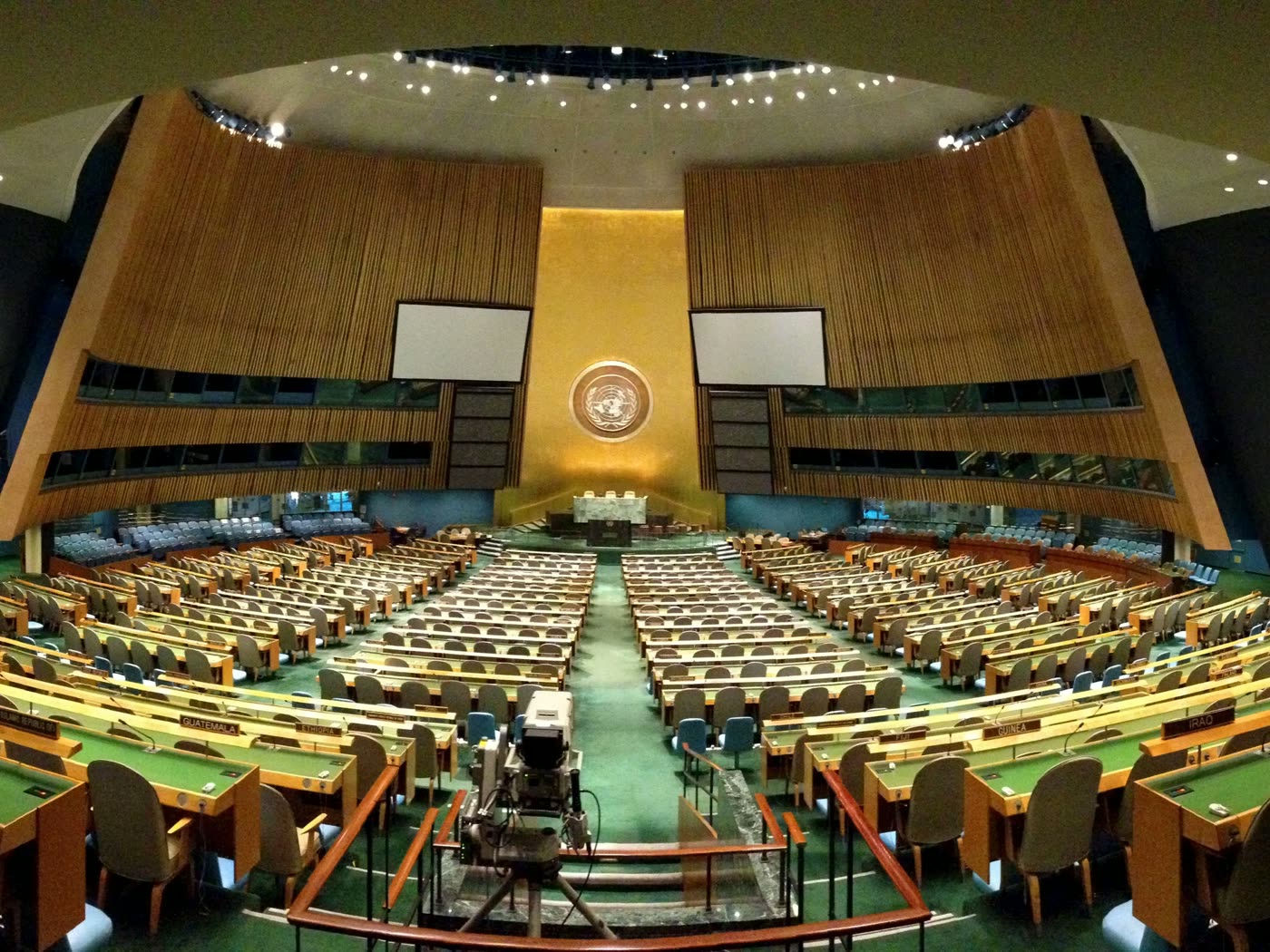
A furious shouting match between the United States and Cuban delegations briefly suspended debate at the United Nations General Assembly on Tuesday, as the world body opened its annual discussion of a resolution calling for an end to Washington's economic embargo on Cuba, according to The Hindu. The confrontation, which unfolded on the floor of the Assembly hall in New York, set a tense tone for Wednesday's vote — the 34th time Cuba has brought the resolution before the Assembly since 1992.
The row broke out as the United States Ambassador to the UN, Mike Waltz, addressed the Assembly to argue that the resolution should be rejected. Cuban Foreign Minister Bruno Rodríguez objected to the remarks, walked up to the podium and demanded that the speech be halted, prompting an exchange of raised voices that forced the chair to suspend the session temporarily.
Table of Contents
- A confrontation on the Assembly floor
- The resolution at the centre of the row
- A pressure campaign behind the scenes
- Caribbean voices join the call
- What the vote will — and will not — change
- Frequently Asked Questions
A confrontation on the Assembly floor
According to reports of the session, Waltz was criticising repression of Cuban citizens by the island's government when Rodríguez approached the podium seeking a point of order. "You are a liar!" Rodríguez shouted at the American envoy, The Hindu reported. Waltz responded in kind: "This is the United Nations. This isn't your communist dictatorship. You cannot silence me," he shouted, demanding that the Cuban diplomats step back.
The Assembly's president briefly suspended proceedings and instructed both delegations to return to their seats. Once order was restored, Waltz was allowed to continue his address, and Rodríguez later took the floor to denounce what he called "ridiculous lies" that undermined the dignity of the Assembly, its member states and the Cuban people.
The episode was striking even by the standards of a debate that has grown more heated in recent years. During his speech, Waltz displayed a photograph of former Cuban leader Fidel Castro wearing two Rolex watches, which he said were worth about $40,000 each — enough, he claimed, to pay for 55 years of an average Cuban wage. He then held up a photograph of current President Miguel Díaz-Canel, alleging that he too wore an expensive watch, according to Moneycontrol.
The resolution at the centre of the row
The resolution, titled "Necessity of Ending the Economic, Commercial and Financial Blockade Imposed by the United States of America against Cuba," calls on all states to refrain from measures of that kind and urges those that still apply them to repeal them, UN News reported. Cuba has submitted it every year since 1992, and it has consistently won overwhelming support from the Assembly's 193 member states.
Last year, the resolution received 165 votes in favour, seven against and 12 abstentions — its weakest level of support in two decades, a sign that Washington's lobbying has had some effect even as the measure continues to pass by a large margin. The resolution is not legally binding: the General Assembly cannot compel the United States to lift the embargo, which remains a matter of US law. But the vote is widely read as a barometer of world opinion.
The embargo itself dates back more than six decades. It was formally established in February 1962 under President John F. Kennedy and has been tightened and loosened by successive administrations ever since. For Havana, it is the central grievance of its foreign policy; for Washington, it is a tool of pressure against a one-party state it accuses of human rights abuses and corruption.
A pressure campaign behind the scenes
This year's debate is taking place against a sharper backdrop than usual. Cuba has accused Washington of launching an "unprecedented" campaign to persuade countries to oppose the resolution, including an oil blockade and sanctions targeting third countries, according to The Hindu. Cuban Ambassador to the UN Ernesto Soberón said the US State Department, its UN mission and American embassies around the world had launched coordinated efforts to weaken traditional support for the resolution, A News reported.
The Associated Press, quoted by The Sen Times, reported that President Donald Trump last week once again raised the prospect of US military intervention, saying American warships could stop over in Cuba on their way back from the Iran war. The remark, coming days before the vote, added to Havana's sense of siege — and to the determination of its diplomats to make the debate heard.
Cuba is meanwhile weathering a deepening economic crisis. Fuel shortages, prolonged power outages and difficulties obtaining medicines, food and drinking water have been cited by Cuban officials as consequences of the embargo and the tightened sanctions regime. The island's power grid has suffered repeated failures in recent months, a subject Chronicle has covered in its reporting on Cuba's eastern grid failure.
Caribbean voices join the call
Ahead of Wednesday's vote, eleven former Caribbean heads of government added their voices to the campaign for the embargo's end, urging countries around the world to support the resolution. In an open letter dated October 24, addressed "to all nations of the world," the former leaders "strongly and unequivocally" urged all nations to vote in favour, Dominica News Online reported.
The signatories included former Barbados Prime Minister Freundel Stuart, former Jamaican Prime Ministers Bruce Golding and P.J. Patterson, former Grenadian Prime Ministers Keith Mitchell and Tillman Thomas, and former Trinidad and Tobago Prime Minister Keith Rowley, among others. They described the US restrictions as a violation of international law and fundamental humanitarian principles, and argued that Washington has repeatedly disregarded the international community's position despite more than three decades of Assembly resolutions opposing the embargo.
The letter's timing was deliberate: the Cuban Embassy in Dominica, which publicised it, said the message was clear — "the United States embargo against Cuba has to end, and the world should say so loudly on Wednesday."
What the vote will — and will not — change
Whatever the margin on Wednesday, the practical outcome is predictable: the resolution will pass, and the embargo will remain in place, because only Washington can lift it. The real questions are about the size of the majority and what it signals. A further erosion of support would suggest that the Trump administration's pressure campaign is working; a stable or rising majority would show that most of the world still regards the embargo as illegitimate, even at a moment of intense US lobbying.
The shouting match on Tuesday may, paradoxically, help Havana's cause — dramatic confrontations at the UN tend to draw attention to the underlying issue, and the images of the Cuban foreign minister confronting the American ambassador have already circulated widely. But they also underline how far the relationship between the two countries has deteriorated, and how little room remains for the quiet diplomacy that once produced, however briefly, a thaw.
For now, the Assembly's attention turns to the vote itself. Member states will cast their ballots on Wednesday, and the result — whatever it is — will be read in Havana and Washington alike as a verdict not just on the embargo, but on the state of a six-decade standoff that shows no sign of ending. Readers following Washington's wider pressure campaign on Cuba can also read Chronicle's coverage of US efforts to enlist Cubans in intelligence cooperation and of the US Coast Guard's interception of a Cuba-bound fuel ship.
Frequently Asked Questions
What is the UN voting on?
The General Assembly is voting on a resolution titled "Necessity of Ending the Economic, Commercial and Financial Blockade Imposed by the United States of America against Cuba." It calls on states to refrain from embargo-style measures and urges those applying them to repeal them.
Is the resolution legally binding?
No. General Assembly resolutions are not legally binding, and the Assembly cannot compel the United States to lift the embargo. The vote is a statement of world opinion, but it carries political weight because of the size of the majorities it has historically attracted.
How long has the US embargo on Cuba been in place?
The embargo was formally established in February 1962 under President John F. Kennedy, making it more than six decades old. Cuba has brought its annual resolution to the General Assembly every year since 1992.
What happened during Tuesday's debate?
US Ambassador Mike Waltz and Cuban Foreign Minister Bruno Rodríguez exchanged shouts on the Assembly floor after Rodríguez walked to the podium to object to Waltz's speech. The session was briefly suspended before order was restored.
What was last year's vote?
Last year the resolution received 165 votes in favour, seven against and 12 abstentions — its weakest level of support in two decades, though still an overwhelming majority.