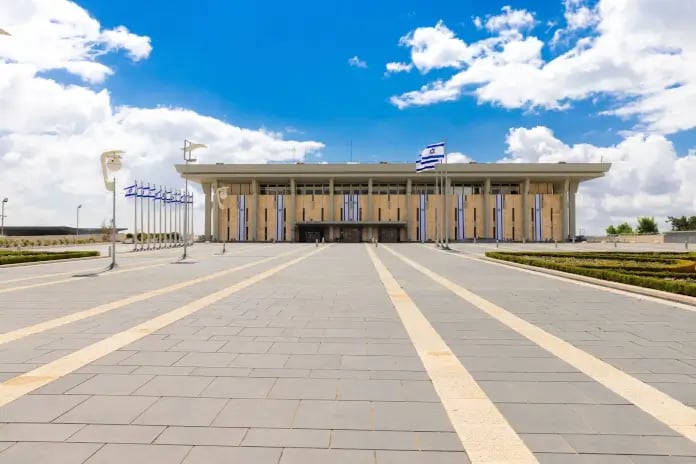
Israel's first election since the October 7, 2023 Hamas attacks ended on Tuesday, October 27, 2026, with exit polls pointing to political deadlock: Prime Minister Benjamin Netanyahu's right-wing and religious bloc is projected to win just 50 of the Knesset's 120 seats, the main opposition parties 52–53, and the predominantly Arab lists a record 17–18. Neither camp is close to the 61 seats needed for a majority, setting up weeks — possibly months — of coalition negotiations, and raising the prospect of yet another election if no government can be formed.
The result, if confirmed by the official count, would be a heavy blow to Netanyahu, Israel's longest-serving prime minister, whose bloc fell 11 seats short of a majority in every major network's projection. Yet it is not a clean opposition victory either: the opposition's path to 61 runs through the Arab parties, several of whose potential partners have previously ruled out governing with them.
Table of Contents
- What the exit polls say
- A record turnout, and a record Arab vote
- Likud first, but its bloc last
- Herzog's dilemma: who gets the first mandate
- Why this election mattered so much
- What happens next
- Key takeaways
- Frequently Asked Questions
- Sources
- Chronicle related reading
What the exit polls say
All three major television networks converged on the same broad picture. Channel 12 projected 50 seats for Netanyahu's bloc, 52 for the principal opposition parties and 18 for the two predominantly Arab lists, according to The Media Line. Channel 13 and Kan 11 gave a similar split: Netanyahu's bloc on 50, the opposition on 53 and the Arab parties on 17.
Counted together, the opposition and the Arab parties hold 70 seats — a clear majority of voters against the current government, but not a governing coalition. The arithmetic is the story of this election: 50 plus 52 is not 61, and 52 plus 18 is 70 only if parties that have spent years refusing to sit together can be brought into the same room.
Former prime minister Yair Lapid, running with the opposition's Together party, declared the outcome a verdict on the government. "Netanyahu's bloc has suffered a crushing defeat. This is a total collapse. The public has told them to get out," he said, as reported by Haaretz.
A record turnout, and a record Arab vote
Turnout was exceptionally high. The Central Elections Committee reported 74.3 percent of eligible voters had cast ballots by 8 p.m., compared with 66.6 percent at the same hour in the 2022 election, The Media Line reported. The Times put the figure at more than 74 percent, the highest in decades, with some cities approaching 80 percent.
More than seven million people were eligible to vote, and because Israel does not permit voting from abroad, tens of thousands of citizens travelled home to cast their ballots. Turnout in Arab communities rose sharply, a surge that translated directly into seats: the Joint List was projected at 10–11 seats and the United Arab List (Ra'am) at 7, giving the Arab parties their strongest-ever Knesset presence and, potentially, the balance of power.
Likud first, but its bloc last
One paradox defines the night: Netanyahu's Likud is still expected to finish as the largest single party, with about 24–25 seats, ahead of former army chief of staff Gadi Eisenkot's Yashar party on 21–23. Under Israel's proportional system, however, the largest party does not automatically govern — blocs do, and Netanyahu's bloc shrank.
The projections also suggest two parties failed to clear the electoral threshold: the far-right Amcha Yisrael, part of Netanyahu's bloc, and the unaligned Reservists party. Their absence from the next Knesset removes seats from Netanyahu's side of the ledger and sharpens the opposition's numerical edge — without solving its coalition problem.
Herzog's dilemma: who gets the first mandate
Once the official results are certified, President Isaac Herzog must decide whom to invite first to try to form a government. Convention points in two directions at once: Netanyahu leads the largest single party, while Eisenkot leads the largest bloc. Either choice will be contested, and the first mandate does not guarantee success.
If the first candidate fails, Herzog can turn to the other. If both fail, Israel faces the scenario its voters know all too well: another election, probably in the early weeks of next year. The country endured five elections between 2019 and 2022 before Netanyahu's current government took office, and the exit polls suggest the structural deadlock that produced that cycle has not gone away.
Why this election mattered so much
The vote was widely described as the most important in Israel's history, and the first since the October 7 attacks and the war in Gaza that followed. Netanyahu's standing was damaged by allegations over the security failures that preceded the Hamas attack, in which Israel suffered its greatest single-day loss of life since its founding. The opposition accused him of manipulating the military campaign against Iran to bolster his personal standing — a charge he rejected, and one that sharpened the campaign's final days.
The election also unfolded against a tense regional backdrop. In the weeks before the vote, the United States drew down embassy staff in several Middle East countries amid threats from Iran, and the campaign itself became a referendum on security, on the war's legacy and on whether Israel would, in the words of one opposition framing, remain a democracy governed by its institutions rather than by one man.
What happens next
The official count will take days, and exit polls have been wrong before — the margins here are small enough that a seat or two moving between blocs could change the narrative, though not the underlying deadlock. Party leaders will spend the coming days sounding each other out in public and in private, and the Arab parties, long treated as outsiders to coalition-building, will be courted as never before.
Three paths are open. The opposition could assemble a broad, fragile coalition that includes Arab support from inside or outside the government. Netanyahu could attempt to peel off opposition lawmakers or smaller parties to rebuild a majority. Or the system could fail to produce a government at all, sending voters back to the polls. Whichever path emerges, the exit polls have already delivered their message: a majority of Israelis voted against the Netanyahu government, but they did not vote for a single alternative.
Key takeaways
- Exit polls give Netanyahu's bloc 50 seats, the opposition 52–53 and Arab parties 17–18 in the 120-seat Knesset — no majority for anyone.
- Turnout topped 74 percent by 8 p.m., the highest in decades, with a record vote in Arab communities.
- Likud remains the largest single party (24–25 seats), but its bloc lost ground; Eisenkot's Yashar is second with 21–23.
- President Isaac Herzog must choose between the largest party's leader and the largest bloc's leader for the first mandate to form a government.
- If no coalition emerges, Israel could face another election in early 2027.
Frequently Asked Questions
Who won Israel's October 27, 2026 election?
Nobody won outright, according to the exit polls. The opposition bloc led by Gadi Eisenkot finished narrowly ahead of Benjamin Netanyahu's bloc (52–53 seats to 50), but neither reached the 61 seats needed for a majority in the 120-seat Knesset. The Arab parties, with 17–18 seats, hold the balance of power.
Why is Likud still the largest party if Netanyahu's bloc lost?
Israel votes by proportional representation, so seats follow each party's vote share. Likud won more votes than any other single party (about 24–25 seats), but the smaller parties allied with Netanyahu lost seats, leaving his overall bloc at 50 — short of a majority.
What role will the Arab parties play?
A decisive one. The Joint List (10–11 seats) and the United Arab List (7 seats) together hold 17–18 seats. The opposition cannot reach 61 without them, either as coalition partners or through outside support — an arrangement several opposition parties have previously ruled out.
Who decides who tries to form a government first?
President Isaac Herzog. He will consult party leaders and then invite one candidate — most likely Netanyahu, as leader of the largest party, or Eisenkot, as leader of the largest bloc — to attempt to build a coalition.
Could there be another election?
Yes. If neither Netanyahu nor Eisenkot can assemble 61 seats, Israel could head back to the polls in early 2027. The country held five elections between 2019 and 2022 before the current government was formed.
Sources
- Haaretz — Israel Election 2026 exit polls live coverage
- The Times — Israel election results live
- The Media Line — Israeli exit polls show Netanyahu bloc short of majority