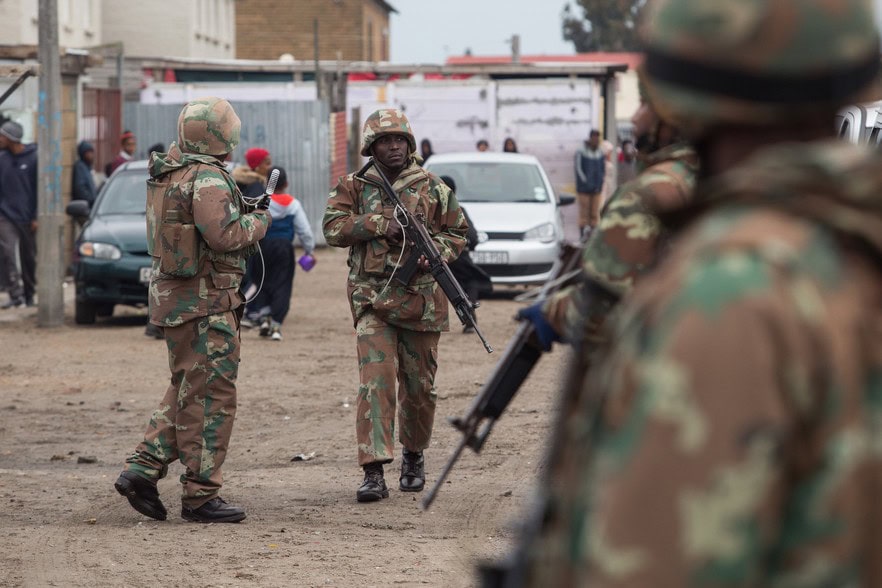
President Cyril Ramaphosa has deployed 510 soldiers to KwaZulu-Natal to back up police struggling to contain anti-migrant protests that have turned violent in the province and in parts of Gauteng. The troops, drawn from the South African National Defence Force (SANDF), will remain on standby to assist the police until November 30, at an estimated cost of just over 34 million rand. The deployment, announced days after vehicles were torched and foreign-owned shops looted in Durban and Soweto, is the government's most visible response yet to a crisis that began in a courtroom and spilled onto the streets.
In a letter to National Assembly Speaker Thoko Didiza dated October 21, Ramaphosa said the soldiers would support the South African Police Service under Operation Prosper, a joint security initiative aimed at restoring order in volatile areas. Presidency spokesperson Vincent Magwenya said the troops would assist police "in maintaining law and order in KZN, especially in light of recent violent actions arising from a campaign of misinformation about the Constitutional Court judgment on the Refugee Act". The Star reported that the soldiers will remain on standby to respond to "any eventuality".
The court ruling at the heart of the unrest
The trigger for the protests was a landmark Constitutional Court judgment handed down on July 7, 2026, in the case of Scalabrini Centre of Cape Town v Minister of Home Affairs. The court struck down procedural barriers in the Refugees Act that had prevented undocumented migrants from lodging asylum claims, ruling that asylum seekers cannot be barred, rejected or disqualified from the process on the basis of immigration-related procedural errors before their claims are assessed on their merits.
The ruling did not grant anyone refugee status, permanent residence or citizenship — each claim must still be assessed under the law. But a wave of false claims on social media suggested otherwise, telling audiences that the judgment, and a subsequent Home Affairs directive implementing it, handed migrants automatic citizenship, jobs and voting rights. The Mail & Guardian reported that the deployment was sparked by protests driven by that misinformation campaign.
On September 28, the Department of Home Affairs issued an operational directive requiring refugee reception offices to accept asylum applications from people who had entered the country irregularly, in an attempt to comply with the ruling. The offices were quickly overwhelmed. On October 8, protests in Durban and Soweto turned violent: police said at least 24 vehicles were torched and foreign-owned shops looted, and officers used rubber bullets to disperse crowds gathered outside Home Affairs offices. Within days, the department withdrew the directive, citing overwhelmed offices, risks to staff and threats to public order — while insisting the court judgment itself still stands.
A government caught between a court order and the street
The deployment exposes an awkward position for Ramaphosa's government. It is legally bound to implement a Constitutional Court ruling, but the first practical attempt to do so produced precisely the disorder its critics predicted. Justice and Constitutional Development Minister Mmamoloko Kubayi has described the surge at reception offices as the "unintended consequences" of the judgment, and the Inter-Ministerial Committee on Migration, which she chairs, has said it will approach the Constitutional Court to request a supervisory order on how the ruling should be carried out.
Home Affairs, for its part, has stressed that the withdrawn directive was an operational measure issued by the director-general without the knowledge of the minister or other political office-bearers — an attempt to distance the political leadership from a decision that backfired. The department says it remains committed to complying with the court order and will develop a revised operational approach, though it has not yet announced the details.
The political stakes are rising fast. South Africa heads to local government elections on November 4, and anti-immigration groups have called for nationwide protests in the run-up to the vote. The unrest has already strained relations with Nigeria and Ghana, which have evacuated thousands of their citizens and demanded investigations into attacks on their nationals. For a government already under pressure over unemployment and service delivery, the migration question has become a proxy for wider discontent — and a test of whether the state can enforce a court ruling that a vocal part of the public rejects.
What the soldiers can — and cannot — do
The 510 troops are a support force, not a replacement for the police. Under Operation Prosper they will assist the SAPS in maintaining law and order, with the constitutional responsibility for public order remaining with the police. Their presence is meant to deter further attacks on foreign-owned businesses and to give overstretched police units breathing room — but soldiers on standby cannot resolve the underlying policy deadlock: how to give effect to a court ruling guaranteeing access to the asylum system without triggering the scenes that forced its first implementation to be abandoned.
That deadlock is now playing out in the lives of people caught in the middle. Asylum seekers in cities such as Gqeberha report being unable to obtain legal papers because reception offices remain closed to new applicants, leaving them without documents, unable to work legally and exposed to the very violence the deployment is meant to prevent. South Africa's asylum system has been largely closed to newcomers since January 2020, and rejection rates are among the highest in the world — a combination that leaves many applicants in limbo for years.
What happens next
Three questions will shape the weeks ahead. First, will the deployment hold the line through the November 4 elections, or will planned nationwide protests overwhelm it? Second, will the government's promised revised approach to the court ruling — and its planned request for a supervisory order — arrive before the next flashpoint, or will the asylum system remain frozen? And third, will the violence ease once the election passes, or has the ruling permanently fused migration politics with street protest in South Africa?
For now, the soldiers are a stopgap: a visible show of state capacity deployed to manage the symptoms of a dispute the government has not yet resolved. The court has spoken, the streets have answered, and Pretoria is still searching for a way to honour both.
Key takeaways
- President Cyril Ramaphosa has deployed 510 SANDF soldiers to KwaZulu-Natal to support police amid anti-migrant protests, at a cost of about 34 million rand.
- The troops will remain on standby until November 30 under Operation Prosper, supporting — not replacing — the police.
- The unrest was sparked by misinformation about a July 7 Constitutional Court ruling that opened the asylum system to undocumented migrants.
- A Home Affairs directive implementing the ruling was withdrawn after violent protests in Durban and Soweto on October 8, in which vehicles were torched and shops looted.
- The deployment comes days before South Africa's November 4 local government elections, with further nationwide protests expected.
Frequently Asked Questions
Why has South Africa deployed soldiers to KwaZulu-Natal?
President Cyril Ramaphosa authorised 510 SANDF troops to support police in maintaining law and order after anti-migrant protests in the province turned violent. The soldiers, deployed under Operation Prosper from October 9 to November 30, remain on standby to assist the police in responding to any further unrest.
What did the Constitutional Court rule on asylum seekers?
On July 7, 2026, the court ruled in Scalabrini Centre of Cape Town v Minister of Home Affairs that asylum seekers cannot be barred from lodging claims because of immigration-related procedural errors. The ruling guarantees access to the asylum process; it does not automatically grant refugee status, residence or citizenship, and each claim must still be assessed on its merits.
Why was the Home Affairs directive withdrawn?
The department withdrew its September 28 directive after refugee reception offices were overwhelmed by applicants and protests in Durban and Soweto turned violent on October 8. Home Affairs cited risks to staff, threats to public order and pressure on its offices, while stressing that the court judgment itself remains in force.
How does this connect to South Africa's elections?
Local government elections are scheduled for November 4, and anti-immigration groups have called for nationwide protests in the run-up to the vote. The deployment is partly intended to keep order through the election period, when tensions over migration are expected to intensify.
Read more on the wider migration crisis in our earlier coverage: South Africa's anti-migrant protests in Durban and Soweto and the returnees caught in South Africa's xenophobia wave.