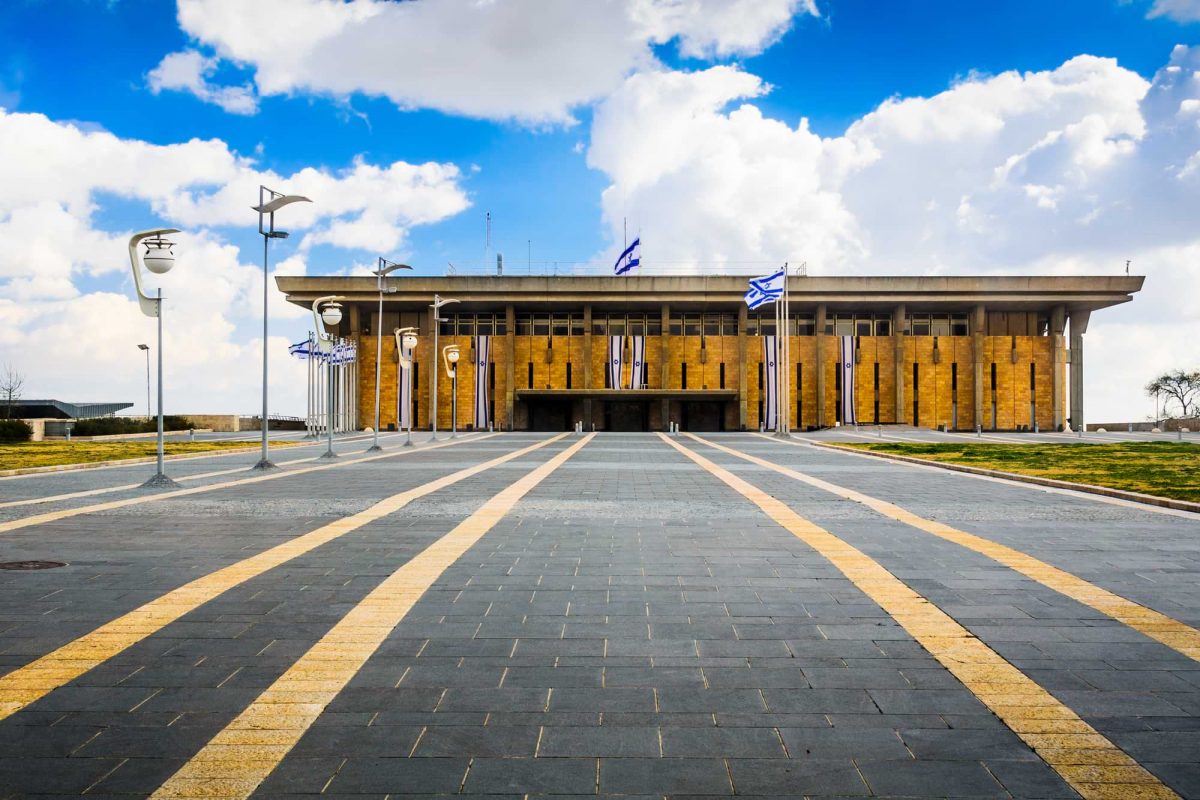
With 84.5% of ballot boxes counted in Israel's general election, Prime Minister Benjamin Netanyahu's bloc leads with 54 of the Knesset's 120 seats, ahead of 49 for the opposition bloc led by former military chief Gadi Eisenkot and 17 for the Arab-led parties, according to partial results published by the Central Elections Committee on Wednesday, October 28, 2026. Neither camp is within reach of the 61 seats needed for a parliamentary majority, and with more than half a million double-envelope ballots — including soldiers' votes — still to be counted, the final shape of the next government remains open.
The count has moved in Netanyahu's favour since election night, when exit polls pointed to a narrow opposition lead and a deadlock. But it has also slipped back from an earlier peak: at 66% counted, the Netanyahu bloc stood at 56 seats, before gains by the Arab-led lists trimmed it to 54. Likud remains the largest individual party, on 27 to 28 seats, ahead of Eisenkot's Yashar on 20 to 21, The Times of Israel reported.
Table of Contents
- From exit-poll deadlock to a Netanyahu lead
- A record turnout, and a record Arab vote
- The coalition maths: who can reach 61?
- What both leaders said on election night
- What happens next: double envelopes and the president's mandate
- Frequently Asked Questions
From exit-poll deadlock to a Netanyahu lead
Tuesday's vote was Israel's first general election since the Hamas attacks of October 7, 2023, and voters turned out in the highest numbers in decades to deliver their verdict on Netanyahu, the country's longest-serving prime minister. The three main broadcasters' exit polls had projected the opposition bloc at around 51 to 53 seats and Netanyahu's camp at 50 to 52, with neither side close to a majority — a picture covered in Chronicle's earlier report on the exit polls pointing to deadlock.
The actual count has told a somewhat different story. As ballot boxes were tallied through Wednesday, Netanyahu's bloc pulled ahead of Eisenkot's, even as it stayed well short of 61. At 72.4% counted, Israeli media put the split at 54–48 with 18 seats for the Arab-led parties; by 84.5%, counted at 12:34 p.m. local time, it was 54–49–17, with the Joint List and Ra'am shedding one seat between them. Parties below the 3.25% electoral threshold — Yoaz Hendel's Reservists at 2.7%, Ofer Winter's People of Israel at 1.6% and the Charedi Public list at 0.2% — currently win no seats at all, and their votes are effectively redistributed among the parties that clear the bar, which is one reason the seat totals keep shifting as the count progresses.
Israel's stock market fell on Wednesday as the exit polls' picture of no clear winner sank in, a reminder that investors, like politicians, had hoped for a decisive result and got the opposite.
A record turnout, and a record Arab vote
Final turnout reached 77.7%, the highest since 1999 and up 7.1 percentage points on the 2022 election, according to figures reported by NBC News and The Jerusalem Post. The surge was driven in part by Palestinian citizens of Israel, who turned out in soaring numbers against a prime minister who has repeatedly warned that the minority would dilute the Jewish nationalist direction in which he has taken the country. Al Jazeera reported that the high Arab turnout was itself a central story of election night.
That mobilisation is reflected in the seat count: the Arab-led parties, at 17 seats with most ballots tallied, are on course for one of their strongest-ever Knesset showings, and their backing could prove decisive in determining who governs. Joint List chairman Yousef Jabareen urged parties seeking to oust Netanyahu to engage with his faction and embrace Jewish-Arab partnership, arguing that the opposition cannot reach a majority without it.
The coalition maths: who can reach 61?
The arithmetic is unforgiving for both camps. Netanyahu's 54 seats leave him seven short of a majority, and the most obvious partners are already inside his bloc; there is no large unaligned party left to recruit, and he has ruled out a government backed by Arab parties. Eisenkot's 49 seats leave him twelve short — but 49 plus the Arab parties' 17 equals 66, a comfortable majority, if a coalition spanning the opposition and the Arab lists could be assembled.
That "if" is the whole story. Most parties in Eisenkot's camp expressed reluctance during the campaign about governing with the Arab lists, and some have ruled it out outright. Yet Yair Golan, leader of the Democrats, the main left-wing party inside Eisenkot's bloc, called on Wednesday for precisely that arrangement, writing: "We must no longer accept Netanyahu's racist division between Jewish votes and Arab votes." Whether Golan's argument persuades the bloc's centrist and right-wing members will decide whether Eisenkot can present himself as a viable alternative prime minister — or whether the deadlock simply deepens.
A third possibility, familiar from Israel's recent political history, is another election. Eisenkot himself warned against that outcome on election night, while Netanyahu told supporters overnight: "We must form a right-wing, national, strong government." Neither leader conceded anything to the other, and both vowed to form the next government despite neither being projected to win a majority.
What both leaders said on election night
Netanyahu, who has dominated Israeli politics for most of the past three decades and campaigned with the public backing of US President Donald Trump, framed the result as a mandate to continue. Trump, for his part, claimed credit for the prime minister's showing on Wednesday, telling reporters aboard Air Force One that his endorsement "had helped him a lot" — a claim that followed his endorsement of Netanyahu during the campaign.
Eisenkot, a former military chief and political novice leading the Yashar party, struck a different note, telling supporters that "the people have spoken against the continuation of Netanyahu's rule." His bloc's argument throughout the campaign was that the election was a referendum on Netanyahu himself — on the wars launched after October 7, 2023, on the sharp turn to the right, and on the prime minister's long tenure. The count so far gives that argument partial vindication: Netanyahu's bloc has lost ground, but not enough for the opposition to claim victory on its own.
What happens next: double envelopes and the president's mandate
The count is not finished. More than half a million double-envelope ballots — cast by soldiers, hospital patients, diplomats and other voters unable to vote at their designated polling stations — are counted separately, after checks to ensure no voter cast more than one ballot. That count was due to run from around midnight Wednesday into Thursday evening, producing a nearly final rather than certified result; official results are due by November 4.
Once the certified results are in, President Isaac Herzog will consult party leaders and task the candidate he judges most likely to assemble a 61-seat coalition with forming a government. That candidate will then have weeks of negotiations — over ministries, policy red lines and the place of the Arab parties — before a government can be sworn in. If no candidate succeeds, Israel could face yet another election, the latest in a cycle of inconclusive votes that has already shaped a generation of its politics.
For now, the headline of the 2026 election is not who won, but who did not: no bloc won. The voters delivered the highest turnout in a quarter of a century, a record Arab vote, and a parliament in which the balance of power sits with the parties both main camps spent the campaign keeping at arm's length. How those parties are treated in the coming weeks will decide Israel's next government — and possibly its next election.
Frequently Asked Questions
Who won Israel's October 2026 election?
Nobody has won outright. With 84.5% of ballots counted, Benjamin Netanyahu's bloc leads with 54 seats, Gadi Eisenkot's opposition bloc has 49, and the Arab-led parties have 17. No bloc has the 61 seats needed for a majority in the 120-member Knesset.
Why did the results change from the exit polls?
Exit polls on election night projected a narrow opposition lead, around 51–53 seats to Netanyahu's 50–52. The actual count moved toward Netanyahu, reaching 56 seats at 66% counted before settling at 54 as Arab-led lists gained. Partial counts shift as different ballot boxes — urban, rural, military — are tallied, and as parties near the 3.25% threshold gain or lose seats.
What are double-envelope ballots, and why do they matter?
Double-envelope ballots are cast by voters who cannot vote at their designated polling station, including soldiers, hospital patients and diplomats. More than half a million were cast in this election. They are counted separately after eligibility checks, and because soldiers and other groups vote differently from the general population, they can shift the final seat allocation.
When will Israel have a new government?
Official results are due by November 4, 2026. President Isaac Herzog will then consult party leaders and task the most promising candidate with forming a coalition. Negotiations typically take weeks, and if no candidate can assemble 61 seats, another election becomes possible.
Could the Arab parties decide who becomes prime minister?
Yes. Eisenkot's 49 seats plus the Arab parties' 17 would reach 66, a majority — but only if opposition parties agree to govern with the Arab lists, something most of them resisted during the campaign. Netanyahu has ruled out relying on Arab support. Their role is therefore the central question of the coalition talks.