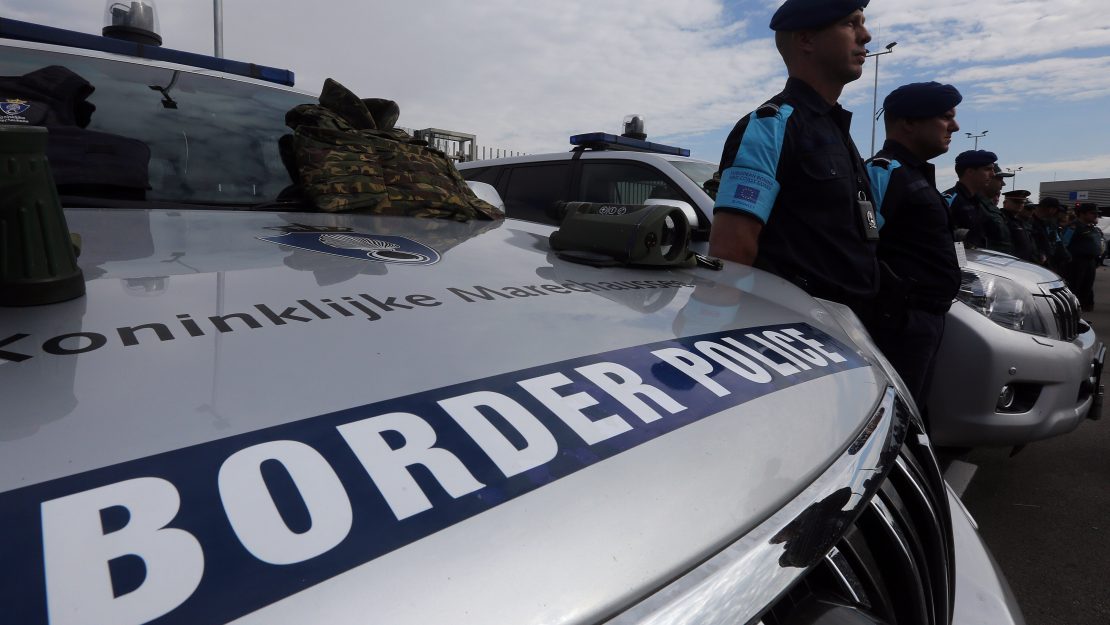
The European Commission has unveiled a sweeping plan to transform Frontex from a border-management agency into the European Union's central authority for returning irregular migrants, with new powers to operate beyond the bloc's territory, a rapid-reaction force able to deploy within 24 hours, and a standing corps set to grow to 30,000 officers. The proposal, presented on Tuesday by Commissioner for Internal Affairs and Migration Magnus Brunner, amounts to the most ambitious expansion of the agency since it was created — and it has already drawn a sharp rebuke from critics who warn it risks turning Frontex into a European version of the United States' immigration enforcement apparatus.
Under the plan, Frontex would take charge of the whole returns process, rather than mainly supporting member states at the EU's external frontiers. Brunner described the agency as the future "central EU actor on returns," a role that would put Brussels — rather than individual capitals — at the heart of deciding how deportations are organised and carried out.
Table of Contents
- A new mandate: from borders to returns
- Powers that reach beyond EU territory
- A 30,000-strong corps and a 24-hour force
- Why now: the returns gap and the Ceuta crisis
- The accountability question
- What happens next
- Frequently Asked Questions
A new mandate: from borders to returns
Frontex, formally the European Border and Coast Guard Agency, was built up over the past decade as the EU's first uniformed service, patrolling the bloc's external borders and assisting member states under pressure. The Commission's proposal would reorient that mission decisively toward returns — the process of sending back people who have been ordered to leave the EU but remain in its territory.
The shift reflects a long-standing frustration in European capitals: a large share of people issued with return decisions are never actually removed, a gap governments blame on fragmented national systems, limited cooperation from countries of origin, and a lack of central coordination. By placing Frontex at the centre of the process, the Commission aims to close that gap with a single operational hub, common procedures, and the ability to move personnel and equipment quickly to wherever pressure builds.
Two new structures sit at the core of the plan. An EU Return Coordination Center inside Frontex would orchestrate returns across member states, while a new online monitoring centre would track border-related developments on social media and support action against content linked to border-security risks. The combination signals an agency that is as much about information, planning and enforcement coordination as it is about boots on the ground.
Powers that reach beyond EU territory
Perhaps the most consequential change is geographic. The proposal would allow Frontex to act outside EU territory and to support non-EU countries in returning migrants to their countries of origin. In practice, that could mean European officers and resources involved in removals that begin far from Europe's borders — for example, assisting with the return of a Bangladeshi national from Libya, an example cited in reporting on the plan.
That extraterritorial reach raises immediate legal and political questions. Operations on third-country soil depend on agreements with host governments, and the treatment of people being returned would be tested against EU fundamental-rights law and international obligations, including the principle that no one should be sent back to face persecution or serious harm. Supporters argue that working further upstream is the only realistic way to make returns function; critics counter that distance from European courts and watchdogs makes abuse harder to detect and remedy.
The proposal also envisages Frontex spotting risks early and reacting fast. A quick-reaction force able to deploy within 24 hours would give the agency a standing capacity to reinforce a border under sudden strain, rather than assembling ad hoc national contributions over weeks, as has often happened in past crises.
A 30,000-strong corps and a 24-hour force
The numbers underline the scale of the ambition. The plan envisages gradually expanding Frontex's standing corps to 30,000 officers, including a new "European border and return reserve" of 17,000 officers over the next 15 years. Those reserve officers would remain at member states' disposal, available for deployment when needed, blending national personnel into a European framework.
No budget figure accompanied the announcement in the reporting of the proposal, leaving one of the most important practical questions — who pays, and how much — for the legislative negotiations ahead. A force of that size, with new centres, equipment and overseas operations, would represent a major long-term financial commitment, and member states that guard their control over policing and borders are likely to scrutinise both the cost and the command structure.
The 15-year horizon also matters. The expansion would unfold across several political cycles, meaning the agency taking shape now would outlast the governments and commissioners who design it — a point that will sharpen debate about democratic oversight.
Why now: the returns gap and the Ceuta crisis
The Commission's timing is not accidental. Migration and returns have climbed back to the top of the EU agenda, driven by governments that argue too many people ordered to leave simply stay. Against that backdrop, the proposal follows the humanitarian crisis in Ceuta over the summer, when the Spanish exclave on Morocco's Mediterranean coast came under intense pressure. Some member states cited the episode as evidence that the EU could do more to prevent people reaching its territory, Italy imposed temporary border controls on travel from Spain, and Spain's prime minister criticised what he called the "selfish" response of some partners.
Ceuta has long been a flashpoint in Europe's migration debate: a tiny piece of EU territory on the African mainland, fenced and guarded, where surges in arrivals instantly become a European political crisis. The Commission's answer, in effect, is to build an agency capable of acting before such crises peak — spotting risks early, deploying within a day, and coordinating returns from a single centre rather than through 27 separate national systems.
That logic also connects to the EU's wider migration deals with countries of origin and transit, which increasingly tie aid, visas and trade to cooperation on readmission. A Frontex with an external mandate would become the operational arm of that diplomacy, turning political agreements into organised removals.
The accountability question
Frontex does not arrive at this debate with a clean record. The agency has previously faced criticism over accountability, including allegations around pushbacks — the unlawful forcing back of asylum seekers without examining their claims — and the adequacy of its internal oversight. The new proposal, according to reporting on it, would shrink its internal rights watchdog, with complaints referred instead to national authorities.
That detail has become a focal point for critics. Tineke Strik, a Dutch member of the European Parliament from the Greens/EFA group, accused the Commission of "pandering to populism and the far right on migration," called for a human-rights-based approach, and warned of a risk of turning Frontex into a European version of ICE, the US Immigration and Customs Enforcement agency. The comparison, made in the charged atmosphere of the American immigration debate, is designed to frame the choice starkly: a border agency that enforces the law within strict rights safeguards, or one whose power outruns its oversight.
Supporters of the plan, led by Brunner, present the opposite case: that faster action and earlier risk-spotting will make the system more orderly, more predictable and ultimately more humane than the current patchwork, in which returns fail, irregular stays drag on, and border crises recur. The contest between those two framings will define the months of negotiation ahead.
For readers following Europe's migration policy, the proposal also sits alongside the bloc's continuing debates over asylum rules, border controls inside the Schengen area, and new mobility partnerships with third countries — such as the migration pact covered in India and Switzerland's migration and mobility agreement and the strains on Cyprus's path toward Schengen membership. The human stakes were underlined again recently by the tragedy in the Aegean in which 12 migrants died near Lesbos and Samos.
What happens next
The proposal is, for now, only a proposal: a piece of draft legislation from the Commission that must still survive negotiation in the European Parliament and among member states in the Council. No timetable for adoption has been set out in the reporting so far, and the most contentious elements — the external mandate, the size of the corps, and the future of the rights watchdog — are precisely the points where parliamentarians and capitals are most likely to demand changes.
What is already clear is the direction of travel. The EU is moving toward a more centralised, more muscular returns system, and Frontex is the vehicle chosen to carry it. Whether that vehicle also carries stronger safeguards will be decided in the bargaining to come — and will determine whether the agency's next chapter is remembered as an efficiency reform or as a turning point in how Europe polices its borders. Reporting on the proposal comes from DW, drawing on Reuters and dpa.
Frequently Asked Questions
What is Frontex?
Frontex is the European Border and Coast Guard Agency, the EU's agency for managing the bloc's external borders. It deploys uniformed officers, equipment and surveillance to support member states, and under the new proposal it would become the EU's central actor on migrant returns as well.
What new powers would Frontex gain under the proposal?
It would take a central role across the whole returns process, be able to act beyond EU territory and support non-EU countries with returns, field a quick-reaction force deployable within 24 hours, and gain a new EU Return Coordination Center and an online monitoring centre tracking border-related developments on social media.
How large would the Frontex force become?
The plan envisages gradually expanding the standing corps to 30,000 officers, including a new "European border and return reserve" of 17,000 officers within the next 15 years, with those officers remaining available to member states for deployment when needed.
Why are critics concerned about the proposal?
Critics point to Frontex's past accountability problems and say the reform shrinks its internal rights watchdog, referring complaints to national authorities instead. Green MEP Tineke Strik warned the Commission was "pandering to populism and the far right on migration" and raised the risk of Frontex becoming a European version of ICE.
Is the proposal already law?
No. It is a legislative proposal from the European Commission. It still needs to be negotiated and adopted by the European Parliament and EU member states in the Council, and no adoption timetable has been set out in reporting so far.