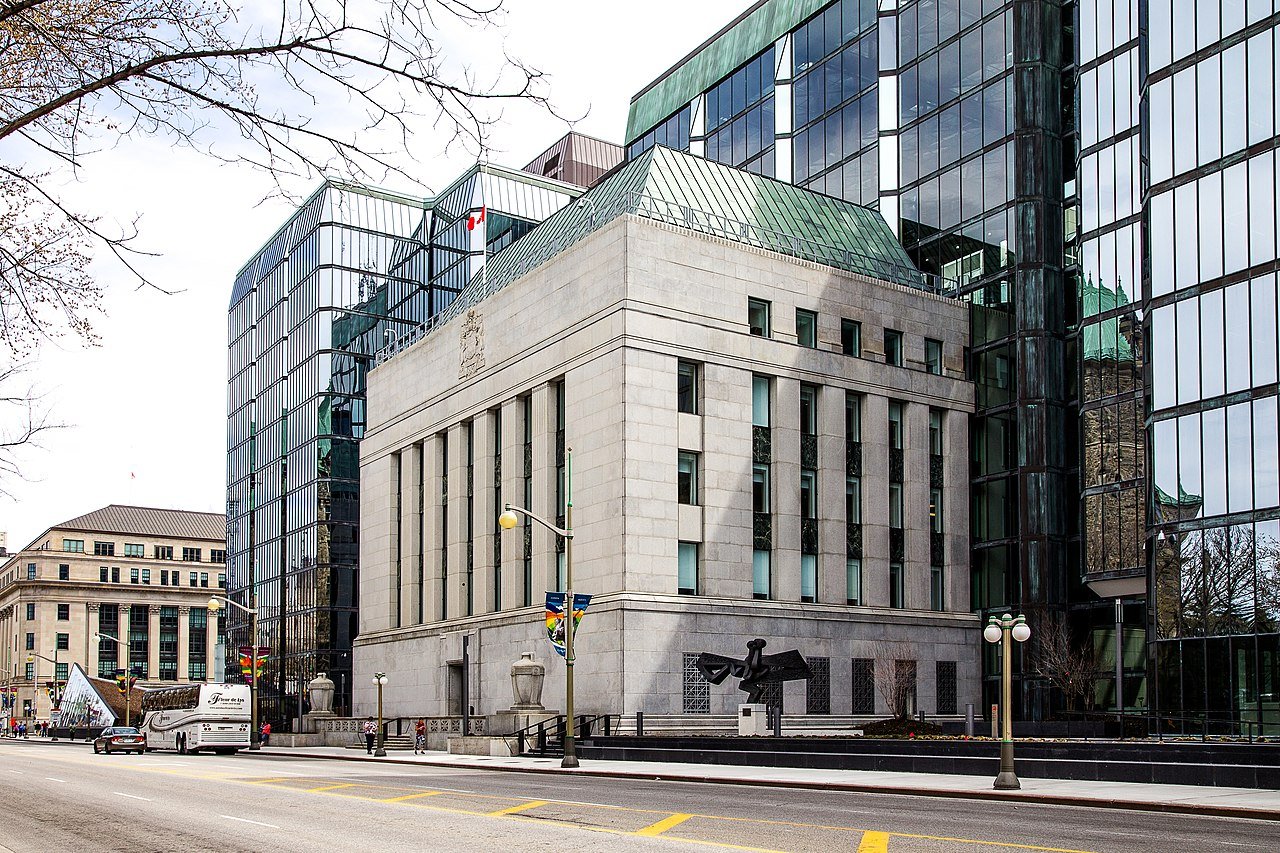
The Bank of Canada raised its key policy rate by a quarter of a percentage point to 2.5% on Wednesday, October 28, 2026, its first increase since July 2023 and its first policy move of any kind in a year. The decision, widely anticipated by markets, marks a clear turn in Canadian monetary policy: after years in which the central bank's main worry was weak growth and the fallout from trade tensions, the danger it now sees most clearly is inflation taking root through energy prices.
Governor Tiff Macklem left little doubt about the reasoning. With the inflation outlook, in his words, substantially higher and the economy proving resilient, a rate rise was needed to reduce the risk that elevated energy prices spill over into generalised inflation. He also warned that further increases may be required, while pledging to proceed carefully given the uncertainties facing the economy.
The move puts Canada at odds with the direction of travel at several other major central banks, which have spent much of the past year cutting rates or holding them steady as growth cooled. For Canadian households, it means borrowing is about to get a little more expensive again — mortgages, loans and lines of credit all tend to follow the policy rate — at a moment when many are already feeling the squeeze at the petrol pump and the grocery till.
Table of Contents
- Why the bank moved now
- An inflation forecast sharply revised up
- What it means for households and businesses
- A resilient economy, but not a comfortable one
- What happens next
- Frequently Asked Questions
Why the bank moved now
The trigger was energy. Annual inflation reached 3.2% in September, above the Bank of Canada's 1% to 3% target range, and the overshoot was driven almost entirely by higher energy and energy-related transport costs, Reuters reported. Fuel prices have climbed sharply in recent months: West Texas Intermediate crude was already around $90 a barrel in early September, and has risen a further 10% to 20% since, according to economists at National Bank of Canada cited in pre-decision reporting.
That distinction — energy-led inflation versus broad-based price pressure — is exactly what made this decision a close call. Core inflation measures, which strip out volatile items such as energy, have actually eased below 2%, the midpoint of the bank's target range. In other words, the underlying price trend looks contained; the headline number does not.
The bank's governing council concluded that it could not afford to wait and see. Its fear is second-round effects: if businesses and workers start expecting higher energy costs to persist, they raise prices and wage demands accordingly, and a temporary energy shock hardens into lasting inflation. Macklem told reporters that the council agreed risks to inflation had increased and that there was less scope for monetary accommodation — central-bank language for saying cheap money is no longer the right medicine.
The decision was well telegraphed. Nineteen of 34 economists surveyed by Reuters in the days before the announcement expected a quarter-point rise to 2.5%, and a majority also forecast one more increase before March. Markets, in other words, were braced for this — which may limit the immediate market reaction, even as the signal about the bank's priorities lands clearly.
An inflation forecast sharply revised up
Alongside the rate decision, the bank published new projections that explain the shift in tone. Its forecast for inflation in 2027 was raised to 3.1%, up from the 2.0% it had predicted as recently as July — a strikingly large revision for a single quarter. Macklem said inflation was expected to end this year at 3.5% and stay around 3% for most of next year, before returning close to the 2% target by the middle of 2028.
Growth, by contrast, was revised modestly upward: the economy is now expected to expand by 1.0% this year, against 0.7% projected in July. That resilience is part of the case for tightening — an economy still growing can absorb a higher policy rate better than one already contracting — but it also underlines the bank's dilemma. Canada's economy has been buffeted by US tariffs and trade uncertainty, themes that have dominated the country's politics this year, including warnings from Prime Minister Mark Carney about the strain in the Canada–US relationship covered in Chronicle's earlier report. The bank has consistently played down tariff concerns relative to inflation risks, and Wednesday's decision confirms where its priorities lie.
Even after the hike, policy remains below what the bank considers neutral. The midpoint of its estimated neutral rate — the level that neither stimulates nor restrains the economy — is 2.75%, so at 2.5% the stance is still, technically, accommodative. That framing matters: it leaves room for the bank to argue that it is not slamming on the brakes, merely removing some of the stimulus it had provided.
What it means for households and businesses
For borrowers, the effect will be gradual but real. Variable-rate mortgages, home equity lines of credit and many business loans are priced off lenders' prime rates, which move with the Bank of Canada's policy rate. A quarter-point rise on a typical variable mortgage adds a modest but noticeable amount to monthly payments, and it arrives at a time when many Canadian households are already refinancing at higher rates than they enjoyed during the pandemic-era lows.
For savers, the news is marginally better: deposit rates should edge up, though banks are rarely in a hurry to pass the full increase on. For the Canadian dollar, higher rates tend to provide support, which could help offset some imported inflation — though currency markets had largely priced the move in advance.
The broader question is whether one hike is enough. If energy prices keep climbing, the bank may find itself hiking again into early 2027, as the Reuters survey majority expects. If energy prices retreat, Wednesday's move could look like a one-off insurance policy. Much depends on oil markets and on whether the energy shock feeds through to the prices of goods and services that have, so far, stayed calm.
A resilient economy, but not a comfortable one
The bank's message on Wednesday was therefore two-sided: the economy is holding up better than feared, but the inflation picture has deteriorated enough to act. That combination — resilient growth plus rising headline inflation — is precisely the environment in which central banks feel they have room to tighten without tipping the economy into recession, and also the environment in which delay carries the greatest risk.
It is also a reminder of how quickly the policy debate can turn. Just a year ago, the conversation in Ottawa was dominated by the risk of a tariff-driven slowdown and whether the bank would need to cut further to support growth. Trade tensions have not gone away — US–Canada trade talks remain stalled — but for now, the inflation data have forced their way to the top of the agenda.
What happens next
Macklem's guidance was deliberately conditional: there could be a need to raise rates further, but the bank will proceed carefully. In practice, that means the next decision will hinge on the data between now and then — above all, whether energy prices stabilise, whether core inflation stays below 2%, and whether wage growth shows signs of responding to the headline inflation spike.
If the energy shock fades, the bank can plausibly pause at 2.5% and wait for inflation to drift back toward target through 2027 and into 2028, as its own forecasts project. If it does not fade, Canadians should expect at least one more hike — and a longer period of borrowing costs above the lows of recent years. Either way, the era in which Canadian rates only moved in one direction is over.
Frequently Asked Questions
How much did the Bank of Canada raise interest rates?
The bank raised its key policy rate by 25 basis points, from 2.25% to 2.5%, on October 28, 2026. It was the first increase since July 2023 and the first policy change of any kind in a year.
Why did the Bank of Canada raise rates now?
Annual inflation reached 3.2% in September, above the bank's 1% to 3% target range, driven almost entirely by higher energy and energy-related transport costs. The bank said the hike was needed to reduce the risk that elevated energy prices spill over into broader, generalised inflation.
Will there be more rate hikes?
Possibly. Governor Tiff Macklem said there could be a need to increase the policy rate further, but that the bank would proceed carefully given uncertainties. A majority of economists surveyed by Reuters before the decision forecast one more rise before March 2027.
When is inflation expected to return to target?
The bank expects inflation to end 2026 at 3.5%, stay around 3% for most of 2027, and return close to its 2% target by the middle of 2028. Its forecast for 2027 inflation was revised up sharply, to 3.1% from 2.0% predicted in July.
What does the rate hike mean for mortgages?
Variable-rate mortgages and lines of credit are typically priced off lenders' prime rates, which follow the Bank of Canada's policy rate. Borrowers on variable rates should expect their costs to rise modestly; fixed-rate borrowers are unaffected until they renew.